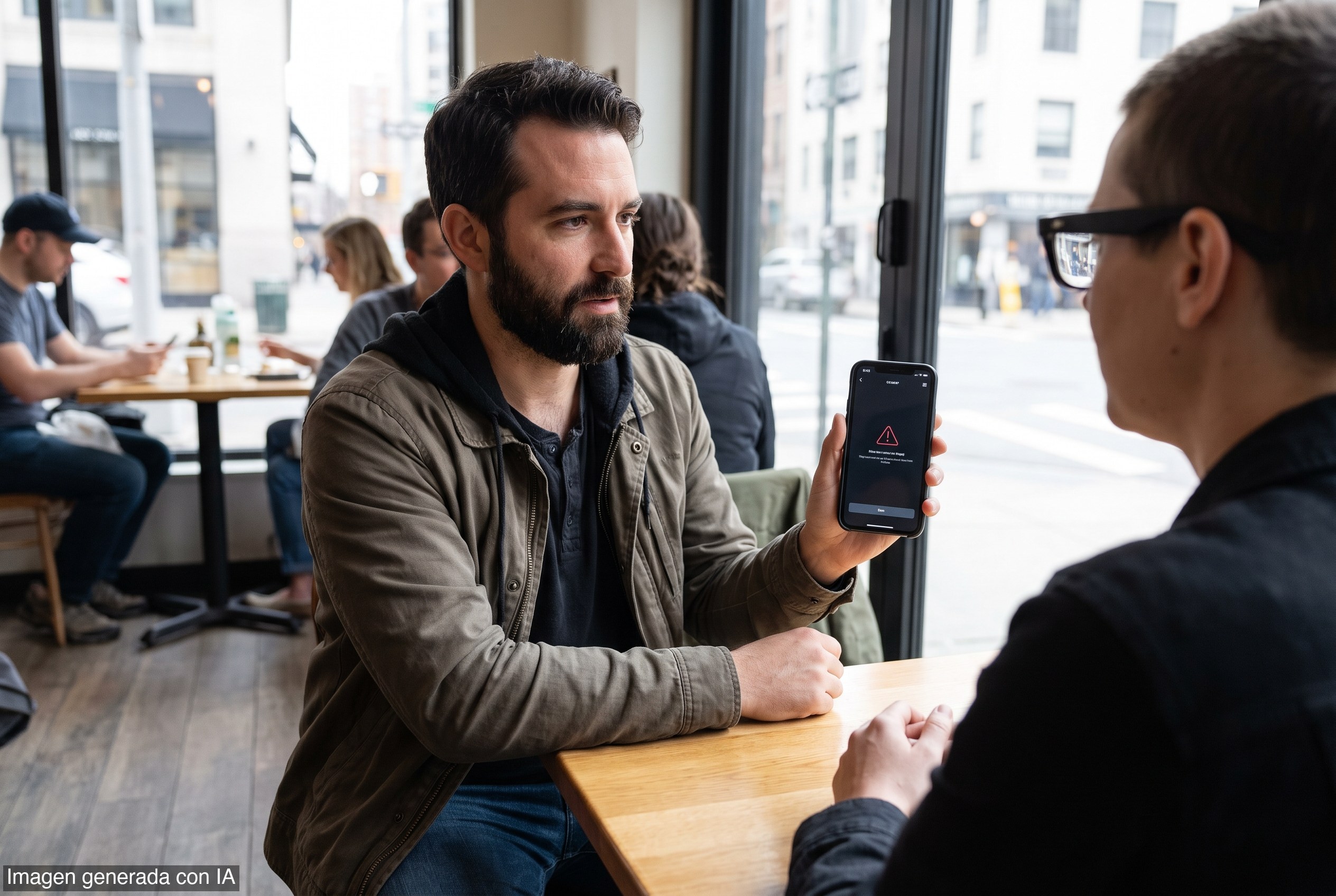
When Pawel Szydlowski watched videos of people using smart glasses to record and identify strangers without their knowledge, he did what founders do: he spotted a gap and shipped a product.
The 30-year-old Polish software developer built Zuckoff, an app that detects nearby smart glasses by analyzing the Bluetooth signals those devices broadcast. Since its launch on Apple's App Store last month, it has attracted 5,000 users.
Here's the playbook he used.
Szydlowski physically obtained multiple models of smart glasses and reverse-engineered their Bluetooth 'fingerprints' — the universally unique identifiers (UUIDs) and manufacturer codes each device broadcasts. Some devices, he said, have Bluetooth services literally labeled 'Meta' or 'Ray Bans.' When the UUID and manufacturer identifier both match a known pair of glasses, he calls it 'an ultimate combo.'
The free version shows users the likely proximity of nearby smart glasses. A 'Zuckoff Pro' tier runs in the background and pushes notifications even when the app is closed — a classic freemium wedge that converts the most privacy-anxious users into paying customers.
The problem he's solving is real and growing.
Meta's AI smart glasses are at an inflection point. This month, Meta remotely disabled thousands of glasses after discovering that built-in LED indicator lights — designed to signal recording — had been tampered with. Meta CTO Andrew Bosworth argued in an Instagram video that the camera was 'designed to be noticed.' Pickup artists filming women without their knowledge, and commenters doxxing subjects in those videos, suggest the market disagrees.
Szydlowski's proposed long-term fix is elegant and market-friendly: smart-glasses makers should adopt an industry standard similar to the one Apple and Google built for AirTag tracking alerts, letting any phone warn its owner when an unknown recording device is nearby. 'If they really care about that part not being abused, they would go that way,' he said.
Noteworthy: EU regulators have already contacted Szydlowski for more information about the app.
The editorial read.
This is what market-driven privacy protection looks like. One developer, a few hundred dollars in hardware, and a sharp eye for user pain produced a solution faster than any Brussels directive or congressional hearing could. Szydlowski himself put it plainly: 'We have a way to address problems, of course, faster than government in some cases.'
The lesson for founders is straightforward. When a platform creates a negative externality — covert recording, location tracking, data leakage — and the platform owner moves slowly, there is a product waiting to be built. Zuckoff is early, but 5,000 downloads in 30 days without a marketing budget is a signal worth reading.