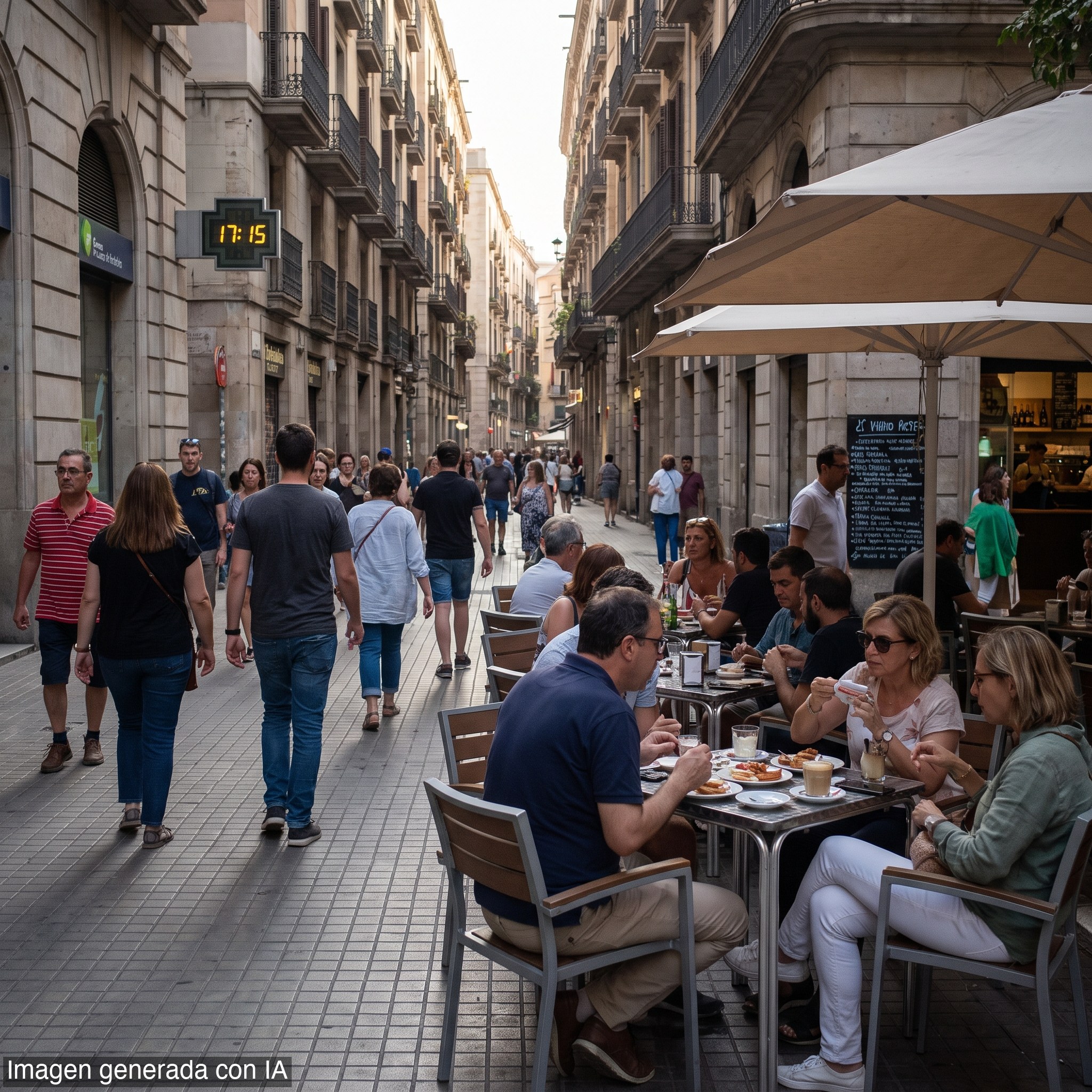
Jordan Mautner moved from Los Angeles to Barcelona in 2020 and says the city has been home for six years. What surprised him most was not just the culture, but the day-to-day operating system of life in Spain.
In Barcelona, he found that Catalan is often the first language you see on menus and signs, even though people also speak Spanish. He also had to adjust to local traditions that are very different from the ones he knew in the US, from Sant Jordi in late April to Christmas customs like Caga Tió and caganers.
Food is part of that adjustment too. Tapas are common across the city, and he describes the meals as social and shareable. He also points to the typical Spanish breakfast, a bocadillo on baguette-style bread with tomato rubbed into the bread, usually with ham, cheese, or a potato omelet, plus coffee.
The biggest lifestyle shift may be timing. In the US, he ate dinner around 7 p.m. or 8:30 p.m. if he was working late. In Spain, dinner is typically served around 9 or 10 p.m., and meals can stretch until midnight because people take time to eat and socialize. He also notes that siestas shape the rhythm of errands, because afternoon and weekend closures are part of the routine.
Barcelona also gives him a different mix of leisure. The city is known for nightlife, but he says it is easy to balance that with outdoor fitness, yoga, beach walks, and trips into the Collserola mountains. Costa Brava is also within reach, with turquoise water, sandy beaches, xiringuitos, and historic stops such as Tossa de Mar and the house where Salvador Dalí lived.
For founders and operators, the lesson is simple: local habits can matter as much as the address itself. When you move markets, you do not just change rent and language. You change the cadence of work, meals, errands, and social life. That affects how you plan, how you schedule, and how fast you can move.
Founders who expand internationally learn this the hard way. The customer may be new, but so is the calendar, the dinner hour, and the definition of normal. Start smaller than you think, observe the local playbook, and build around the rhythm of the place rather than forcing your old one onto it.