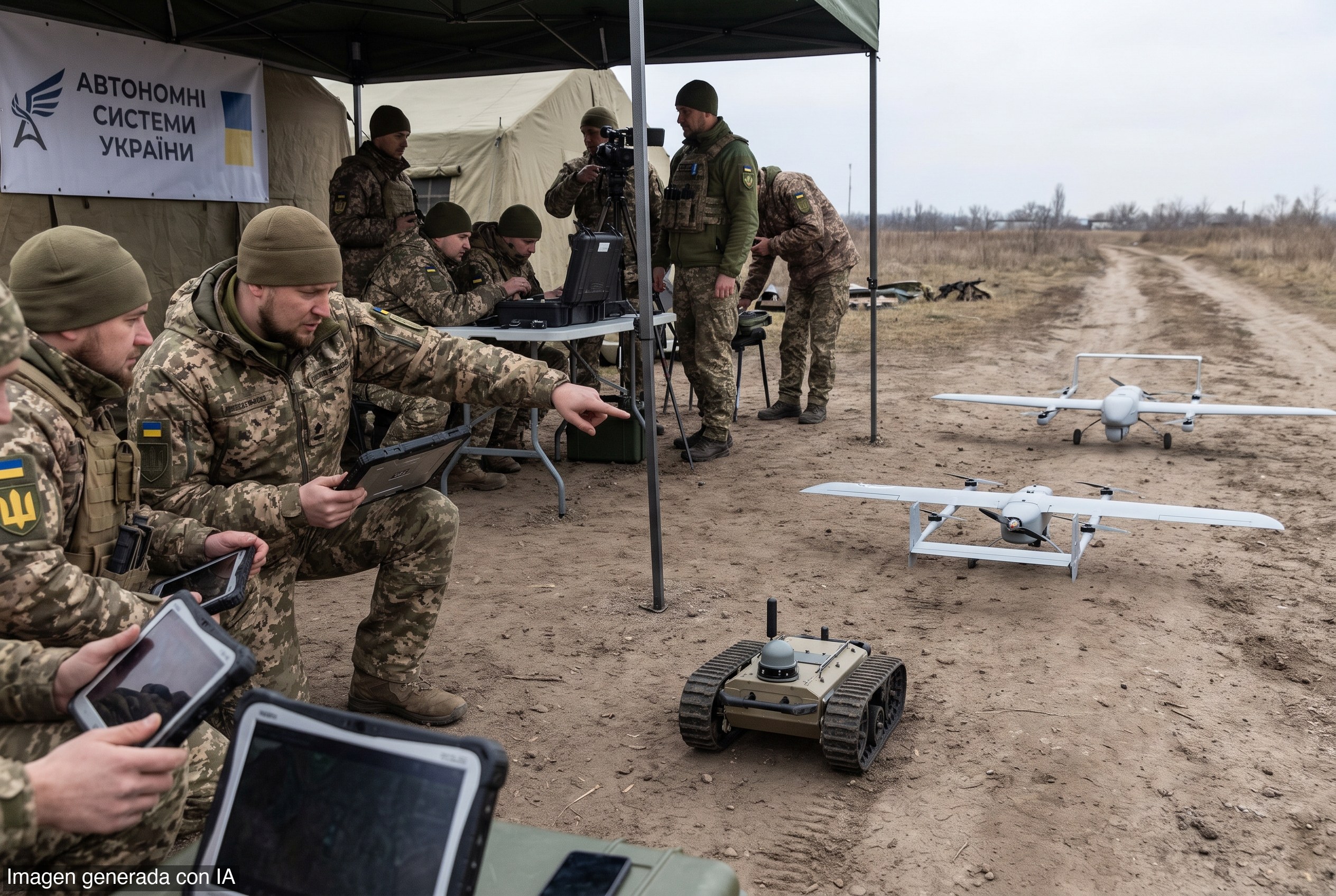
Ukraine's drone makers are pushing systems that can do more of the basic work themselves, from navigating and returning to base to helping identify targets. The goal is simple: let one operator oversee multiple drones instead of manually piloting each one.
Mykyta Rozhkov, chief business development officer at Frontline Robotics, said the shift comes straight from soldiers. 'Our soldiers are coming to us with a request of: 'How can you provide us with the capability to have different robots controlled by one person?' or 'Can we make a shift of our UAV pilots easier?''
Frontline says it responded by adding an autonomy layer to its drones so they can travel to and from an area of interest with minimal input. Rozhkov said a pilot can bring the system home 'with a push of a button' and the drone can find the shortest way back.
The company also says its latest Linza 3.0 drone has more onboard autonomy, allowing it to operate when GPS is unavailable because of Russian electronic warfare. Its Zoom reconnaissance drone also has AI navigation for the same reason.
Ukraine's defense ministry said in August that units were using 'more than 70 different systems powered by AI and computer vision technologies to strike enemy targets.' It also said the aim is to eventually have '100% of drones on the front line equipped with computer vision and AI capabilities.'
Still, the autonomy push has limits. Many companies and experts say what is often described as autonomy is really advanced automation, not independently acting AI. Ukraine's defense ministry said last month that 'algorithms are now being entrusted with critical combat tasks, ranging from navigation and object identification to autonomous target engagement. However, the final decision on target selection and engagement is made by a human operator.'
That distinction matters. The technology can reduce the mental load on soldiers and help systems keep working when Russian electronic warfare disrupts signals. But the human still sits at the center of the use-of-force decision.
For founders watching the defense market, the playbook is clear: autonomy sells when it cuts operator burden and survives real-world conditions. In Ukraine, that means less manual control, more resilience, and systems that can keep moving when the connection drops.