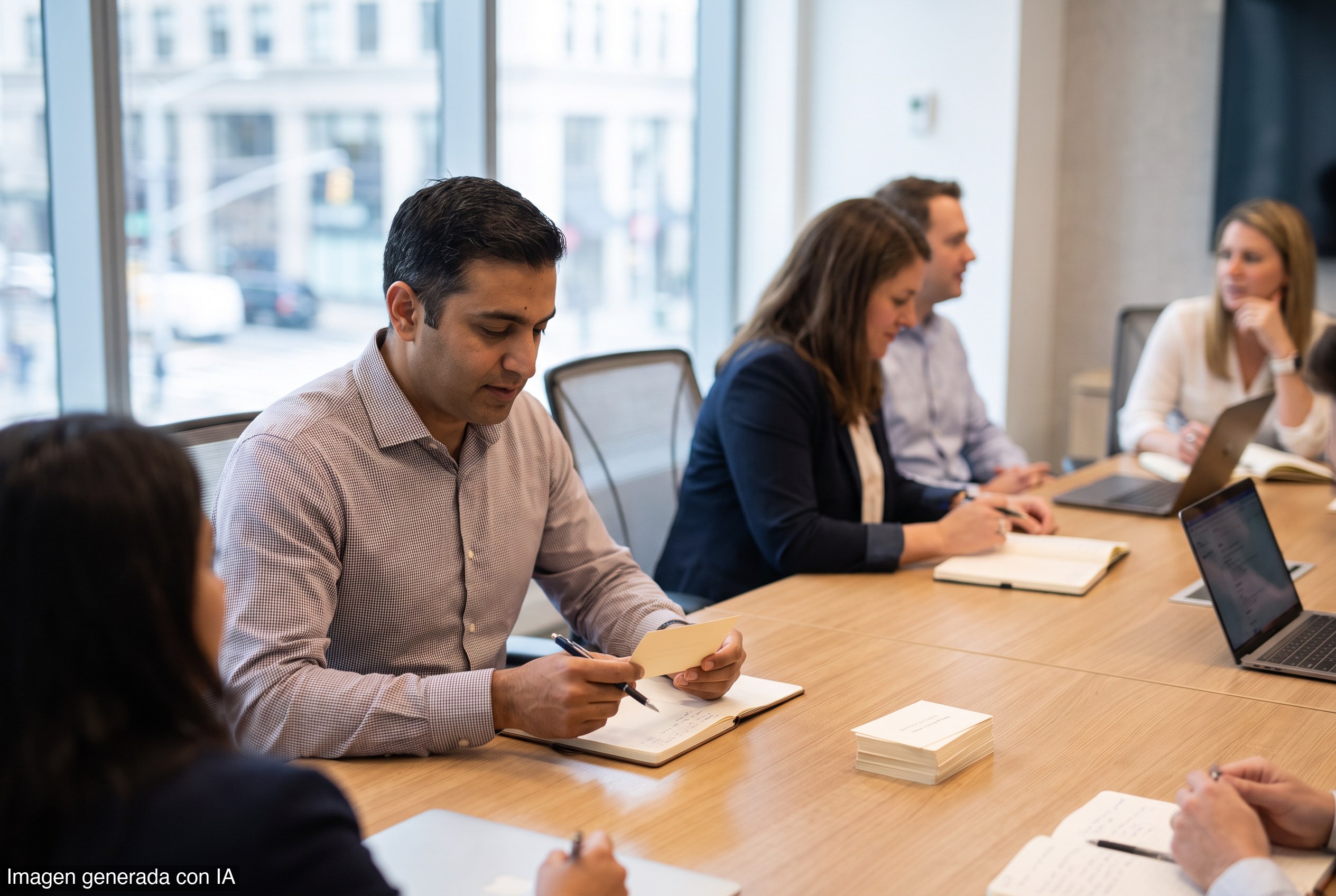
Twilio CEO Khozema Shipchandler spends hours every year handwriting personalized notes to every member of the company’s 80-plus-person leadership team before its annual retreat.
He said the ritual is partly rooted in his memories of being a junior employee at GE and feeling seen by a senior leader. He also said the notes help him build relationships with people who could someday sit in Twilio’s C-suite.
Shipchandler said the messages usually mention a project or initiative the leader is driving, add something complimentary about their leadership style, and include encouragement for what comes next. 'They are our bench,' he said.
Twilio, founded in 2008, provides technology businesses use to interact with customers over phone calls, texts, and emails. Shipchandler became CEO in 2024 after serving as president of communications, operating chief, and finance chief. He previously spent 22 years at GE before joining Twilio in 2018.
His handwritten notes are part of a broader approach to leadership. Shipchandler said he tries to respond to employees’ emails, texts, and Slack messages within 24 to 48 hours, reads meeting materials in advance, and aims to be a 'straight shooter' rather than a CEO who softens hard news with 'corporate speak.'
'If I can do that just for one person and it increases their confidence or their capacity or their desire to go do a hard thing, I think that's pretty awesome,' he said.
He said transparency matters because employees, investors, and board members are owed information they can use to make decisions.
That same philosophy shows up in Twilio’s remote-friendly setup. Shipchandler oversees a roughly 5,500-person workforce with optional in-office attendance, a stance that is at odds with many large employers that have brought back white-collar workers at least part-time. He said productivity stayed steady after the company went remote during the pandemic, while recruiting, engagement, and retention improved.
The model has made culture harder to build, he said, so Twilio creates deliberate in-person opportunities, including periodic paid trips for team get-togethers and free lunch on Thursdays at its San Francisco headquarters.
Shipchandler has also taken a different path on middle managers. Rather than trim the ranks and lean more on AI, as Block and Meta have done, he said Twilio is continuing to invest in the midlevel cohort through training programs. He said managers bring something AI cannot replace: judgment.
The playbook is simple: keep the human layer, communicate early, and treat managers as future leaders instead of overhead. For founders, that is a reminder that culture is not a slogan. It is a system of incentives, attention, and accountability.
And in a market where too many companies hide behind corporate speak, the edge may belong to leaders who make information, trust, and judgment part of the operating model.