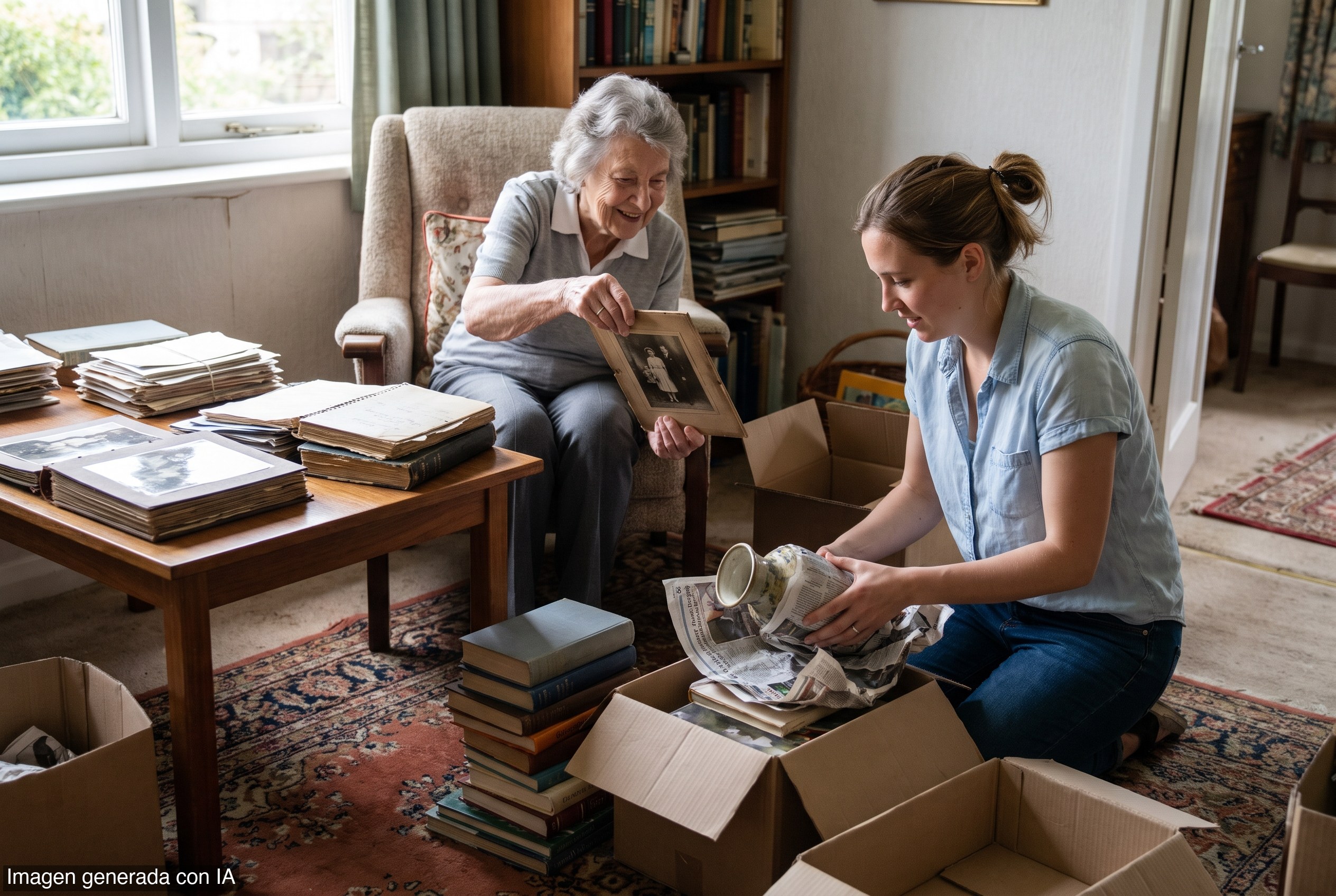
Every year, Mar Yvette and her husband travel from California to Michigan to spend a few months with his 85-year-old mother, Elizabeth. What started as a natural decluttering habit has evolved into a deliberate, ongoing practice of 'Swedish death cleaning' — a method focused on getting possessions in order before you die, largely so loved ones aren't left sorting through decades of belongings while grieving.
Why the daughter-in-law is the right person for the job
Yvette credits her position in the family as a structural advantage. Unlike her husband or sister-in-law, she doesn't carry the same emotional weight into the process. Her father passed away eight years ago, and in the last year both her grandparents died. She knows firsthand how overwhelming it is to sort through belongings while grieving — when every object feels tied to someone you love.
That experience, rather than being a burden, became a skill. She's not trying to protect herself from the memories; she's trying to protect her husband and sister-in-law from the logistical and emotional overload when the time comes.
The system: small decisions, year after year
Elizabeth's home is filled with antique furniture, one-of-a-kind art objects, shelves of books, and fine china inherited from her own mother. This is not a weekend project. Yvette describes it as 'making hundreds of small decisions, year after year — some take five minutes, others take five conversations.'
This summer's focus was the wardrobe. Elizabeth already donated clothes to her Armenian church, but this year they expanded to the Salvation Army and other charities. Yvette also took her to a resale shop to sell vintage clothing for the first time. The money wasn't significant — but the exercise answered a more important question: was it better to let clothes gather dust, or let them find a new life with someone else? That reframe helped Elizabeth become more willing to let things go.
The unexpected return: the stories
The process has surfaced stories Yvette never knew existed — a photo of a 15-year-old Elizabeth meeting Elvis Presley, wedding telegrams from around the world, newspaper clippings about the businesses Elizabeth built over the years. 'I've come away with a much deeper appreciation for who she is,' Yvette writes, 'not only as my mother-in-law but as an entrepreneur, traveler, philanthropist, daughter, mother, and friend.'
Elizabeth herself frames it simply: 'I feel so privileged to have known these people over the years and to have had those experiences.'
The bottom line for founders
The Swedish death cleaning model is, at its core, a systems problem applied to legacy. You identify assets, assign value, make disposition decisions, and document the stories behind them — iteratively, over time, before a crisis forces your hand.
Families that run this process proactively aren't just reducing future grief. They're compressing decision-making into manageable units, preserving institutional memory, and giving the person at the center of it all more breathing room — literally and emotionally — right now. That's not morbid. That's good operations.
Start the conversation before you need to. The runway is shorter than it looks.