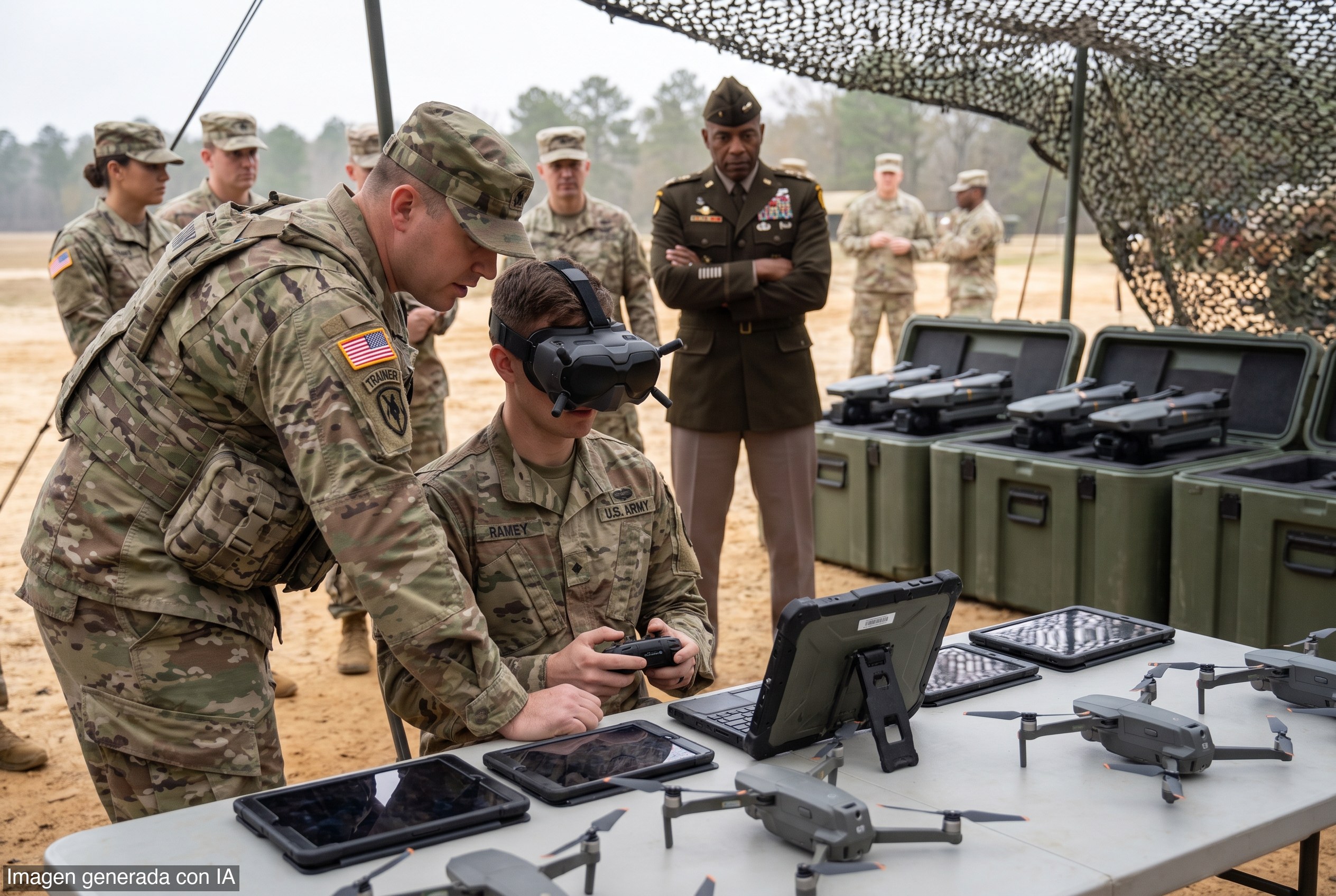
US Army officials say the service has already fielded 10,000 drones and is in the process of receiving another 30,000 more.
Col. Gregory Merkl, the director of drone dominance for the Army, said Thursday during a media roundtable that the buildup is enough to get drones 'down to every squad level.' But he said the service still has work to do on training. 'Right now, if you look across the force, you have that capability in every platoon. We still have a little bit of work to do in terms of getting qualified pilots down to the squad level,' he said.
The Army plans to field thousands of low-cost, one-way attack drones by next fiscal year. It has also held a series of events to select drone companies for advancement in evaluations called Gauntlets.
The push is tied to Drone Dominance, an iterative development program that is investing $1 billion to purchase at least 200,000 drones through 2027. Last year, Defense Secretary Pete Hegseth issued a memo directing the overhaul of how the Pentagon buys and integrates small uncrewed aerial systems across the armed forces.
Training is now catching up to procurement. The Army is using specialized courses such as the Unmanned Advanced Lethality Course and other programs focused on flying specific models of drones. It is also exposing soldiers to drones starting in basic training, then moving them into tactics for different scenarios.
One approach launched last year was a three-week crash course at Fort Rucker, Alabama. The pilot class was described as a 'catch-up' effort to close the US gap on drones, with students learning the basics of piloting the systems and how to build and 3D print parts for them.
Army officials have said soldier feedback is prioritized, along with lessons from the war in Ukraine and from US soldiers who have trained with Ukrainians. Maj. Gen. Christopher Norrie, acting commander of US Army Europe and Africa, said the rotation provided 'a tremendous amount of data and feedback' to the Army.
The playbook is simple: buying hardware is only the first half of modernization. The harder half is human capital, doctrine, and repeatable training at scale. For founders and operators, that is the same lesson every time a company adds new tools faster than it adds talent to run them.
If the Army can put drones in every squad but cannot produce enough qualified pilots, the bottleneck is not inventory. It is execution. That is where margins, readiness, and speed all get decided.