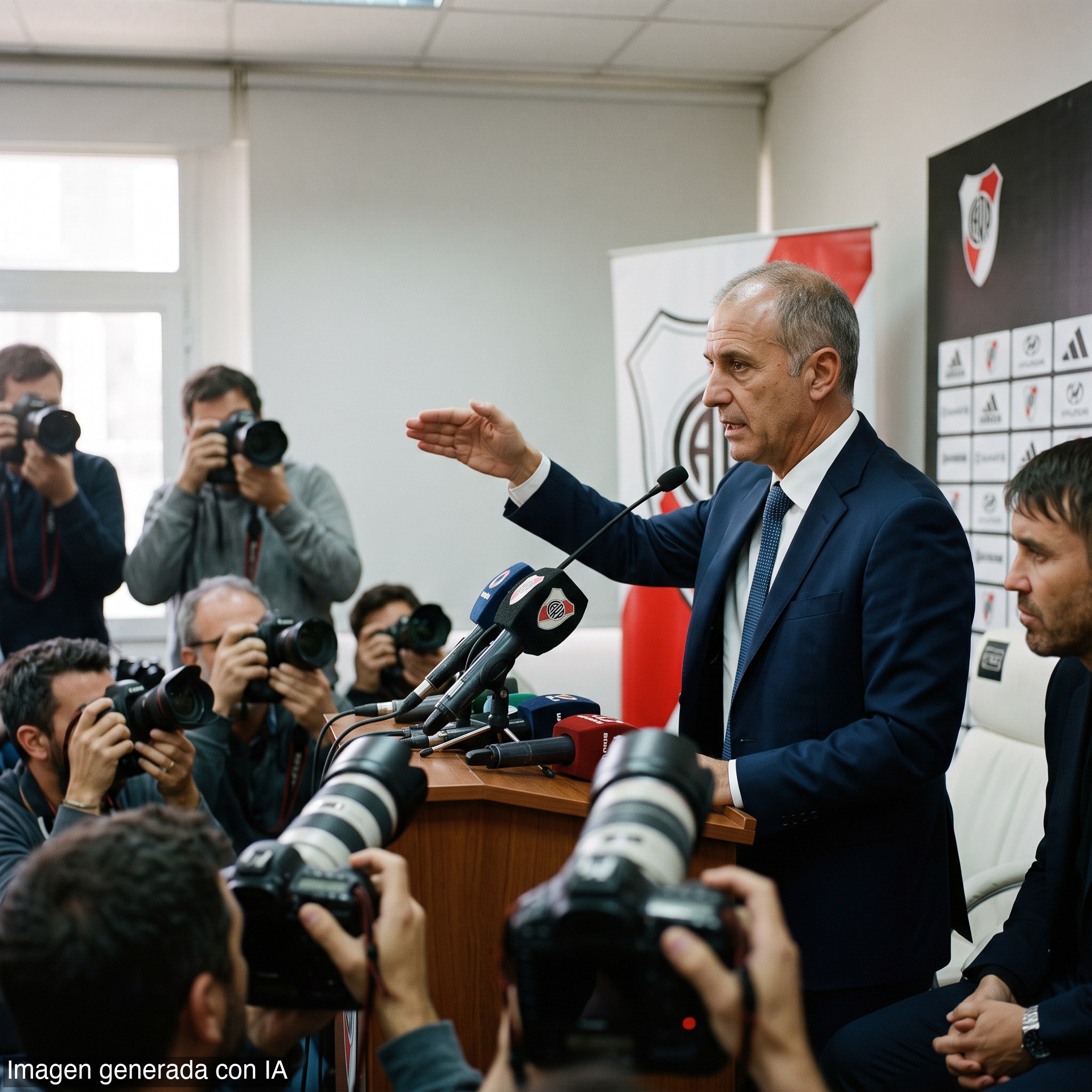
When a team stumbles out of the gate, the first instinct of most boards is to look for a scapegoat. River Plate's leadership is doing the opposite.
Journalist Diego Díaz reported that he spoke directly with club president Stefano Di Carlo late at night and came away with one unambiguous message: 'Coudet no se toca' — Coudet is not up for review, not against Rosario Central, not after two, three, or four more matches.
Di Carlo, according to Díaz, is 'totally in sync' with coach Eduardo Coudet, alongside the club's inner circle. The framing from the top is clear: whatever the scoreboard says right now, history will be the judge — not the next fixture.
The rebuild logic
The leadership's argument is structural, not emotional. River made a deliberate decision to move on from a significant number of players. The plan was to replace them during the transfer window. The problem, as Díaz explained, is that negotiations don't run on a coach's timeline.
'In the attempt to replace them, and sometimes because of how negotiations work, you can't get eight, nine, or ten players in all at once,' Díaz noted. The arrivals staggered. The squad is still finding its footing. New players need acclimatization time to absorb what River demands of them.
That's the context Di Carlo and the inner circle are asking fans — and critics — to hold in mind.
What this means for founders
The playbook here translates directly to any organization mid-transition. When you gut a roster — whether that's players, headcount, or a product line — and rebuild around a new system, the dip is not a bug. It's the cost of the pivot. The mistake most leaders make is pulling the plug on the new hire or the new strategy the moment the numbers look ugly, before the inputs have had time to compound.
Di Carlo is making a bet that process discipline beats panic. He's absorbing short-term reputational cost to protect a longer-term rebuild. That's a defensible call — provided the new pieces actually arrive, integrate, and perform.
The risk, of course, is real. Backing a coach publicly and unconditionally raises the stakes on every result that follows. If the rebuild stalls, the credibility cost falls on leadership, not just the technical staff. River's board has drawn a line in public. Now the clock is running.