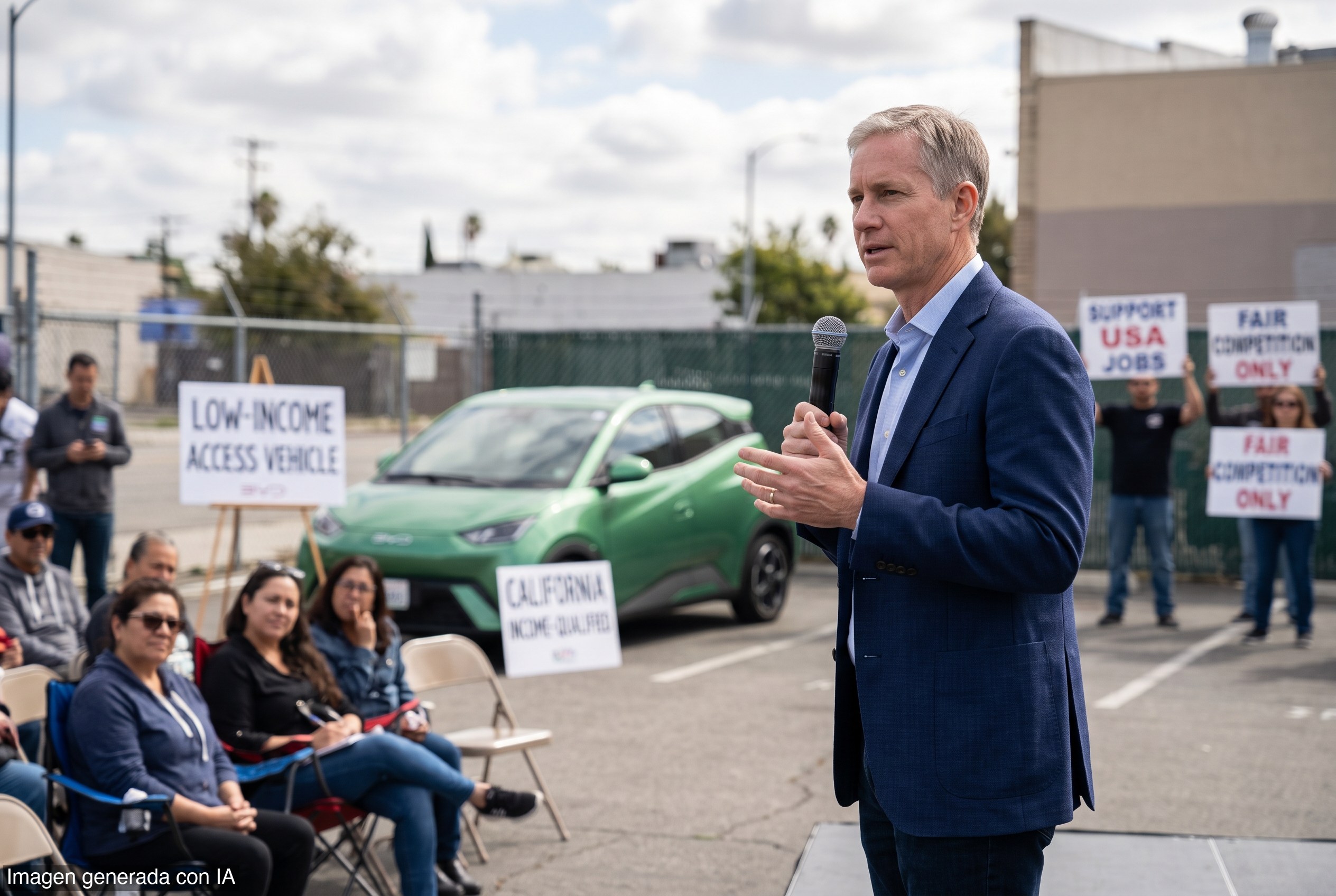
Chris Larsen, cofounder and executive chairman of Ripple, has a simple argument: if American automakers won't build a $10,000 electric car, California should let someone else sell one to the people who need it most.
Speaking on the podcast 'On with Kara Swisher,' Larsen said California should open its market to select Chinese-made EVs — specifically for income-qualified buyers. His example: the BYD Seagull. 'The BYD Seagull, $10,000 car, fabulous car,' he said. 'We should be letting that into California, at least for our low-income folks.'
The affordability math is hard to ignore. The average price for a new vehicle has remained above $50,000 since April, according to Cox Automotive data. Gas prices remain elevated amid ongoing tensions in the Strait of Hormuz. In California, an excise tax adds more than $0.60 per gallon on top of that. Larsen called it the 'most regressive tax in the world that's hurting the guy who can't afford to live in Silicon Valley.'
His proposed fix: 'Let him buy a Chinese BYD Seagull. But maybe it had to be income tested because we're never going to make that stuff.'
The auto industry is pushing the opposite direction. Last week, the Alliance for Automotive Innovation — a trade group representing automakers and suppliers — sent a public letter urging Congress to 'enact a Chinese vehicle, software and hardware ban before adjourning this year and make this policy the law of the land.' The group cited subsidized pricing and connected-vehicle technology as both economic and national-security concerns.
Larsen's position cuts against that lobby directly. His framing is a classic affordability-versus-security tradeoff, and he lands firmly on the side of the buyer who can't absorb $50,000 sticker prices or $0.60-per-gallon surcharges.
Here's the tension founders should watch. Larsen is right that the affordability gap is real and that American manufacturers have not filled it. But the national-security argument around connected Chinese hardware is not invented — it is the same logic that drove the federal government's actions on other Chinese technology platforms. An income-tested carve-out does not resolve the software and data questions the Alliance raised; it just narrows who bears the risk.
For founders building in mobility, energy, or hardware, the policy fight ahead is a signal: the window for cheap Chinese components — whether in vehicles, batteries, or supply chains — is closing fast. Build your cost model around that reality, not around a tariff exemption that may never arrive.