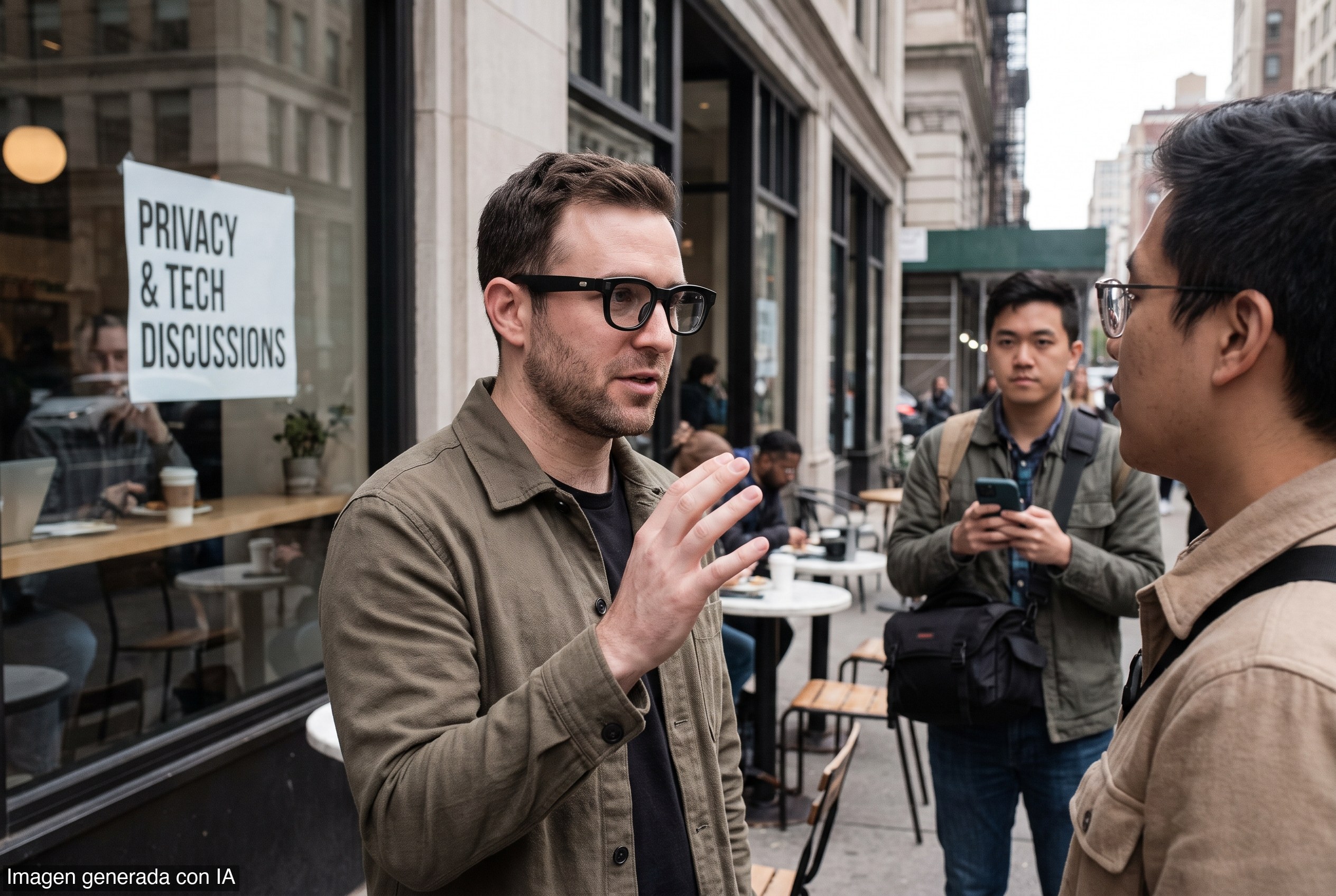
Meta CTO Andrew Bosworth says the debate over Meta glasses should not be defined by a small number of 'bad actors'.
In an AMA on his personal Instagram, Bosworth said most people use the glasses in normal ways, much like a cell phone camera, only more conveniently and hands-free. He also pointed to privacy measures built into the product, including an indicator light that turns on when recording starts, plus anti-tampering features designed to stop recording if the light is covered.
Bosworth said a recent software update closed a loophole that let people start recording, wait a few seconds, then cover the light and keep recording. He added that people who had drilled out or permanently disabled the light had essentially bricked their devices.
He also addressed Meta's moderation policy around harassment captured with the glasses. 'If we find that content, we'll take that content down if it's harassing content. And if we think that this is a person who is doing this systematically, we'll take the account down,' he said.
Meta's crackdown has not eliminated the controversy. Business Insider reported this summer that moderation on Instagram has been uneven, even as some content and accounts were removed. The Verge also reported that prank videos aimed at big-box store workers are creating a 'workplace menace'.
The backlash has grown enough that some businesses are reacting. Nightclubs and restaurants are starting 'no Meta glasses' policies to protect patrons from being recorded without consent. Norway's government is forming a group to look at possible regulation around camera glasses, and French prosecutors are looking into a criminal probe involving sexual harassment and smart glasses.
Meta also appears to be adjusting to the public mood. The Information reported this week that the company plans to launch a new camera-free version of the glasses that would keep audio and AI features but drop the camera.
For Meta, the message is simple: keep the product moving, but do not let a few abuse cases define the whole category. That matters because consumer hardware only scales when users trust it, and trust is now part of the product spec. If Meta wants these glasses to become a mainstream platform, it has to prove the company can protect privacy without making honest users pay for the failures of a small group.