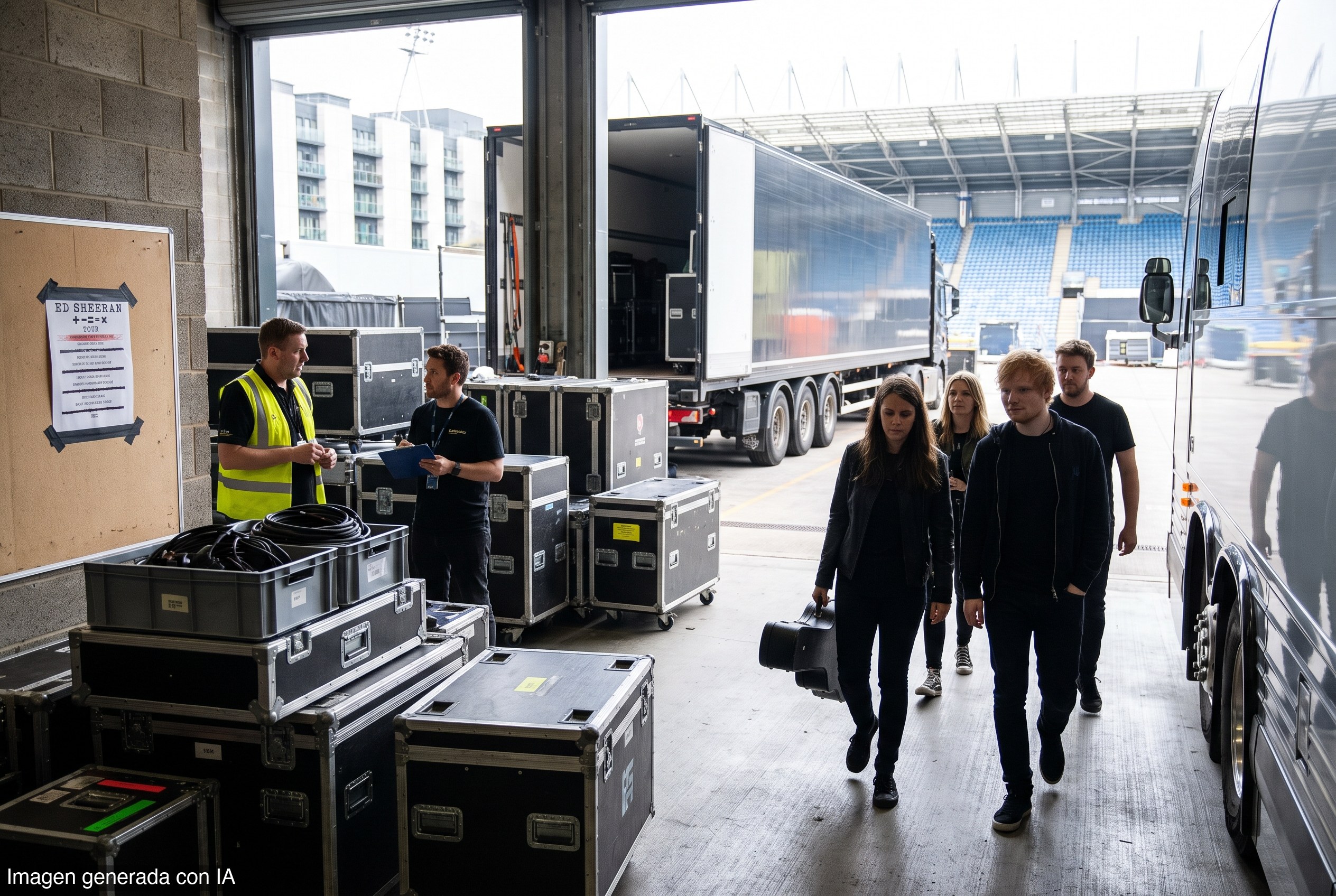
Ed Sheeran’s North and South America tour was thrown into chaos after four supporting acts walked away in solidarity with Macklemore, who was removed from the line-up after making pro-Palestinian comments on stage.
The artists who quit were Finneas, Aaron Rowe, Lukas Graham, and Beoga. Sheeran said on Instagram that Macklemore’s removal was 'the promoter's decision' and not his. He added that he had spent the week 'trying to build bridges' and find a solution, but said he was unable to do so.
Macklemore said the move came after pressure from Robert Kraft, the billionaire owner of the New England Patriots, and from other stadium owners. In a statement reported by other outlets, Kraft confirmed that Gillette Stadium opposed Macklemore appearing at Sheeran’s upcoming shows.
According to that statement, Gillette Stadium said it has a 'longstanding commitment to providing a welcoming environment for all guests' and would not provide a platform for hate speech. The stadium said Macklemore’s recent actions, material shared during the New Jersey shows, and what it called a broader history of antisemitic rhetoric and imagery crossed that line.
The break with the opening acts escalated the problem fast. Rowe and Lukas Graham had been scheduled as replacements for Macklemore on the remaining US dates, while Beoga had been performing several songs with Sheeran during the tour. Finneas was due to tour with Sheeran in South America later this year.
Macklemore’s comments triggered the conflict earlier this month, when he told the audience at MetLife Stadium in New Jersey that 'Free Palestine' was one of the reasons he wanted to do the tour. He then performed 'Hind’s Hall' while footage of devastation in Gaza played on the big screen. Some audience members cheered, but criticism followed almost immediately online.
For founders and operators, the lesson is blunt: one booking decision can ripple through the whole revenue stack. When venue owners, promoters, and performers are no longer aligned, the tour stops being a show business problem and becomes a contract, access, and cancellation-risk problem.
That is the part that matters to anyone managing a live business. The fans still expect the show. The crew still expects to work. The venues still control access. And when a promoter loses that chain of trust, the cost lands on everyone else first.