Bombardier is facing fresh pressure from President Donald Trump, who said in a Monday Truth Social post that the company is 'treating America like a 'piggybank'' and warned, 'NO MORE SELLING BOMBARDIER IN THE UNITED STATES!'
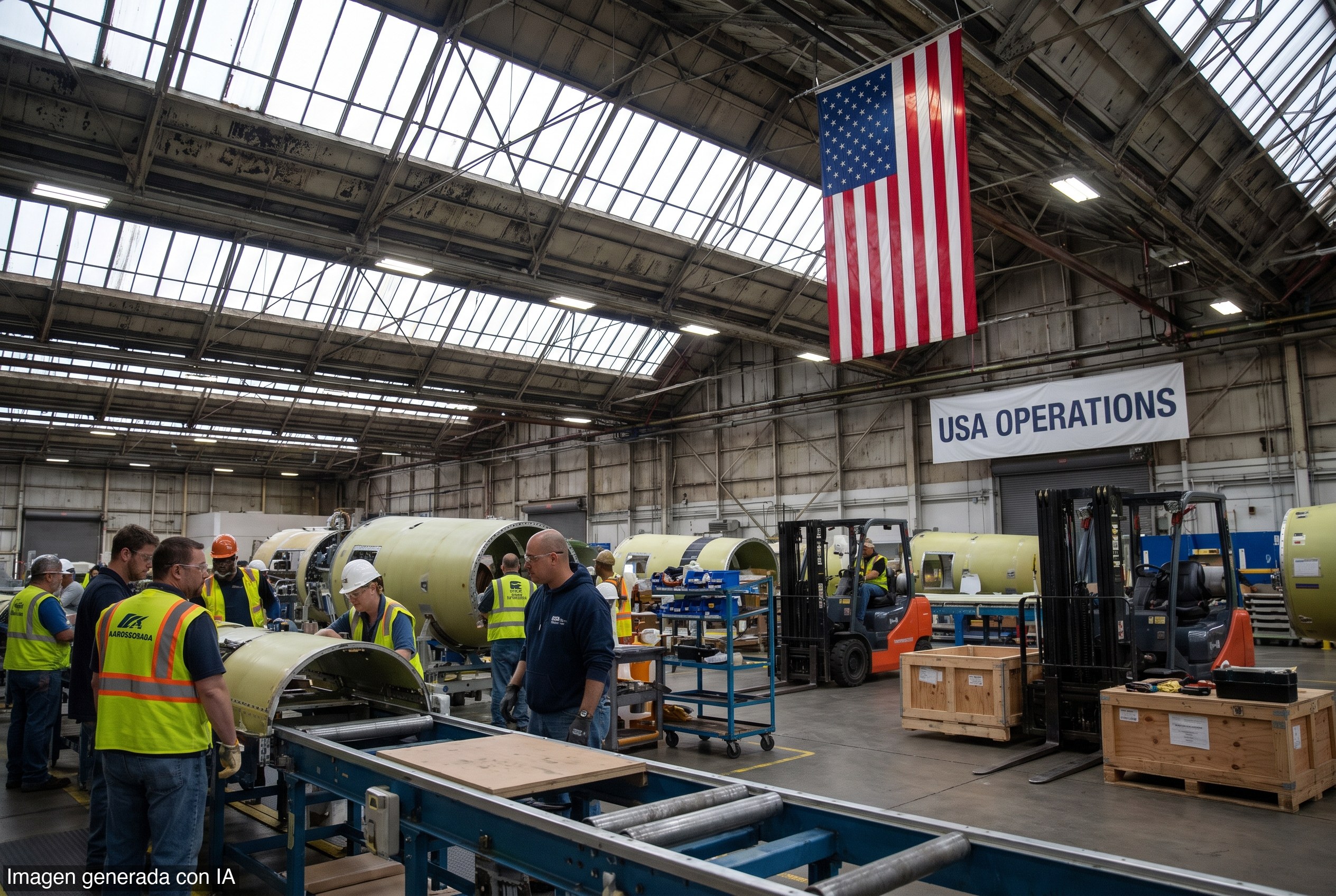
The Canadian aircraft maker responded by pointing to its U.S. footprint. It said it has thousands of direct jobs across more than 20 states, spends $2.5 billion across roughly 2,800 American suppliers in 47 states each year, and operates offices, maintenance facilities, manufacturing plants, and service centers for its customers.
Bombardier said it employs 3,500 direct employees in the U.S. and wants to hire another 500. Some of those jobs are tied to a new service center set to open in Indiana in November.
The company’s U.S. headquarters are in Wichita, Kansas, where the Learjet was manufactured until the program ended in 2022. Wichita now focuses on defense, flight testing, and servicing. Bombardier also builds wings in Red Oak, Texas, and flight control components in California. It has a parts distribution center in Chicago that has operated since 2005.
Other U.S. locations include service centers in Tucson, Hartford, Miami, Dallas, and Fort Wayne, plus truck response teams in 13 states. In Arizona, the Arizona Commerce Authority says Bombardier employs about 1,000 people in the state. Reuters reported in 2025 that the Hartford site has over 200 employees. Chicago employs about 100 people.
Bombardier is also expanding in the U.S. In February, it acquired Velocity Maintenance Solutions in Wilmington, Delaware. The company took over the Velocity team and its 35,000-square-foot hangar.
Some Republicans have already defended the company. US Sen. Jerry Moran of Kansas said Wichita employs over 1,000 Americans and said he had contacted the president to make sure he is aware of Bombardier’s contribution to Kansas. Sen. Roger Marshall said he would 'fight' for Bombardier’s Kansas workforce.
Trump has threatened Bombardier before. In January 2026, he threatened to de-certify Canadian-built planes unless Canada certified certain American-made Gulfstream jets. Canada did so a month later, and the threat faded.
For founders and operators, the math is simple: Bombardier is not just a Canadian exporter, it is already embedded in American payrolls and supplier networks. That matters when policy turns into a sales threat, because the cost does not stay at the border. It lands on workers, suppliers, and the states that depend on private enterprise to keep margins moving.
The bigger lesson is that cross-border business creates political leverage in both directions. When a company has 3,500 direct U.S. employees and thousands more supplier relationships, a trade fight is never just about headlines. It is about who gets to keep working, who gets squeezed by bureaucracy, and whether market access is protected by rules or by pressure.