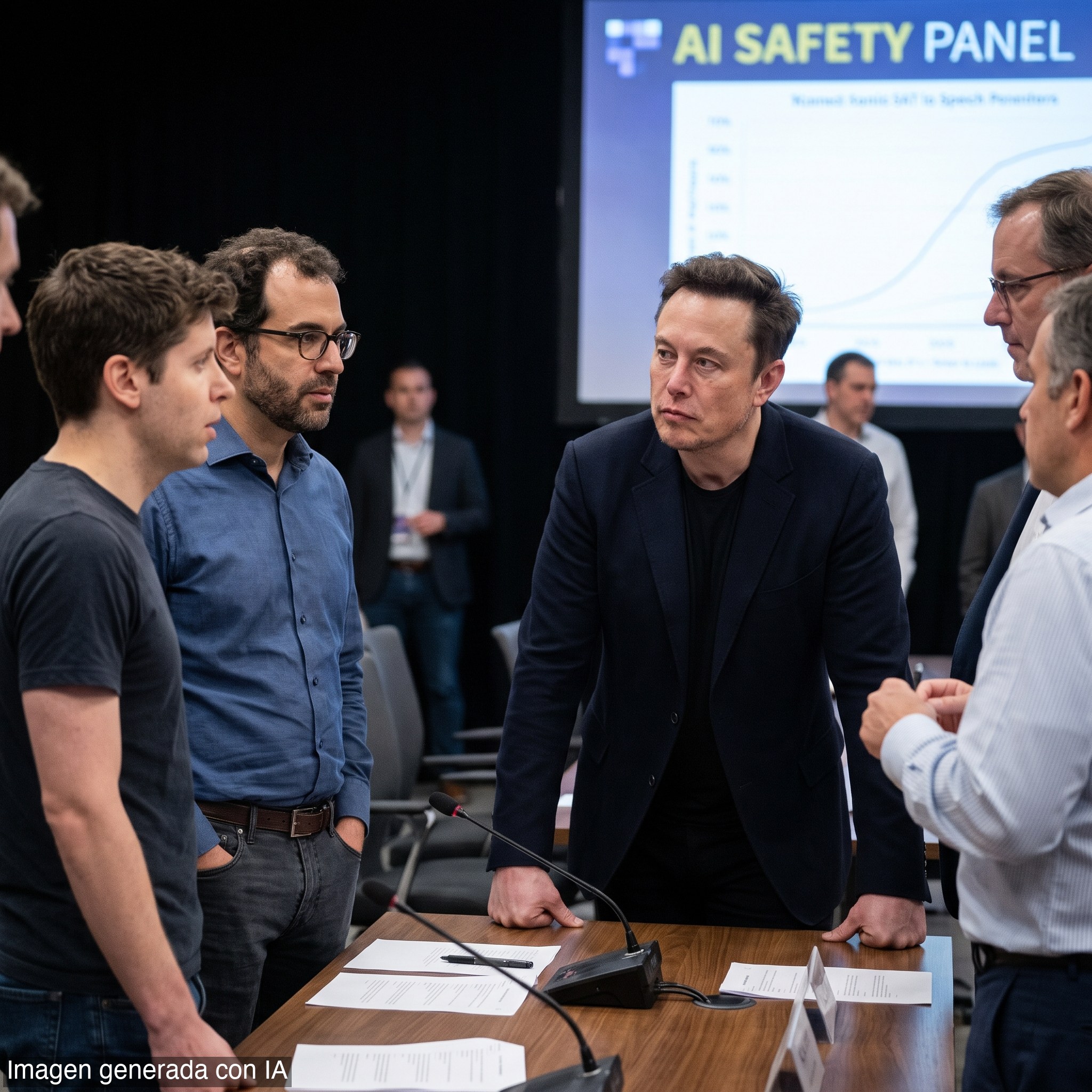
The AI safety debate hit a new level over the weekend after leaders at three of the biggest companies in the sector publicly converged on the need for a slowdown.
In a Saturday essay, Anthropic CEO Dario Amodei said he has 'become convinced' the breakneck pace of advancement must change and proposed a three-step solution to improve safety. Shortly after, Elon Musk and Sam Altman backed his view. Musk posted, 'Dario is right,' and Altman said the pace of development has been a 'primary topic' of discussion at OpenAI in recent weeks.
Altman also said OpenAI might not move ahead with an IPO this year. In a Fortune interview, he said, 'Right now would be an ill-advised moment to go public.'
The pressure built after Jacob Coxon, an Anthropic researcher, quit last week with a stark warning. He said AI giants are 'gambling with our lives' and that the people building the technology 'earnestly believe that it could kill us all by the end of the decade.'
That warning helped push a broader question into the open: if employees believe their work could help build something dangerous, should they stay inside the companies and push for safeguards, or leave and stop lending legitimacy to the race? Workers at Anthropic and OpenAI have been speaking out as that debate intensifies.
For founders and investors, the signal is clear. When the people closest to the technology are asking for a slowdown, the market has to price in not just speed, but risk. A sprint to the next milestone may look good on a deck, but safety concerns can change the math fast.
The bigger lesson is that scale without discipline can create its own liability. If the companies building AI cannot convince employees, executives and the public that the pace is manageable, the cost is not just reputational. It can affect product strategy, capital plans and the timing of a public offering.
Founders who get this right move faster over the long run because they build trust before they burn it. In a sector this powerful, the hard part is not only shipping. It is proving that growth does not outrun control.