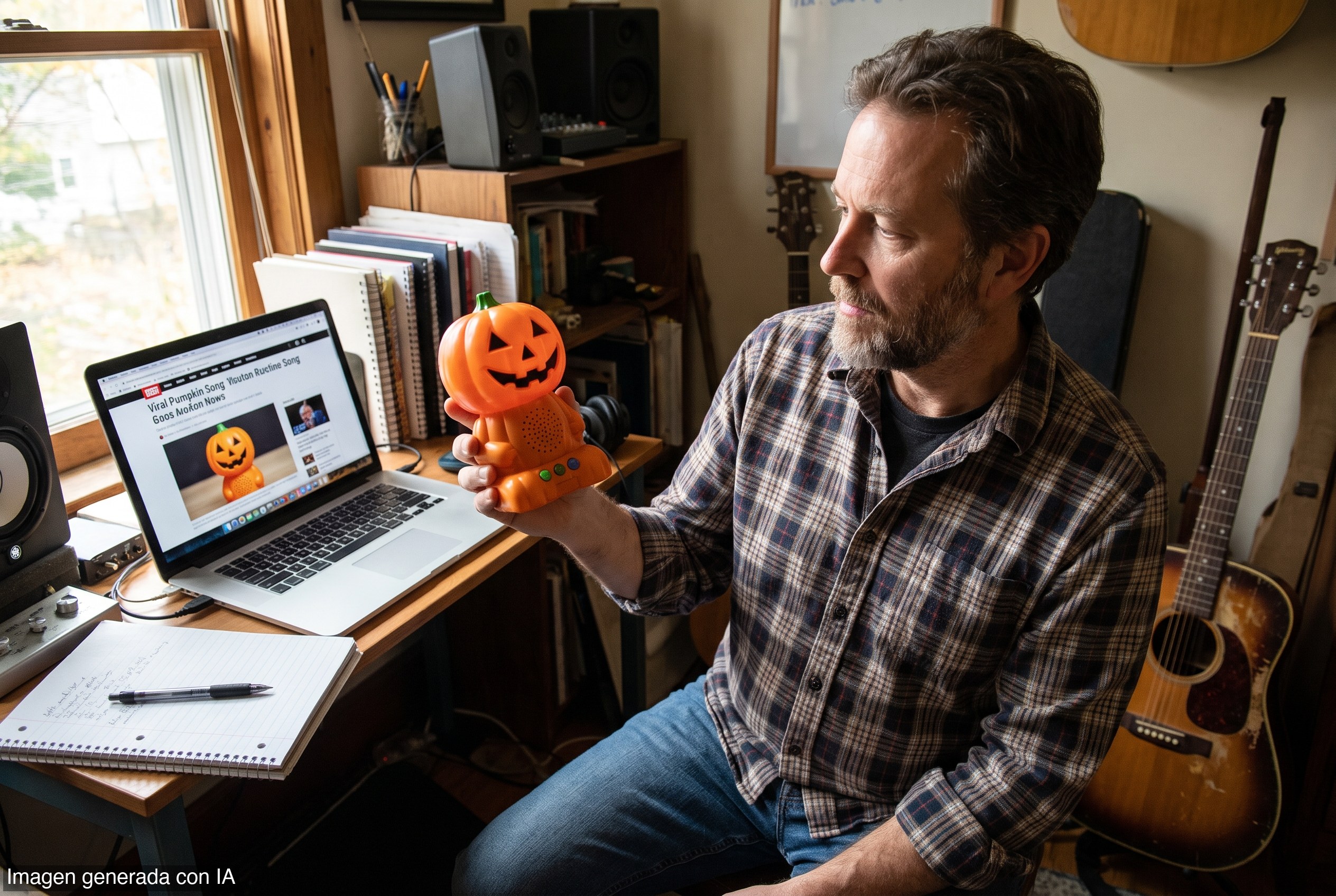
A toy singing pumpkin called Jabberin' Jack has become a viral embarrassment for its maker after a parent posted a TikTok warning about one of its songs.
The track in question, 'Wicked for One Night,' includes lines that many listeners found suggestive, including 'Who wants to be wicked for one night?' and 'Come closer, I have a kiss for you, and it tastes like pumpkin pie.' Another lyric drew extra attention: 'How would you like to scream all night? I'll fill you full of fright. I'll spoil you with my roasted pumpkin seeds.'
Peter McEvilley, the musician who wrote the music and lyrics for the toy, says the song was created in 2019, not by AI, and that he recorded rough demos before a different singer handled the final version. He said he understood the double entendre when he wrote it, adding that the character was meant to be 'a lonely pumpkin who wants to be loved.'
George Balanchi, president of Mindscope Products, said the company is aware of the concerns and takes the feedback seriously. He said the company is sorry the song caused discomfort and that its goal is 'to bring the Halloween spirit into a fun and creative decoration.' Mindscope plans to refresh the toy for 2027, and the 'Wicked for One Night' tune will not be included in the new version.
McEvilley said he had not thought about the pumpkin songs in years and was amused by the viral reaction. He also said people were wrong to assume the song was made with AI. He added that if the project were made today, there is a good chance AI would be used instead.
That is the real business story here. A human creative job that once paid 'a few thousand bucks' now sits in the crosshairs of cheaper tools and faster production. McEvilley said work that used to pay '7,500' dollars, then '2,500' dollars and later '500' dollars is now often replaced by AI.
For founders and operators, the lesson is simple: when a tool can make the same background music faster and cheaper, the market moves fast. That is good for margins, but it is brutal for the people who used to sell those small commercial gigs. The payoff goes to whoever can ship faster at lower cost; the pain lands on the creative labor that used to get paid for the job.