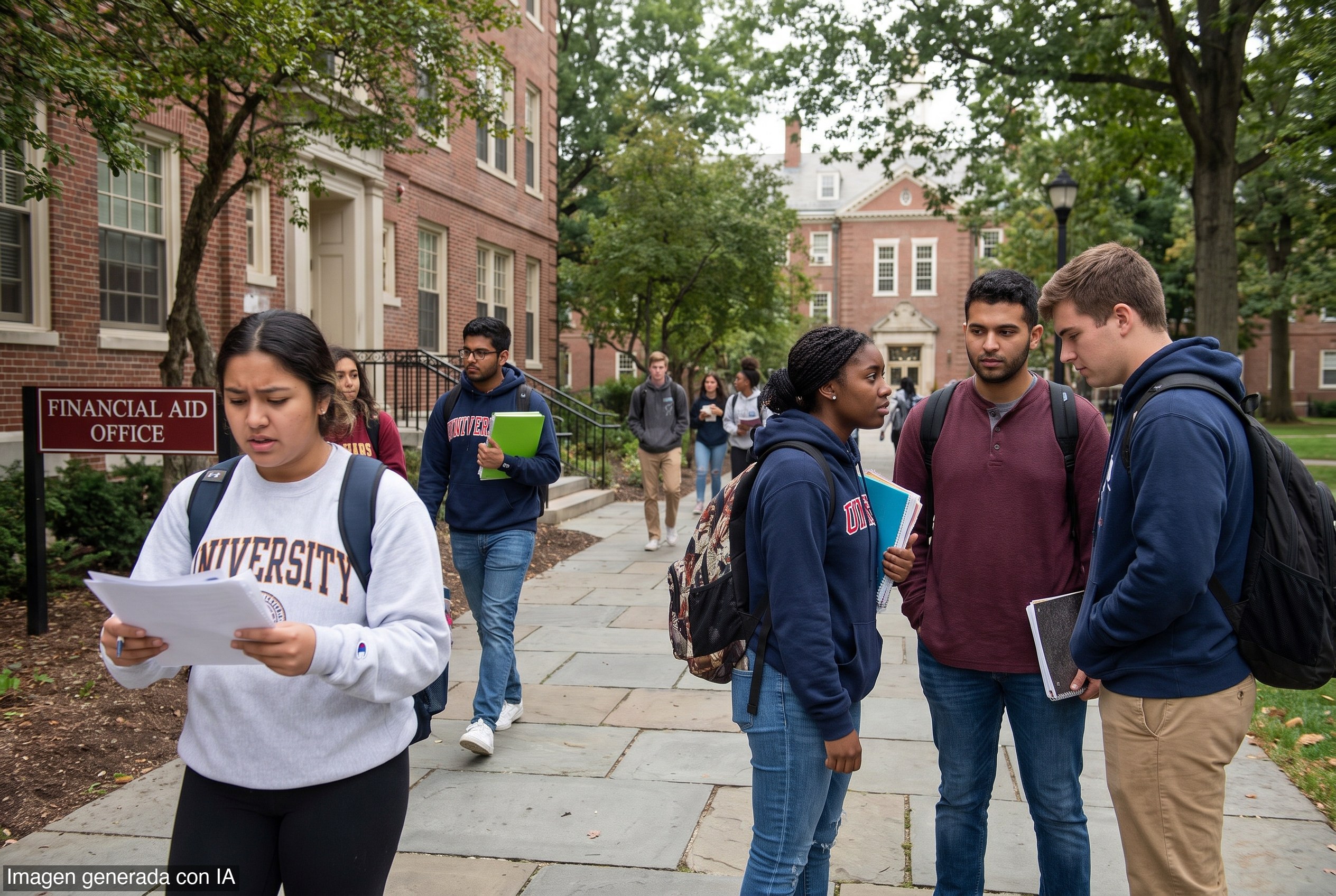
Back-to-school season comes with a number that should stop every founder cold: in 2024, 19.28 million students were enrolled in college, down from a peak of 21 million in 2010, according to the Education Data Initiative. A significant share of them are financing that bet with federal loans.
Business Insider used the Department of Education's College Scorecard to rank the 25 universities whose students graduate with the highest median federal debt. The methodology focused on main campuses with at least 500 undergraduate students that predominantly offer bachelor's degrees. Private loans and federal Parent PLUS loans were not tracked by the DOE, so the real debt burden on students and families runs higher than the ranking reflects.
The number that stands out
Fifty-six percent of the top 25 schools on that list — 14 out of 25 — are historically Black colleges and universities (HBCUs). That is not a rounding error. It is a structural signal.
According to UNCF, HBCU students borrow at a higher rate than non-HBCU students and tend to borrow more. UNCF has linked this pattern to greater 'unmet financial need' among HBCU students.
Marybeth Gasman, executive director of the Rutgers Center for Minority Serving Institutions, told Business Insider the root cause is institutional: 'They have lower endowments and smaller operating budgets than many comparable PWIs,' she said. When the institution cannot offer enough aid, the student fills the gap with debt.
Gasman also noted that some students take out loans not just for tuition but to support their families — a detail that reframes the debt conversation entirely.
What the data does not capture
The DOE scorecard tracks federal loans only. Private loans and Parent PLUS loans — which can dwarf federal borrowing at expensive schools — are invisible in this dataset. That means the 25-school ranking is a floor, not a ceiling, on actual student debt loads.
Tuition prices have soared over recent decades even as Americans have grown more skeptical of the value of a four-year degree, per the source data.
Scale.'s read
The free-market case here is straightforward: when institutions cannot compete on endowment size or institutional aid, students pay the difference in debt — and debt is a tax on future earnings, future investment, and future risk-taking. Every dollar a graduate owes is a dollar not going into a first business, a first hire, or a first product.
The answer is not a federal bailout that socializes the cost onto taxpayers who never enrolled. The answer is more competition, more transparency on outcomes, and more pressure on institutions — of every type — to justify what they charge against what graduates actually earn. Students deserve that math before they sign the promissory note, not after.