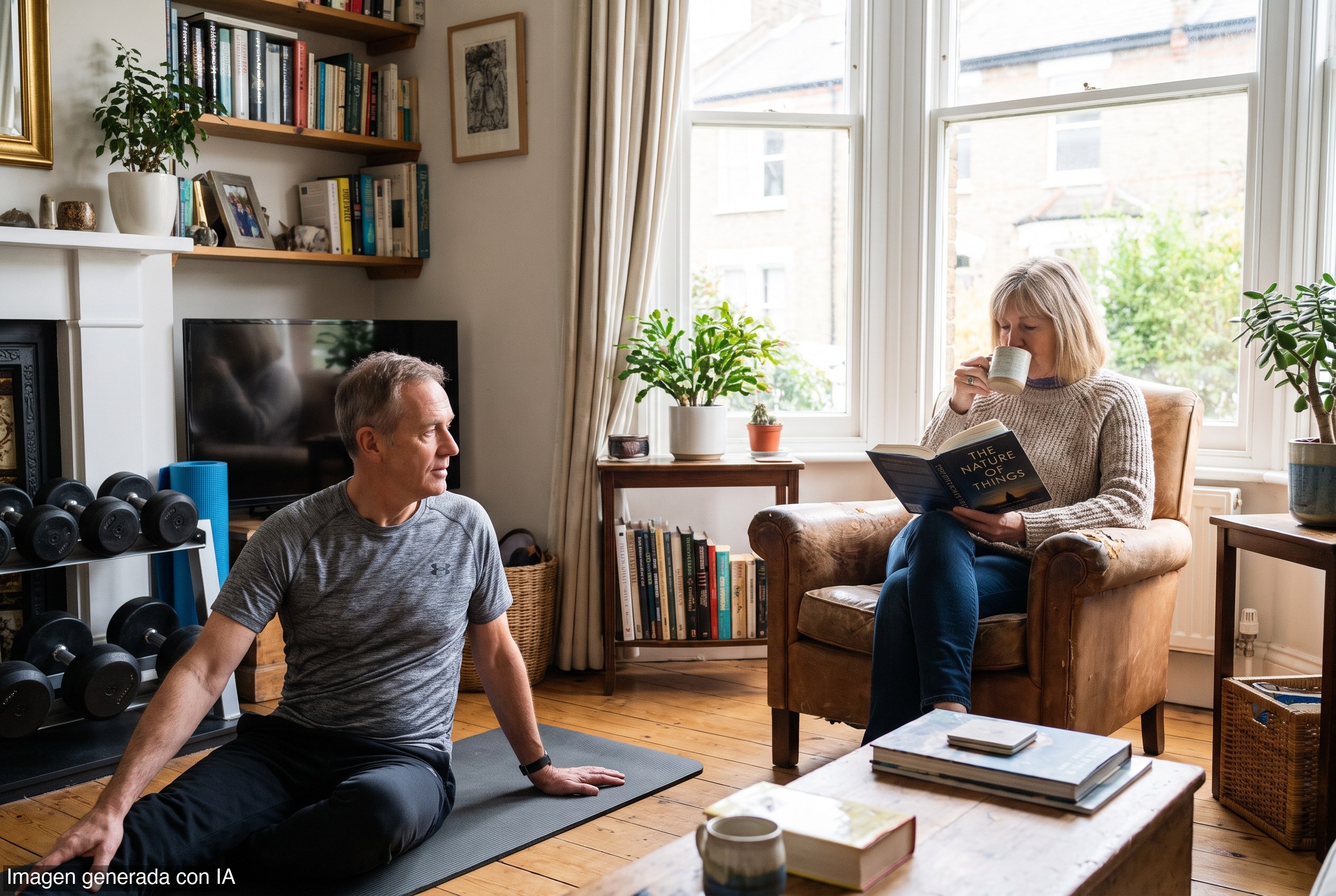
After more than 30 years together, Jensen and his partner have built what most long-term couples chase: shared values, a common outlook, and agreement on what matters most. But as they approach retirement and both work part-time from home, a new dynamic has emerged — and it's one founders navigating co-founder or co-leader relationships might recognize immediately.
Same destination, different lanes.
Jensen leans into the physical: strength, vitality, movement, and health. His partner leans into the mental: curiosity, learning, creativity, and reflection. 'I don't see our preferences as opposites — they're complements,' Jensen writes. 'One fuels the body that carries you through life; the other fuels the mind that gives it meaning.'
The operational detail matters here. Jensen hits the gym three times a week, mountain bikes, and hikes. His partner expands her knowledge of health therapies and natural remedies, including Reiki, the Bowen Technique, and herbal remedies. Yet they still walk together every day — even in the rain — and share gardening, cooking, camping, and travel.
Cross-pollination, not competition.
Rather than siloing their interests, they import each other's worlds. Jensen recently joined his partner on a keto diet and lost eight pounds. He has also tried Pilates, high-intensity interval training, and meditation. His partner has practiced therapy techniques on him over the years. 'We celebrate each other's wins instead of comparing,' he notes.
That's a specific operating principle: admiration over scorekeeping. It removes the zero-sum tension that kills partnerships — business or personal — when one person's growth feels like a threat to the other's identity.
The solo-time variable.
Jensen flags something easy to overlook: 'We recognize and respect each other's space more these days, and the importance of solo time.' With more hours together now that both work from home, intentional separation actually increases the quality of shared time. Their time together, he says, 'has more intent than when we were working full time.'
The math is simple. More proximity without more intentionality produces friction. Structured solo time is the buffer that keeps joint time high-value.
The Scale. take: This story is framed as a relationship piece, but the underlying architecture is a partnership model any founder should study. Two people with complementary skill sets — one optimizing the physical layer, one the intellectual layer — who celebrate divergence instead of forcing uniformity, cross-train in each other's domains, and protect individual runway while committing to shared milestones. That is exactly the co-founder dynamic that survives a decade. The free-market principle at work is simple: voluntary specialization and mutual respect produce better outcomes than enforced sameness. Founders who get this right — in business and in life — move faster and last longer.