The self-sufficient lifestyle has a real operations manual — and most people skip it.
Jayme Serbell and her husband John moved into an off-grid, straw-bale home on 40 acres in northern New Mexico after years of van life. Solar panels, a private well, a septic tank — it looked like the full package. Then winter arrived.
The solar panel problem nobody anticipates
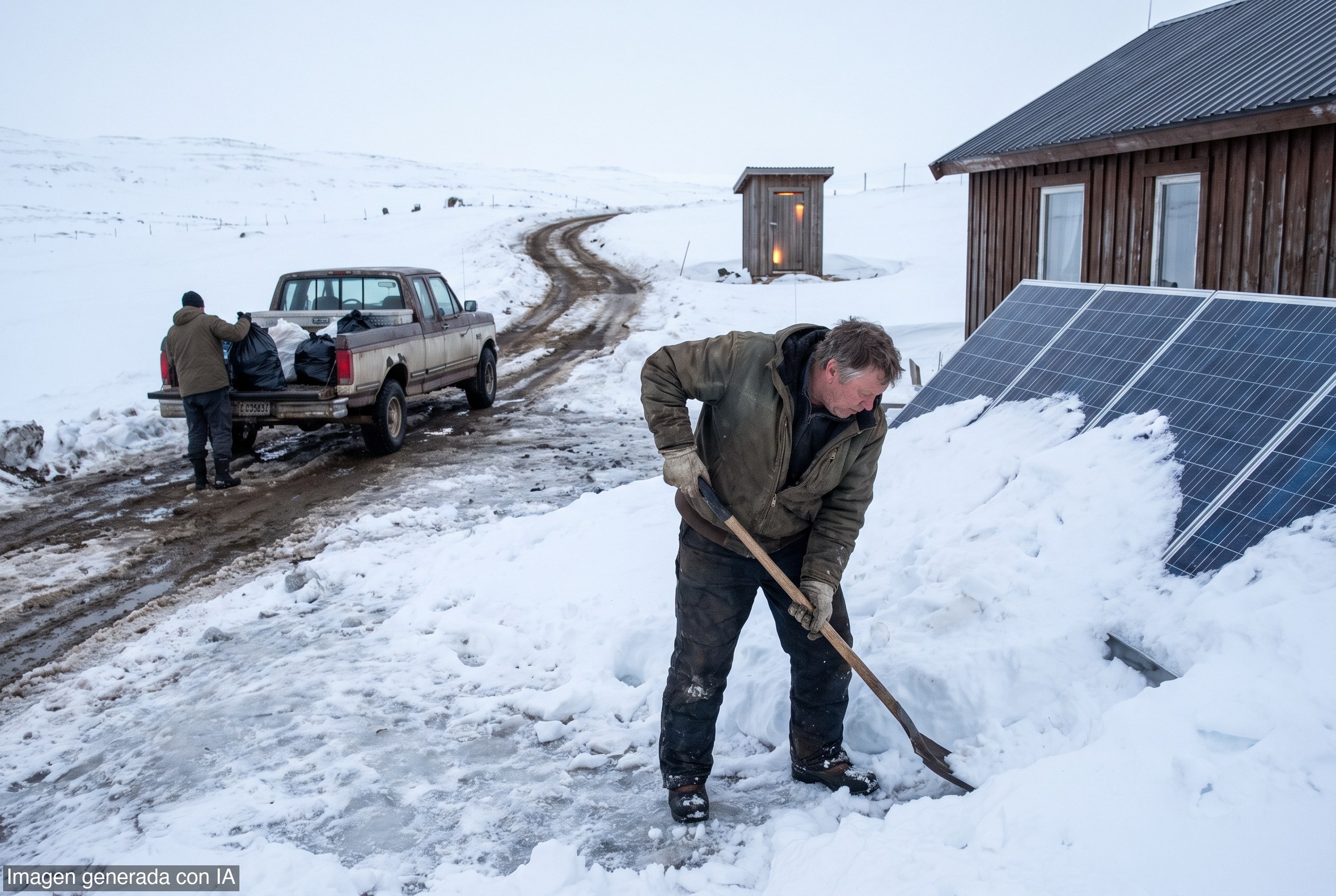
After relocating their solar panels from a ground-level stand to the roof for better coverage, the couple discovered a critical flaw: snow. When panels are fully covered, power stops. When power stops, the well pump stops. When the pump stops, the toilets stop — right in the middle of a family holiday visit.
The fix? Scooping snow from the courtyard into buckets, melting it down into what Serbell describes as 'a stew of dirty water and twigs,' then manually pouring the slush into both toilets until they flushed. Two family members had already used the bathrooms before anyone realized there was a problem.
The lesson: roof-mounted panels maximize sun exposure but create a single point of failure in snow country. Ground mounts are easier to clear. Redundancy is not optional.
Trash is a logistics problem, not a convenience
Rural dirt roads don't get trash pickup. Serbell and John drove roughly an hour round-trip to reach the dump. They stored waste in bungee-sealed plastic bins away from the house — leave them open and local wildlife turns your yard into a party.
The upside: when every piece of trash requires a dedicated trip, you get ruthless about single-use items fast. Inconvenience is a better teacher than any sustainability campaign.
Wildlife doesn't respect property lines
A badger had taken up residence under their workshop. Serbell had never seen one before, but a local game warden walked them through the solution: human urine and mothballs as deterrents. It worked.
Off-grid living means you are the facilities manager, the exterminator, and the utility crew — all at once.
The one perk that makes it click
During a massive regional power outage, the couple only found out about it when they drove into town and saw the crowd at the local store. Back home, everything was running normally. That moment captures the real value proposition: when the grid fails, you don't.
---
For founders, the off-grid playbook maps cleanly onto business resilience. Redundancy costs more upfront. Logistics that seem trivial at small scale become operational bottlenecks fast. And the systems you build for independence — power, water, waste — need to be stress-tested before guests arrive, not during the holiday dinner.
Self-sufficiency is a product you have to maintain. The founders who understand that build companies the same way: no single points of failure, real contingency plans, and the discipline to run the boring systems checks before the crisis hits.