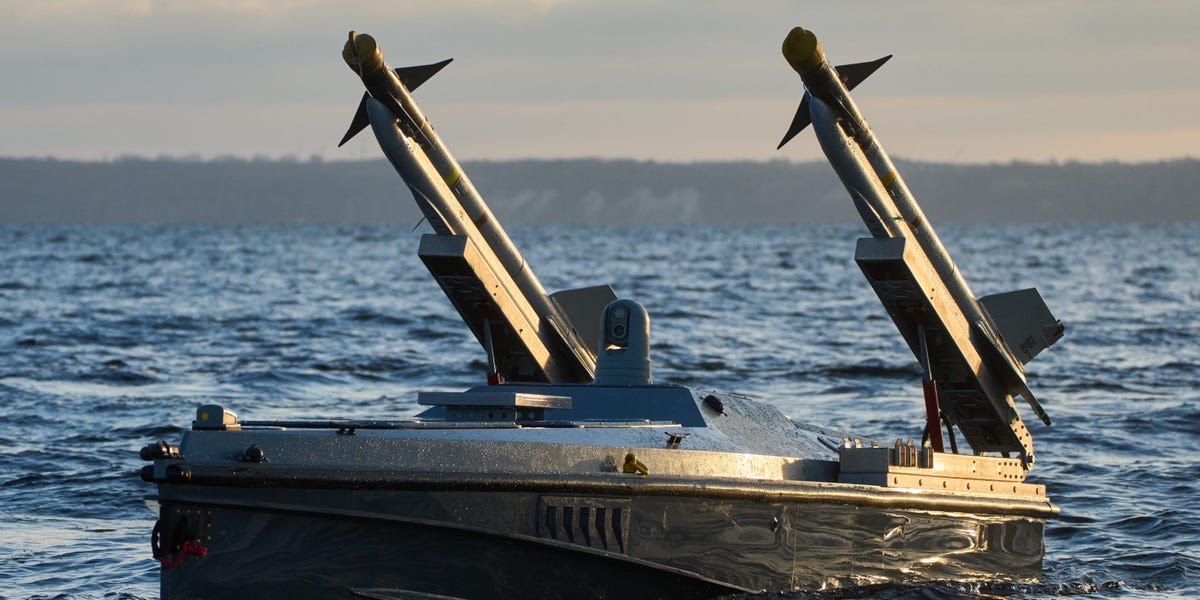
Ukraine's Magura naval drones were built to hit ships. They have since been used to hit helicopters, fighter jets and air defense systems on land. The company behind them did not plan for that.
"I didn't expect it," Oleg Rogynskyy, founder and CEO of UFORCE, told Business Insider. UFORCE was founded in Ukraine and is headquartered in London. Its Magura drone has been central to fighting Russia's Black Sea Fleet. Without conventional warships, Ukraine has damaged and destroyed Russian ships and pushed them away from a key port in occupied Crimea.
Ukraine says Magura drones armed with missiles have shot down Russian helicopters and fighter jets. Other mothership designs have launched FPV drones against air defense targets. Ukraine has reported that FPV drones launched from Magura boats have taken out S-400 launchers and other expensive equipment. After a strike in August, a GUR commander said this "marks a fundamental shift in the nature of the conflict."
Rogynskyy put the economics in one line: "That's the definition of asymmetric warfare right there, when a $40,000 drone can take out a $400 million" Russian air defense system. For founders, the math is the point. A cheap, mass-produced platform that can be redirected to new targets changes what a small player can afford to threaten.
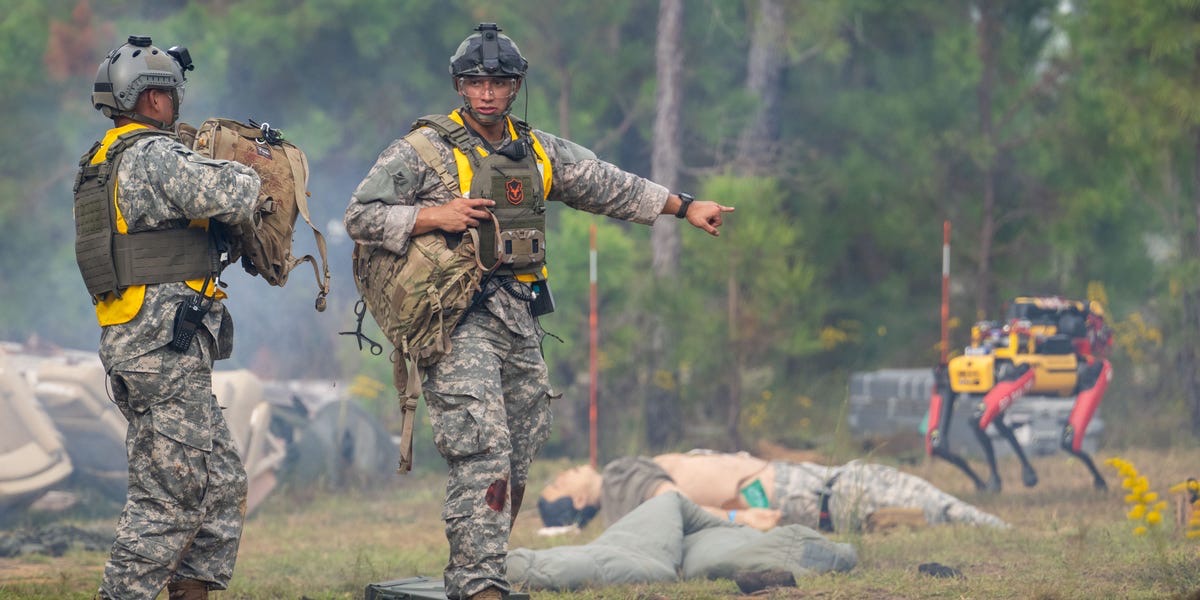
The pattern extends beyond one company. Ukrainian soldiers are encouraged to experiment with and modify their weapons, and units often have research and development teams near the front. Makers keep reporting that they were caught off guard. Achi, CEO of Ukrainian defense firm Ark Robotics, said soldiers have come up with "some really crazy ideas I would never imagine in my life." Oleg Fedoryshyn, director of R&D at DevDroid, said Ukrainian troops first proposed mounting RPGs on robots, and the company then helped make it work. David Roberts, CEO of ARX Robotics UK, called the Ukrainian armed forces "the absolute consumer innovators."
Naval drones are now doing far more than one-way explosive attacks. They launch missiles and drones, deploy uncrewed ground vehicles for amphibious assaults, and fight Russian naval drones in maritime gun battles. Sea drones are not new, but Ukraine is using them at scale and with a coordination not seen before.
Global navies are paying attention. Gen. Sir Gwyn Jenkins, the UK's first sea lord and chief of the naval staff, said in September that "it is no longer possible to defend a vast, contested ocean with crewed warships alone." The UK is pursuing a hybrid fleet in which traditional warships command maritime drones. Rogynskyy predicts that "pretty much every navy on the planet is going to be scaling itself using cheap, attritable, unmanned assets that are AI-controlled." Time will tell.
The lesson for founders is simple. Expensive, slow, centrally planned hardware is losing ground to cheap, modular systems that the end user can rewire on the fly. Markets reward the companies that let customers find the next use case, and that is exactly what happened on the Black Sea.