A physicist's paper may have taken a step toward one of the hardest problems in science, and the reaction tells founders more than the physics does.
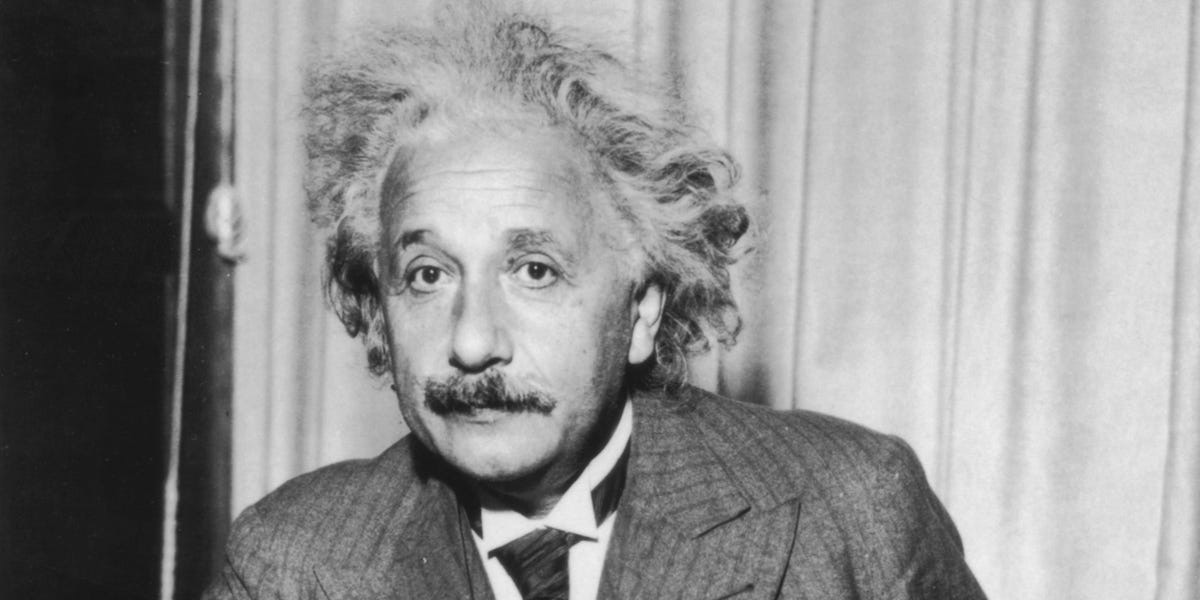
Venkatesa Chandrasekaran, a physicist at Stanford who is also employed at OpenAI, published a paper claiming progress on unifying two theories that govern how the universe works. On one side is general relativity, the framework for gravity Albert Einstein developed in 1916. On the other is quantum mechanics, which describes particles smaller than the atom. Each works in its own domain. Combining them has stumped physicists for about a century.
Chandrasekaran said he reached several calculations "through detailed, back and forth collaboration with GPT-6 Astra," and that the work consumed about 400 million tokens, the units AI models process and the basis on which AI companies charge for compute. The paper has not been peer-reviewed. It proposes a mathematical theory that, he says, combines the two frameworks under limited conditions.
The response has been sharp. In an X post, OpenAI CEO Sam Altman congratulated Chandrasekaran and called him one of the "earliest believers" that the company's then-current model could help solve Millennium Prize problems. In the paper's acknowledgments, Chandrasekaran thanked Altman and others at the company for providing compute and "encouragement throughout the project."
Critics were not persuaded. Jonathan Oppenheim, a physics professor at University College London, wrote in a Substack post that the paper "doesn't even come close to establishing a quantum theory of gravity." He said he dispatched a set of Claude agents to check the work, and they flagged more than a dozen issues. "We will keep getting false alarms like this one unless we find other ways to separate signal from slop," he wrote.
Peter Woit, a mathematician at Columbia University, went further, calling the paper a "publicity stunt" by OpenAI. He said he has reviewed thousands of papers making similar quantum gravity claims and none have held up. Hontas Farmer, a theoretical astrophysicist at Chicago State University, said the paper checks out but adds little, since it "does not propose anything testable" and overlaps with existing ideas.
Not everyone dismissed it. Nirmalya Kajuri, a theoretical physicist and science writer, said the paper does not solve quantum gravity but does move the theory forward. He noted that before the AI era, a paper like this would have drawn little attention. "It's an interesting project," he said. "Let us wait for another 400 milli tokens to see where it goes!"
Here's the playbook for founders. The math is simple: a bold claim without verification is a liability, not an asset. Founders who get this right treat AI output the way a careful operator treats a new hire's first report, with review before it reaches the market. Start smaller than you think: validate the core claim internally, invite outside scrutiny, and only then amplify it. The bigger the promise, the more the market will test it, and a company's reputation takes longer to rebuild than a headline takes to fade.