President Donald Trump has become the hottest topic on China's social media this week, and he hasn't even had to say anything. According to Business Insider, posts on Weibo discussing his visit to Shenzhen cumulatively hit over 200 million views by Thursday noon, local time.
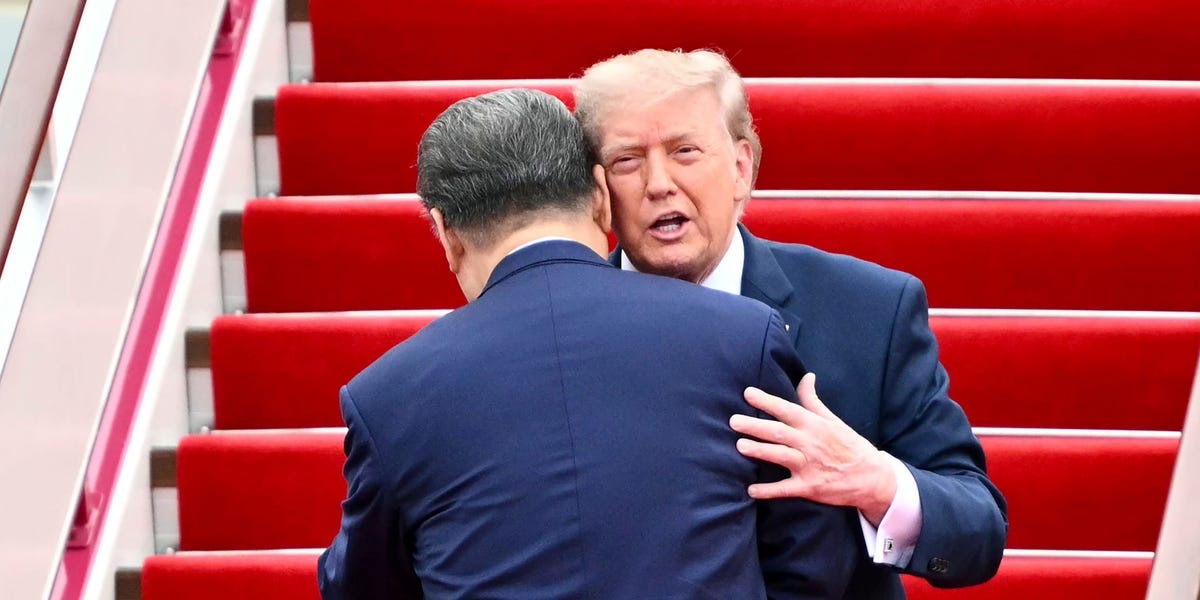
Trump arrived at the Chinese tech hub on Wednesday evening for the annual Asia-Pacific Economic Cooperation, or APEC, summit, hosted by Chinese leader Xi Jinping. Residents gathered near road barricades to snap selfies or record clips of the presidential motorcade. One topic covering Xi's red-carpet welcome for Air Force One reached the top of Weibo on Wednesday evening, with 120 million views.
The mood online was playful. "The fan support is wild," one blogger wrote. "Trump has beaten the entire Chinese entertainment industry." Memes and lighthearted jokes spread across the platform, though Weibo, like all official Chinese social media, is heavily moderated under Beijing's guidance.
The pattern is not new. Trump, who has remained a cult figure in China even while out of office, drew a similarly viral following when he visited Beijing in May. The hashtag #TrumpVisitsChina garnered 210 million visits within a day of his arrival that month. His predecessor, Joe Biden, never visited China during his time in the White House.
The business agenda is where the attention could turn into something useful. Trump is set to meet both Xi and Russian President Vladimir Putin this week in a trilateral meeting, with nuclear arms reduction a major topic. Trump has said he also intends to raise Ukraine, though White House officials later said it was not planned for discussion. Tesla CEO and SpaceX founder Elon Musk is joining parts of the trip, though he is not expected to take part in the official meetings. It is the third time Trump and Xi have met in person this year, with a fourth planned at December's G20 summit in Miami.
Here is the practical read for founders. Consumer fandom in China is a marketing fact, but it is not a market-entry strategy. Access to Chinese buyers, suppliers and capital depends on rules, tariffs and the terms of any deal, and those are still being negotiated at the level of governments. Watch what gets signed, not what trends.
The editorial takeaway is simple: a leader's popularity on a state-moderated platform says little about the freedom to compete there. Real opportunity for a small company comes from predictable trade terms, clear property protections and a level field against state-backed rivals. Summits can produce that, but only if the outcomes are written down and enforced. Until then, treat the headlines as weather, not a forecast.