Every founder knows the feeling: too many stakeholders, too many opinions, and no decision in sight. Our family ran into the same problem when we tried to plan a trip for 13 people, ranging in age from 8 to 80. The occasion was a celebration for Grandma and Grandpa's 80th birthday, and everyone wanted to be there. Agreeing on where to go nearly derailed the whole thing.
The trouble was that every group wanted something different. The kids needed adventure and other young campers to play with. The teenagers wanted freedom. The adults hoped to relax. And everyone wanted the birthday couple to enjoy themselves without spending the week keeping the rest of us entertained. From cruises to beaches, nothing satisfied the whole group.
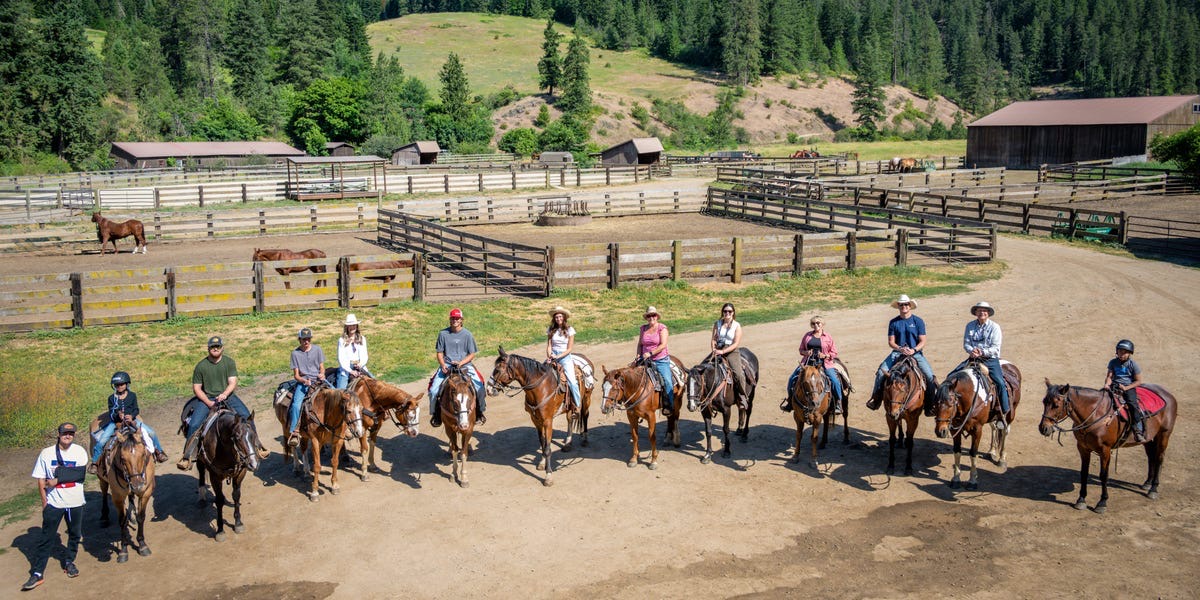
Then the 8-year-old twins suggested a dude ranch. It drew the fewest complaints, and in a family this size, that counted as enthusiasm.
Here's the playbook we used to evaluate it, and it works for any group decision.
Start with logistics. Before falling in love with a ranch, we checked how everyone would get there. A beautiful setting loses its appeal if the journey is exhausting, especially with young children or older relatives. We chose a destination everyone could easily fly to. A ranch within driving distance might make more sense for other families, depending on budget.
Next, look at lodging. Multiple cabins let us divide up without scattering across the property. The teenagers bunked together, couples had privacy, and we could walk to each other's cabins in a few steps.
Then build in variety. The ranch offered horseback riding, a pool, rock climbing, ropes courses, archery, shooting and mountain biking. Arts and crafts kept the younger kids busy while the camp staff ran the day's programming, which gave the adults real downtime. Choice is the real pressure release: nobody had to turn every morning into a family meeting about the agenda.
Feeding a group is often the most tedious chore of any trip. Someone has to find a restaurant, check the menu and confirm it can handle everyone. At the ranch, meals were handled, and the staff accommodated allergies and preferences. That alone saved hours of coordination.
Finally, protect space. Togetherness has limits, even among people you love. Anyone who wanted solitude could take a walk, fish alone or read with a view. Nobody had to keep pace with the most energetic person in the family.
The ranch worked because we could spend time together without negotiating every hour. We had places to gather and room to wander off. Founders who run distributed teams know that good structure creates togetherness, and that principle applies to family trips too.
What stood out most was that the best idea came from the youngest voices in the room. Their suggestion had the fewest objections because it made room for everyone's needs. For a big group, that is the whole game: find the option with the fewest complaints, then design it so that everyone gets a win.