Robotics is having a record year, and the numbers are hard to ignore. According to Crunchbase, robotics and physical AI companies have raised $97.3 billion across more than 1,200 deals globally so far in 2026. That is more than double the $47.4 billion raised in all of 2025.
The money is concentrated in a few places. Defense companies, particularly drone makers such as Anduril, Shield AI, Helsing, and Saronic, account for some of the largest rounds. Gené Teare, a research lead at Crunchbase, told Business Insider that drones attract more capital because the technology is more mature than other experimental areas of robotics.
Sanjay Aggarwal, a partner at the VC firm F-Prime, pointed to four drivers of the boom: growth in autonomous vehicles and defense, a push to revive domestic manufacturing, bets on 'once-in-a-generation' founders such as Jeff Bezos and Travis Kalanick, and futuristic technologies like humanoids. He expects the first three to keep attracting big checks in 2027, while investors scrutinize the fourth more closely. 'You can only raise money on the promise of future revenue for so long,' he said.
Here is what the leaders look like.
Waymo landed the sector's biggest round of the year so far. Its $16 billion Series D, announced in February, valued the company at $126 billion. Dragoneer Investment Group, DST Global, and Sequoia Capital led the round, with backing from Alphabet, its majority investor. The company operates in 15 US cities, with more planned for 2027.
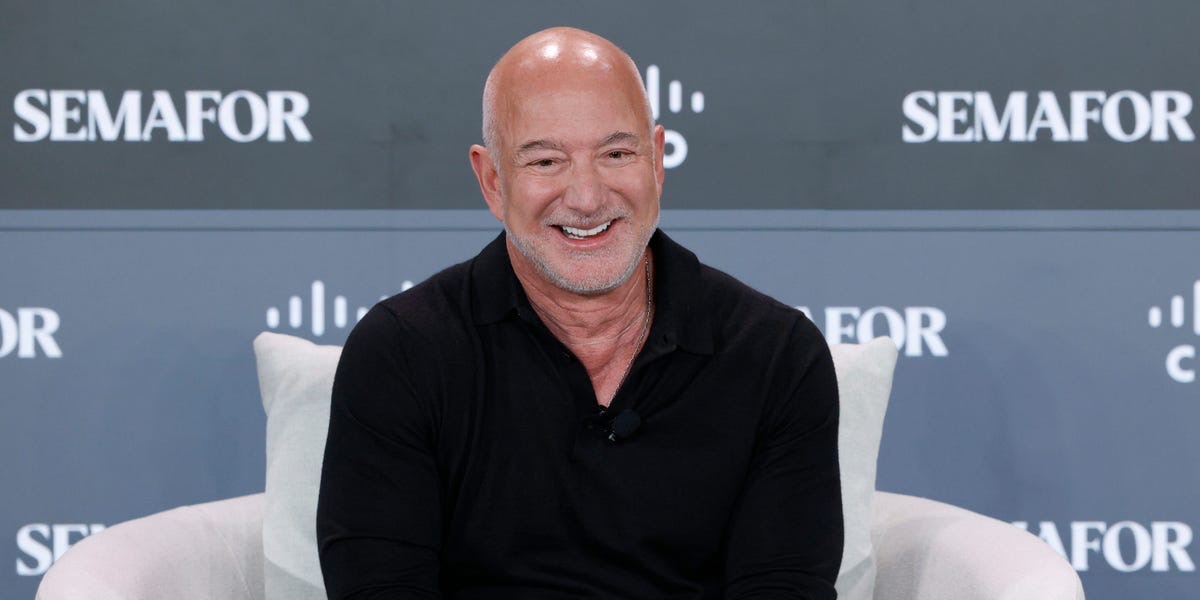
Jeff Bezos is back in the CEO seat at Prometheus, which he co-leads with former Google X executive Vik Bajaj. The company says it is building an 'artificial general engineer,' AI that helps engineers develop and test products in computer simulations before manufacturing them in the real world. Its $12 billion Series B, announced in June, valued it at roughly $41 billion.
Defense tech is the other big story. Anduril, the company Palmer Luckey cofounded nearly a decade ago, said it brought in $2.2 billion in revenue last year, more than double its 2024 figure. Its $5 billion Series H, announced in May, doubled its valuation to $61 billion, with Andreessen Horowitz and Thrive Capital leading.
Shield AI raised two $2 billion rounds this year. In November it announced plans to raise another $2 billion to help fund its acquisition of radar maker Echodyne, including a $1 billion Series H that values the company at $28.8 billion.
For founders, the takeaway is less about robots and more about the financing logic. Investors are paying for revenue that is already visible, for mature technology, and for projects with clear government or industrial buyers. Early-stage humanoid bets still face the hardest questions.
That is a sound discipline, and it is one your own fundraising should borrow. Know which of your revenue lines you can defend in a diligence room, and know which ones are still promises. Capital flows fastest to the first kind.
The free-market reading is this: a record funding wave is a vote of confidence in private builders who can ship products that customers pay for, not in grand plans. Defense procurement and domestic manufacturing are real markets with real buyers, and they reward companies that solve concrete problems. The companies that will still be standing when the cycle turns are the ones whose margins came from customers, not from the next round.


