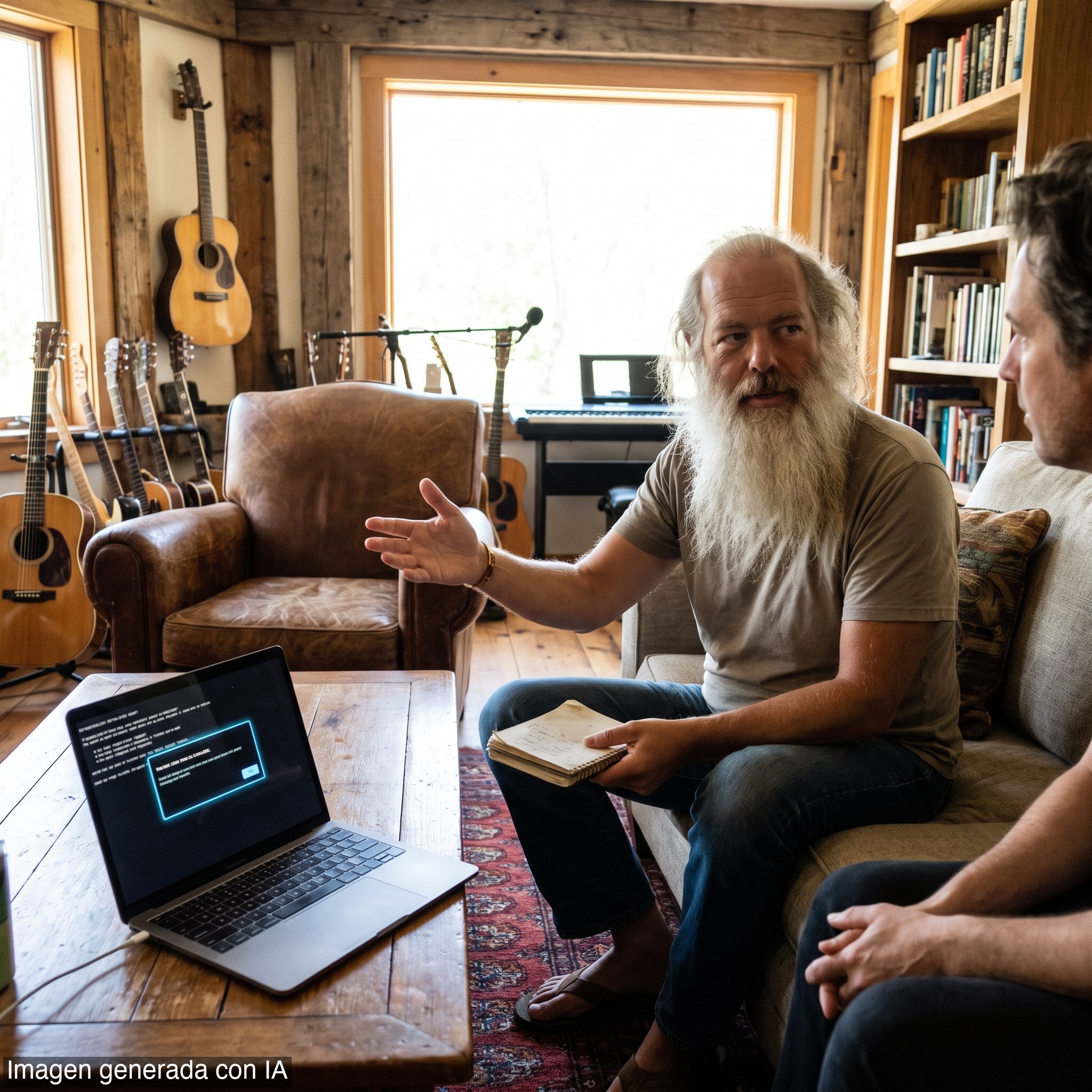
Def Jam cofounder Rick Rubin says AI can help people who do not consider themselves artists make art, including people who cannot draw or play instruments. On Monday's episode of 'Diary of a CEO,' Rubin said he sees prompting as part of the creative process.
'In my opinion, the creativity is there. It's not in the drawing. It's not in the finished movie,' Rubin said, describing AI as a tool that can help more people create. He said the finished work is only a small part of creativity, and that the real creativity is the idea that allows something to be made.
Rubin compared AI prompting to storyboarding in filmmaking, pointing to directors such as Alfred Hitchcock and Wes Anderson, who plan their films frame by frame before working with actors. 'AI could be a great tool to assist in this mocking up, but it's the prompt. The prompt is where the creativity is,' he said.
He also pointed to Andy Warhol's screen-printed celebrity portraits and the role of collaborators, saying that kind of creative division is nothing new. Rubin said Renaissance painters often worked with assistants, and modern musicians still rely on studio players to perform on recordings.
When asked how great artists would stand out if anyone could learn to prompt, Rubin said it comes back to whether the work moves people and makes them want to return to it again and again. Bartlett, the podcast host, said he liked a Spotify song less after learning it was AI-generated because it no longer felt tied to a real person's experience.
Rubin has made similar comments before. In a May 2025 episode of 'The Ben & Marc Show,' he called AI 'just another tool' to help artists bring their visions to life. Netflix co-CEO Ted Sarandos has said AI could help filmmakers make movies better and more efficiently, while Tim Burton has said AI copies of his work lack the 'humanity' and 'soul' of art made by humans.
The bigger business question is simple: if AI lowers the barrier to making art, the prompt becomes the new leverage point. That could broaden access to creation, but it also raises the premium on judgment, taste, and the idea behind the work.
Founders should read that as a familiar playbook. When a tool gets cheaper and easier to use, the advantage moves upstream to whoever can frame the problem better, direct the workflow, and ship something people actually want to come back to.