Recycling batteries sounds simple. The hard part comes first: someone has to sort them. Batteries come in different shapes, sizes and chemistries, and mixing the wrong types makes recycling less efficient and more expensive. That is the unglamorous problem Redwood Materials, the battery recycling startup founded by Tesla cofounder JB Straubel, says it has solved.
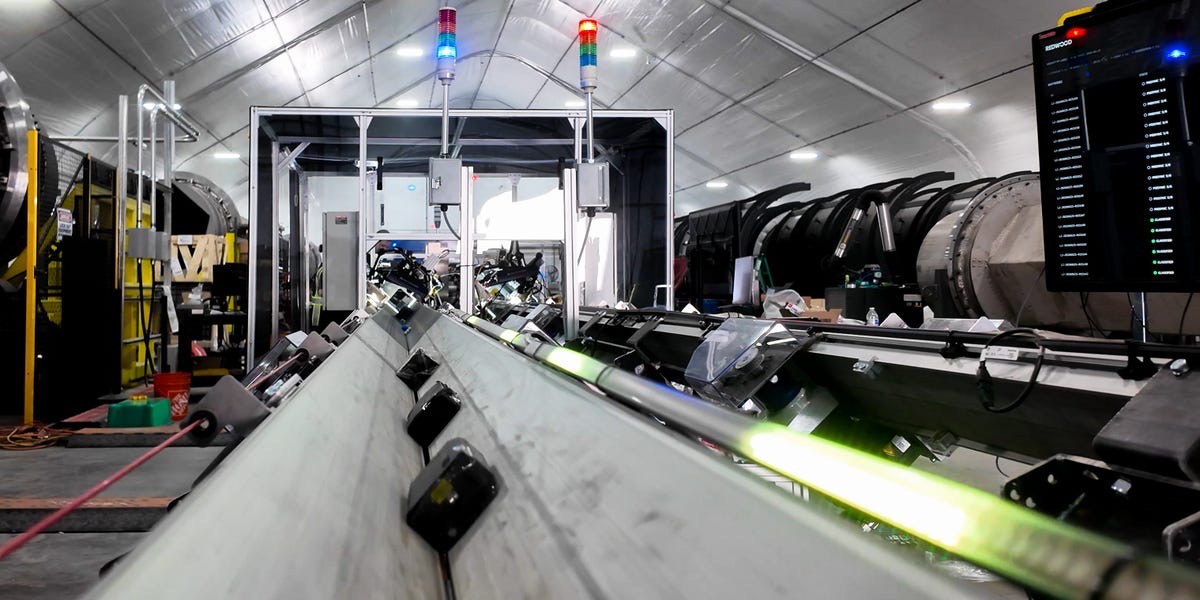
According to the company, its automated sorting system identifies batteries with more than 98% accuracy. The workflow is straightforward. Old batteries arrive in a jumble of boxes and bins. Machines line them up in a single-file stream. Each battery then passes through a tunnel fitted with cameras and sensors that read its label, shape and weight.
The AI model does the classification. It determines what kind of battery it is and routes it to the right recycling process. Redwood trained the model on its own battery data, and it runs on a cluster of GPUs on site. The system was built in just a few months and can handle several tons of batteries an hour.
Why does throughput matter? Because sorting errors are expensive. Every battery sent to the wrong process is a battery that has to be handled again, or a material that is lost. Accurate, fast sorting lowers the cost of getting value back out of spent batteries.
That value is the point. Redwood wants to recover lithium, nickel and cobalt rather than depend so heavily on mining and imports. For founders and investors, the lesson is about where the money sits: a company that turns an expensive waste stream into a supply of inputs has a business that grows with the volume of batteries in circulation.
The editorial reading here is simple. Private firms, not subsidy programs, are the ones solving the logistics that make domestic supply chains work. A factory that recovers its own materials is less exposed to foreign suppliers and to the price swings of imported minerals, and that is a competitive advantage American manufacturing can use.
The risk is that the economics have to hold at scale. A system that performs well on a few tons an hour has to keep its accuracy and its unit costs as volumes rise and battery designs keep changing. Whether Redwood can prove that over time will matter more than the headline accuracy figure.