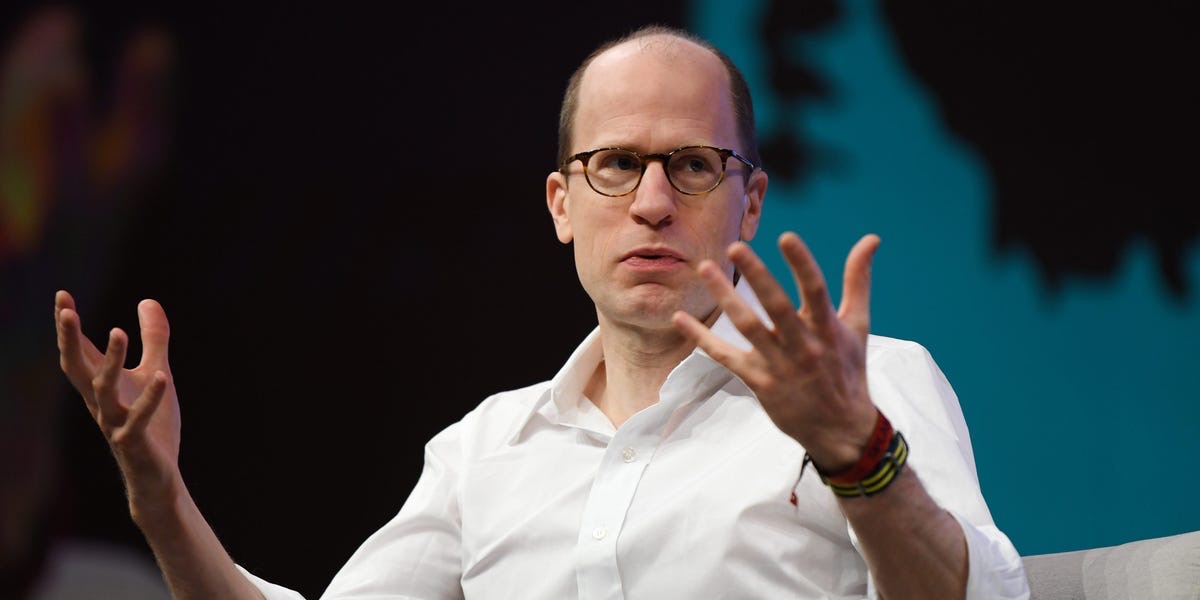
Nick Bostrom, a Swedish philosopher and former Oxford professor, has put a number on one of the most ambitious promises in technology. Speaking on an episode of the A16z show released on Thursday, he said humans could one day live for more than a millennium if AI unlocks breakthroughs in biomedicine and antiaging research.
"If you think about what our life expectancy would be if we weren't aging, it's something on the order of, you know, 1,200, maybe 1,400 years or so," Bostrom said. He added that the figure is "quite a conservative lower bound," because removing aging would also open other ways to reduce mortality risks, such as accidents.
Bostrom is not a newcomer to big claims about the future. He studies human enhancement and emerging technologies, and at Oxford he founded the Future of Humanity Institute in 2005 as a multidisciplinary research group. That institute eventually closed down in 2024.
His comments land at a moment when AI safety has become one of the most contested debates in the sector. Many researchers are calling for AI development to slow down so that alignment problems can be addressed and proper guardrails can keep advanced systems aligned with human interests. Bostrom acknowledged that the trade-off is complicated.
"I think that's only one of many different considerations that would come into an all things considered evaluation here," he said. "On the one hand, you might think that if you took some extra time with this AI transition, maybe we could build AI more safely."
He laid out the other side of the ledger just as plainly. "So you might think that if we spend more time doing AI alignment research, the existential risk from developing AI goes down at some rate," Bostrom said. "And then on the other hand, every year that we delay it, we have millions and millions of people dying."
That is the core tension for anyone building in this space. Slowing down is not free, in Bostrom's framing, because the cost of delay is measured in human deaths. Moving fast is not free either, because the risk of getting alignment wrong falls on everyone.
Here is the editorial reading. The prospect of a radically longer life is exactly the kind of upside that makes founders and investors want to race ahead, and it is worth taking seriously as a driver of capital and talent into biomedical AI. But a claim this large also deserves scrutiny rather than applause. Bostrom's 1,200 to 1,400 year figure is a theoretical projection about a world without aging, not a forecast any company can plan around. The practical lesson for leaders is to treat the upside as a long-term thesis and the safety debate as a near-term operating constraint.
Founders building AI products should read this as a reminder that the strongest pitch is one that can survive both the optimistic and the cautious questions. The math is simple: if the payoff is as large as Bostrom suggests, the cost of a safety failure is larger still, and the companies that treat alignment as part of the product will be the ones still standing when the timelines arrive.