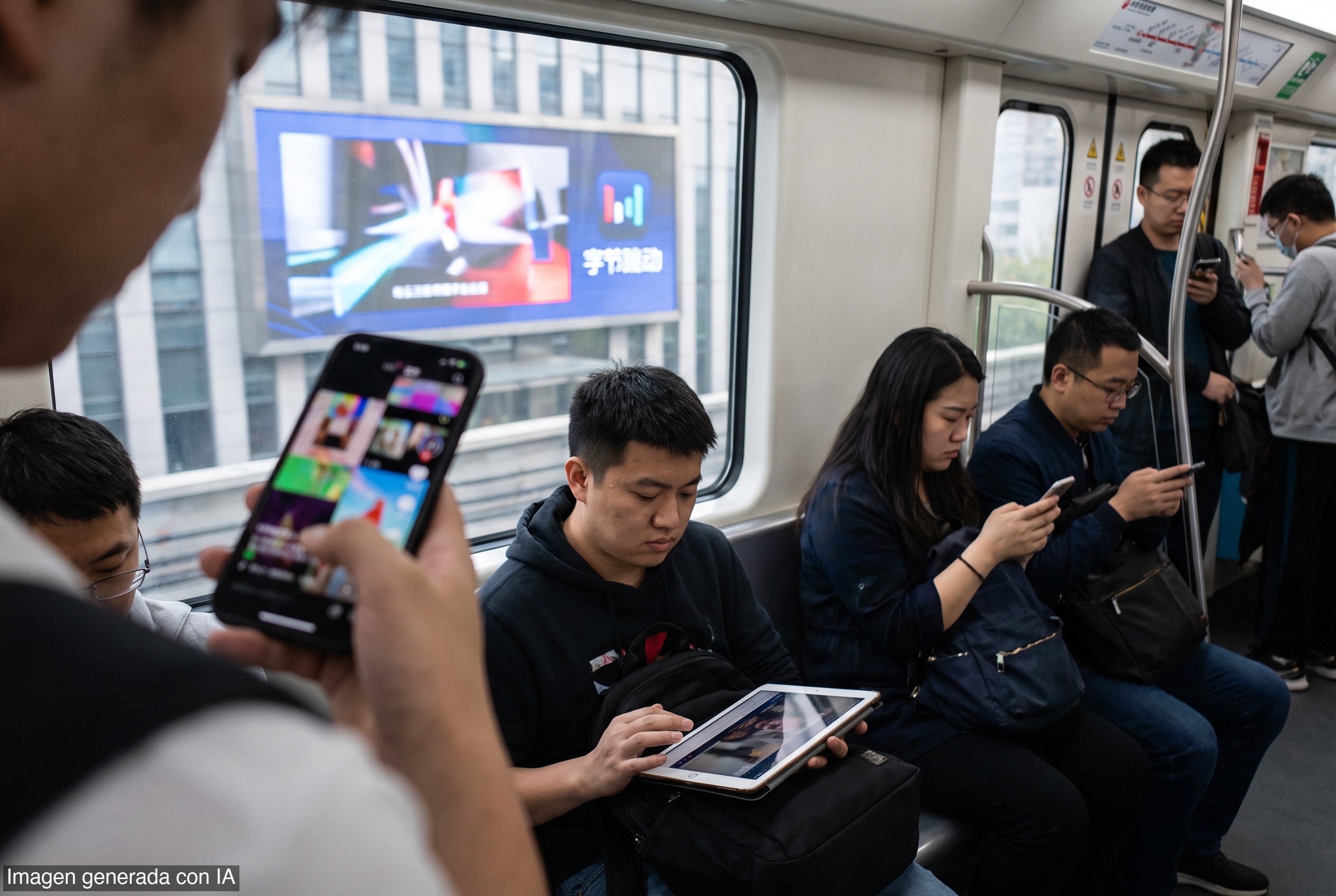
ByteDance’s short-drama app Hongguo is becoming one of China’s biggest streaming platforms.
In August, ByteDance’s apps accounted for 41.8% of the time users spent on China’s 50 biggest mobile apps, up from 34.2% a year earlier, according to Nomura’s China Internet and New Media Monthly App Tracker, published October 5. Much of that growth came from Douyin, the Chinese version of TikTok, and Hongguo, the short-drama streaming app.
Hongguo ranks fourth among China’s biggest apps, behind ByteDance’s Douyin, its Lite version, and WeChat. Launched in 2023, Hongguo runs on a free, ad-supported model. Chinese data firm QuestMobile said the platform had nearly 370 million users as of June.
The shift is not just about one app getting bigger. China’s long-form streaming services are losing ground. In August, the monthly time Chinese users spent on iQIYI fell 35% year-on-year, Tencent Video fell 40%, and Mango TV fell 27%.
Hongguo sits inside a wider short-drama boom in China. These shows are built for phone screens, with episodes lasting several minutes and storylines ranging from romance and revenge to fantasy and family feuds. The format is also taking off overseas. Omdia expects the US, its largest market outside China, to generate roughly half of the $3 billion in international short-drama revenue forecast for this year.
Omdia puts global short-drama revenue at about $11 billion in 2025 and expects it to climb to $14 billion by the end of this year. The format has also become a testing ground for AI-made video.
At the DBS Asia Future Forward Conference in Singapore on Monday, TikTok CEO Shou Zi Chew said AI video tools can help brands create ads at a fraction of the usual cost, and he said that trend is already playing out in China’s short-drama industry. Chew said he believed the 'overwhelming majority' of short dramas now being produced use AI models, including ByteDance’s Seedance.
For founders, the playbook is hard to miss: shorter content, lower production costs, and a product built for the device people already hold all day. Hongguo’s rise shows how fast attention can migrate when distribution, format, and pricing line up.
It also shows why scale matters in a market like this. A platform that owns more of users’ time can pull ahead quickly, while legacy streaming services lose share in a hurry. In China’s content economy, the winners are the ones that make consumption frictionless and monetization simple.