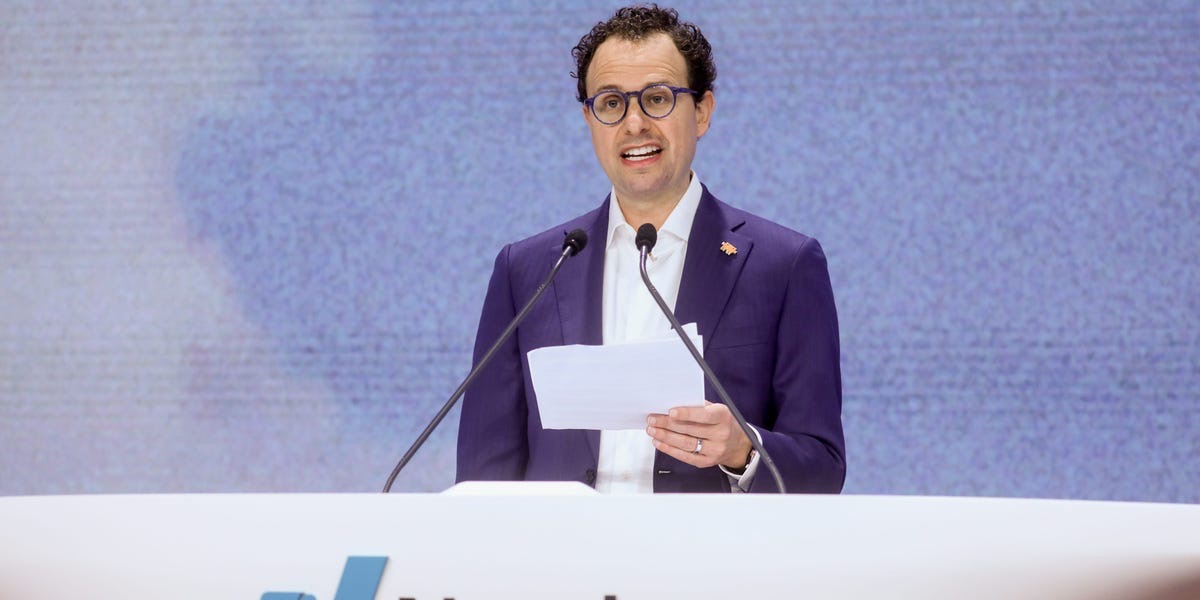
Anthropic CEO Dario Amodei has a message for his rivals in the AI industry: stop talking about human control and start showing it in your products.
In a lengthy post on X on Wednesday, Amodei said some AI executives are engaging in what he called 'vibes-based commercial and political positioning.' They repeat slogans like 'human control and agency' or 'AI should be just a tool,' he wrote, 'without actually doing anything different in their products or taking seriously the difficult questions that lie behind these slogans.'
The post came in response to a report from Axios that some Anthropic employees favor handing certain decisions to superintelligent AI. According to Axios, the report cited Amodei's past remarks and noted that rival executives had defended human control without naming Anthropic.
Amodei pushed back on the idea that he wants AI to govern society. He called it 'absurd' to suggest he wants humans to surrender their free will to machines, and he said handing political control to AI would be a 'terrible idea.' He drew a clear line between governing and doing work. 'This is not AI running the world,' he wrote, 'but AI driving a car, designing a cancer drug, or writing software end-to-end.'
His position on automation is more nuanced than a simple yes or no. 'AI doing more complete or larger tasks is economically valuable and can drive important advances in software, medicine, transportation, energy, etc.,' he wrote. He added that it is 'clearly desirable in many cases and will save a lot of lives.' He also said that he does not believe other AI leaders hold significantly different views on whether specific tasks should be automated.
The caveat is labor. Amodei acknowledged that in some contexts, using AI in too end-to-end a manner may cause serious job disruption, and that it may make sense to slow or even stop some deployments to give people more time to adapt. He also said that in a February interview with The New York Times, he argued that in many cases society does want to stay in charge, even when humans on average make worse decisions.
For founders, the signal is practical. Automation is the product strategy, and it is also a reputational and regulatory exposure. Companies that ship end-to-end automation will be asked to show how they manage the people whose work changes. Amodei's argument is that the honest move is to name the trade-off, not to hide behind slogans.
The editorial reading here is that free enterprise depends on the freedom to build tools that create real value, from medicine to transportation, and that the market should be the place where those tools prove themselves. Amodei's critique of 'vibes-based' positioning is a warning against using political language as marketing. Founders who build in this space should expect scrutiny, and they should earn their credibility with specific product choices rather than with slogans.