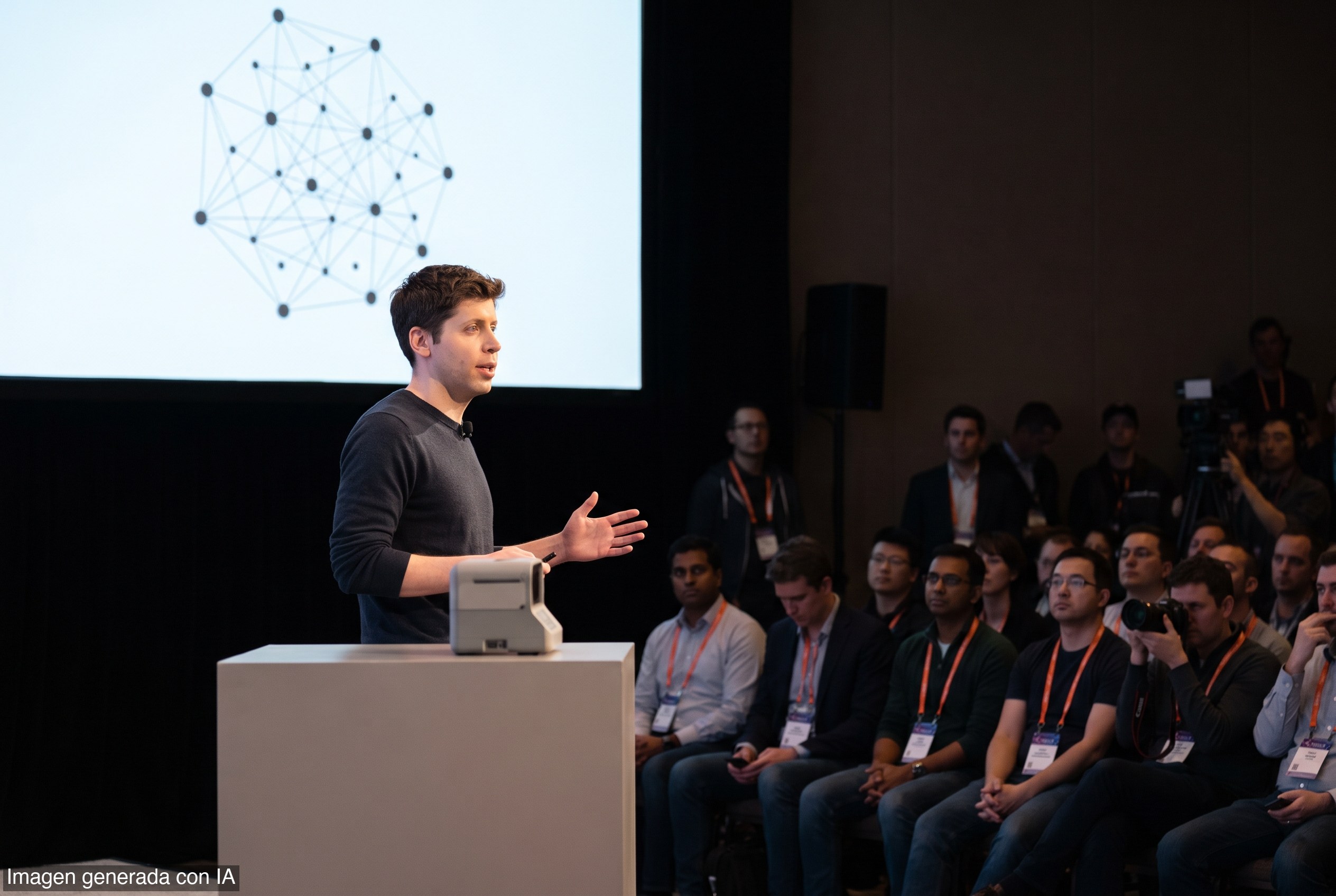
OpenAI CEO Sam Altman used the company's DevDay conference in San Francisco to sketch a bigger ambition for AI and to question one of the industry's core pricing units.
Altman said AI should have a greater impact on the world than the Industrial Revolution, but he argued it should 'focus more on empowering people.' He added, 'I don't think the purpose of this technology is to just sort of like, turn the economic crank faster and faster for the sake of AIs.'
He also said tokens are a 'terrible metric for a bunch of reasons,' including that different models can use different numbers of tokens to complete the same task. OpenAI and other companies use tokens to price their models, and Altman said customers have pushed back on eliminating them because they want an 'underlying basis' for what they pay.
The company also announced a new AI agent product called Dots. Altman said it would be 'reasonable to assume' the tool could run inside a new OpenAI device. For now, he said the agent helps him feel calmer about his to-do list and has made him feel 'less attached' to his smartphone.
On AI safety, Altman said the debate is often framed too simply. He described one side as people who want to keep quickly ramping up AI capabilities and another as people who want development fully paused or shut down. He said both paths could create problems, from loss-of-control incidents to a concentration of power if development stops.
'Energy and ambition are still needed,' but Altman said safety has to stay ahead of capabilities. 'I think as an industry, we need to navigate this centrist path,' he said.
Altman also addressed job anxiety around AI. He said some classes of jobs will 'totally go away,' but told a young attendee that this is 'the best time to be entering the job market, except hopefully all the time in the future.' He argued that doom-and-gloom forecasts underestimate how much the economy will grow.
The bigger story for founders is simple: OpenAI is trying to shape not just the tools people use, but the rules and pricing logic around them. That matters because when the dominant platform questions how the market measures value, the rest of the industry has to follow or get left behind.
For customers and builders, the bet is whether AI becomes a productivity layer that creates more revenue per worker, or a system that keeps charging by the token while promising a bigger payoff later. Founders who get this right will care less about the hype and more about which metrics actually map to customer value.