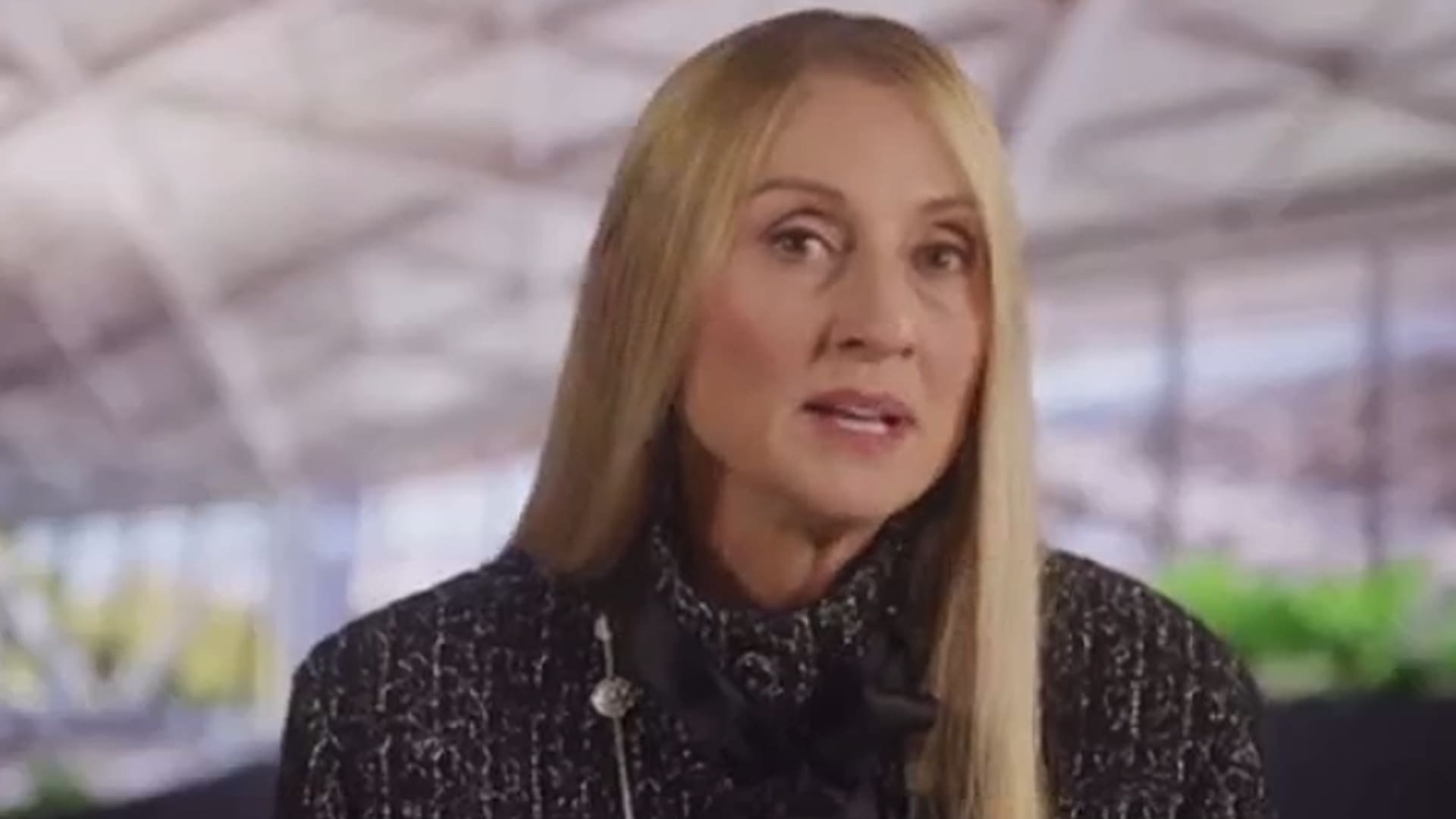
Five days after Jensen Huang resigned from the company he co-founded 33 years ago, Nvidia's shareholders got their first look at the new leadership. Colette Kress, now interim CEO, used the company's earnings call to tell Wall Street that nothing has slipped.
"We've engaged with our customers, we've engaged with our suppliers, our partners, they're all 100% behind us," Kress said on the call. She also said leaders from Taiwan Semiconductor Manufacturing Company, Nvidia's most important supplier, visited company offices this week.
The numbers back up the message. Revenue more than doubled in the latest quarter to $115.84 billion, and Nvidia projects roughly 90% growth in the current period to about $130 billion. Kress also said the 70% growth forecast offered over the summer is now too low, and raised it to 75% for next year. For a company whose revenue has grown about 15-fold since ChatGPT launched in late 2022, that is a striking claim to make in the middle of a leadership crisis.
The stock tells a more cautious story. Shares climbed almost 5% in extended trading after the report, but they remain in a deep slump after a 24% drop so far this month. Investors are weighing concerns about a slowdown in the AI buildout, a political handoff in Washington, and the turmoil at the top of the company. Analyst Dan Ives of Yorkville Ives put it simply in a note after the report: "demand did not leave with him."
The board has also been direct about why Huang left. Harvey Jones, the newly named board chair, said he resigned after "disclosure of personal behavior inconsistent with the company's code of conduct, standards and cultural norms," the first time the board had given a reason. A day earlier, CNBC reported that the board is not considering bringing Huang back as CEO.
Kress framed operations as "business as usual." Nvidia said its Vera Rubin AI system is off to an "extraordinary start," with $20 billion in sales last quarter, and that its roadmap is "on track." Stepped-up share buybacks are still under way, and the board added $150 billion to the repurchase authorization.
There was one notable shift. Kress said Nvidia is being "disciplined" about financing startups and is choosing investments more carefully, a signal that the company is less willing to backstop certain projects.
Neither Kress nor Jones addressed the investigations and hearings in Washington into allegations that Nvidia inflated revenue by selling chips to intermediaries for buyers in China. China came up only twice on the call. Kress said Nvidia sold about $2.4 billion in approved data center products there during the quarter, stopped selling licensed Hopper chips to China, and noted that new U.S. Commerce Department trade rules will cut off Chinese access to renting Nvidia chips. Nvidia also said its quarterly filing will be published in the "coming weeks" rather than on earnings day, a departure from the norm.
For founders, the lesson is about dependency. Nvidia's customers, from hyperscalers and neoclouds to frontier labs like OpenAI and Anthropic, still need its chips and capital. That is good news for the AI supply chain, and it is also a reminder that one company's demand can shape a whole market. If you build on top of a supplier that dominates its category, track its governance and its customer concentration as closely as its product roadmap.
The free-market reading is straightforward. A company that can lose its founder and still sell $115.84 billion in a quarter is showing the value of a business built on real customer demand rather than one person's charisma. Shareholders bear the cost of the turmoil through the stock slump, and the market is pricing that risk in. The question for the sector is whether investors reward that discipline over the long run, or whether the next leadership shock finds a company that never built a bench.


