Scale.
The Latest
NBC Pulls Anti-Israel Ad From 'SNL' Special After Backlash Over $400 of 'Taxpayer Money'•Jensen Huang's Nvidia Comeback Could Usher in an 'Age of Resentment,' Warns Economist Steve Hanke•The Army Has Received Just 180 of Nearly 12,000 Abrams Rounds Due by Summer, and Taxpayers Are Still Paying•Why One Parent Swapped Christmas Gifts for Family Trips, and What It Actually Costs•Musk's Free SpaceX Shares for Every Child: A Gift Worth Watching, and a Reminder That Stakes Beat Subsidies•I Spent a Day Riding, Eating and Cleaning With Robots. Here's the Free-Market Scorecard.•A Budget Traveler's Honest Take on ASKY Airlines: Cheaper Than You Think, Less Consistent Than You'd Like•A Texas Relocation Broker Is Heading to Florida, and Her Clients Say the Tax Math Is Next•Booking Your First Cruise? Here Are the 7 Costs and Surprises Founders Should Plan For•Shake Shack's Holiday Shakes Ranked: The Christmas Cookie Is Sweet, the Hazelnut Chocolate Is Worth Watching•NBC Pulls Anti-Israel Ad From 'SNL' Special After Backlash Over $400 of 'Taxpayer Money'•Jensen Huang's Nvidia Comeback Could Usher in an 'Age of Resentment,' Warns Economist Steve Hanke•The Army Has Received Just 180 of Nearly 12,000 Abrams Rounds Due by Summer, and Taxpayers Are Still Paying•Why One Parent Swapped Christmas Gifts for Family Trips, and What It Actually Costs•Musk's Free SpaceX Shares for Every Child: A Gift Worth Watching, and a Reminder That Stakes Beat Subsidies•I Spent a Day Riding, Eating and Cleaning With Robots. Here's the Free-Market Scorecard.•A Budget Traveler's Honest Take on ASKY Airlines: Cheaper Than You Think, Less Consistent Than You'd Like•A Texas Relocation Broker Is Heading to Florida, and Her Clients Say the Tax Math Is Next•Booking Your First Cruise? Here Are the 7 Costs and Surprises Founders Should Plan For•Shake Shack's Holiday Shakes Ranked: The Christmas Cookie Is Sweet, the Hazelnut Chocolate Is Worth Watching•
Scale.
Sections
The outlet
Startup

Why David Rubenstein says sports teams can still make money, and why he is cautious on AI

The Carlyle cofounder says he bought the Orioles to do something for Baltimore, but also because team ownership now offers both status and returns. He also flagged the same bubble risk he saw in the dot-com era: not every hot AI winner will survive.
SEP 25, 2026
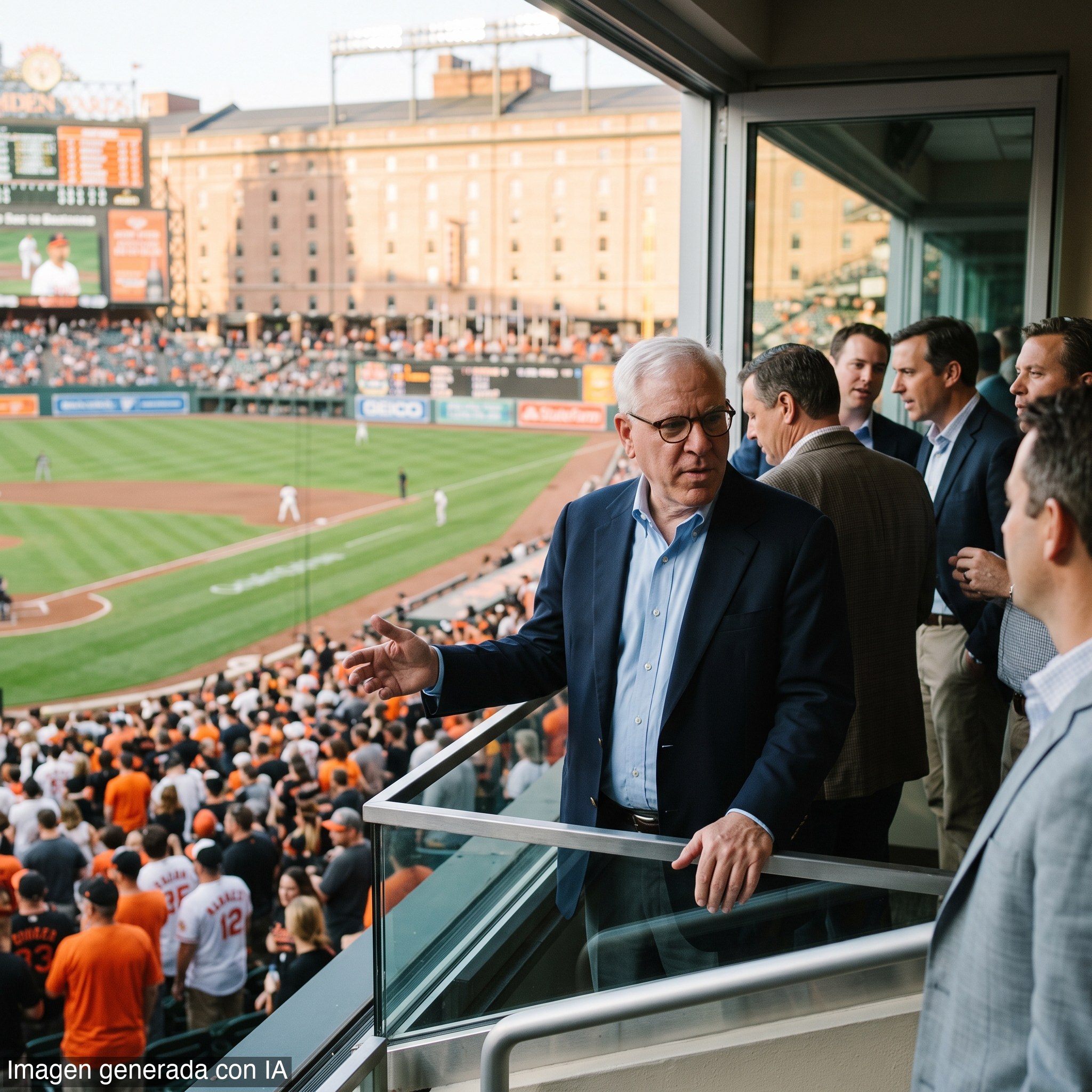
Photo: Imagen generada con IA

David Rubenstein says the math behind buying a sports team has changed.

The Carlyle Group cofounder, who is the principal owner of the Baltimore Orioles, said a few decades ago the ultrawealthy did not want the scrutiny that came with owning a team. Today, he said, changing attitudes and soaring valuations mean owners can 'have some fun' and 'actually make money on it.'

Rubenstein bought the Orioles for around $1.7 billion in 2024. He said he wanted to 'try to do something for the city' because he had not done much on the philanthropy front for his hometown of Baltimore.

He also opened up about his biggest investing mistakes. Rubenstein said his best investment was likely 'starting Carlyle with hardly any money,' while his gravest error was 'walking away from Facebook and Amazon at the beginning.'

He said Jeff Bezos gave him and his partners at Carlyle a stake in Amazon at the very beginning, but they sold after Amazon stock collapsed during the dot-com bubble. That position would have been worth 'many billions of dollars today.' He also said he did not take seriously a request to invest in Facebook when Mark Zuckerberg was seeking to raise $30,000 to launch the website.

On AI, Rubenstein sounded careful, not euphoric. He said AI company valuations are 'really, really high' and hard to justify with earnings in some cases, even as he pointed to Nvidia's recent blockbuster results as proof that it is 'not all pie in the sky.'

He compared the moment to the dot-com era, saying not every AI company will survive and make money. But he added that the hot names 'probably will continue to do well for some time.'

Rubenstein also said he is wary of aggressive accounting, circular financing, hidden debt, and overinvestment in AI. Quoting Warren Buffett, he said that 'when the tide goes out, we'll see who's been swimming without a bathing suit.'

For founders and investors, the playbook is simple: bubbles punish blind momentum, but they also reward patience. Rubenstein's warning is not that you should avoid every hot market. It is that you should know the difference between price and durability before you commit capital.

The deeper lesson is about discipline. When markets are booming, it is easy to confuse hype with a real business. When they crack, the winners are usually the people who stayed selective, kept cash discipline, and did not sell everything at the first sign of fear.


CB
Casey Bramwell
Startup Columnist

Casey Bramwell covers the zero-to-one years — ideas, first customers, fundraising and the unglamorous work of getting a company off the ground.

More from Startup

Booking Your First Cruise? Here Are the 7 Costs and Surprises Founders Should Plan For
Shake Shack's Holiday Shakes Ranked: The Christmas Cookie Is Sweet, the Hazelnut Chocolate Is Worth Watching
Norse Atlantic Grounds Every Flight as Taxpayers and Travelers Pay for a Budget Model Blown Apart by Fuel
