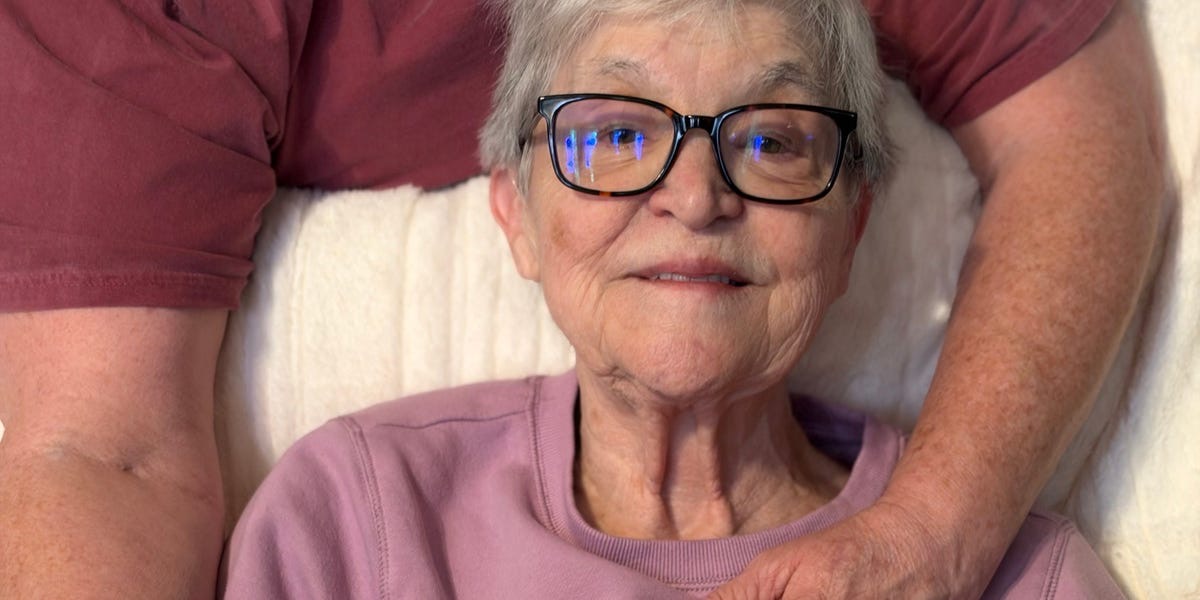
Michelle Gooden, 52, had built a career in marketing in Fredericksburg, Virginia. Then, in March 2024, her brother Jeff called to say their parents were far sicker than they had admitted. Both had fallen, and both had been in and out of the hospital and rehab with serious conditions, including cardiac arrest and a broken tailbone.
Gooden flew to Austin, where she found her mother weighing 90 pounds and her father unable to walk, cook, feed himself or use the bathroom. Independent or assisted living in Austin would have cost between $7,000 and $15,000 a month. The couple had a reverse mortgage on their house and were falling behind on bills. There was no way to pay for professional care.
So Gooden and her wife, Joy, moved her parents into their home. Her mother had to leave her church friends and drive 1,200 miles, agreeing to try the arrangement for six months. The couple set up a large bedroom and private bathroom, which they called the 'apartment,' and hung a wreath on the door. Gooden became an unpaid, full-time caregiver, and later her father's end-of-life carer. He died in February 2025.
Her mother now has mild vascular dementia, along with four different cancers and a stroke and heart attack on record. Gooden handles cooking, cleaning and the drive to medical appointments. Joy manages the prescriptions. Gooden admits the work leaves her frustrated and overwhelmed, and she thinks often about her lost salary and career opportunities. The strain has reached her marriage, where she and Joy barely have time for a date.
Here is the math that matters to anyone running a household or a small business. A paid care facility at the low end of the quoted range costs $84,000 a year. Gooden's labor is not in that figure, and it does not show up in any budget. It is a transfer of cost from the market to one family member, with no paycheck, no retirement contribution and no benefit to her own household finances. Her lost salary is a real economic loss, even though it never appears on a ledger.
The skit that prompted her reflection, a Saturday Night Live sketch about brothers who leave the work to their sisters, struck a nerve because it describes a pattern many families know. Gooden hopes it will push siblings to have hard conversations about eldercare before a crisis forces a decision. Those conversations are a practical planning exercise: who is available, who can contribute money, and what the household can sustain over years, not months.
Gooden also points to a quieter benefit. Her brother Jeff, who lives a 15-minute drive from their parents, calls his mother at least twice a week. Distance has not erased the relationship. Gooden says her own bond with her mother grows stronger every day, and she calls the time a privilege. That is the trade she made: a career for a closer family, with costs that the market never priced and no one signed up to pay.


