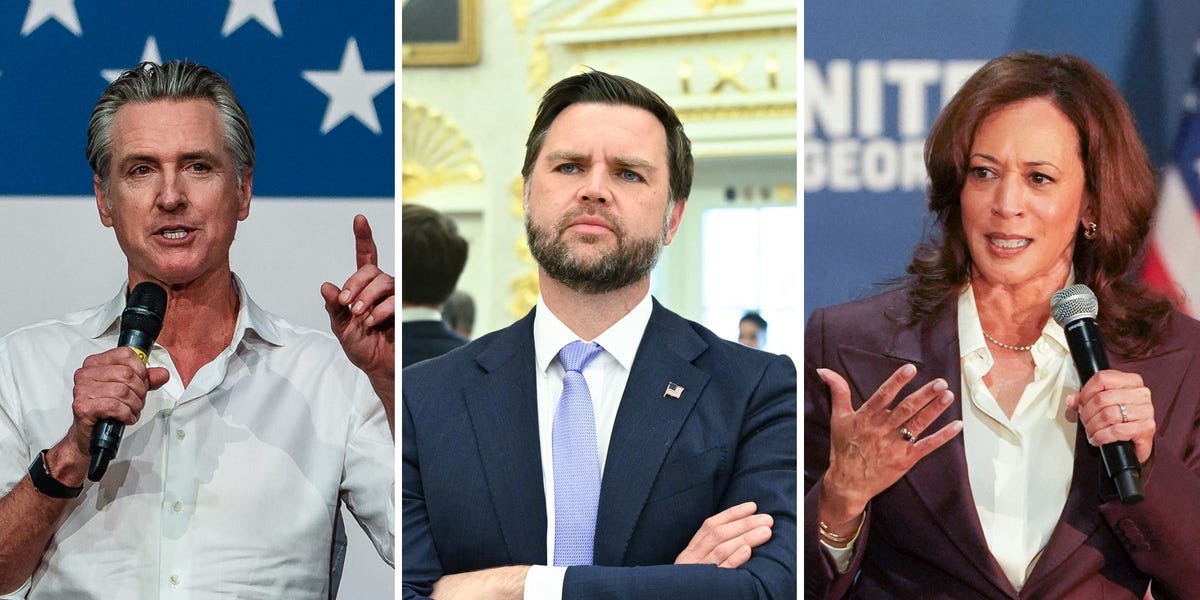
The race for the 2028 presidential election has, unofficially, begun. After the Democratic wave in the early-November midterms, both parties are starting to look past 2026 toward their next presidential nominees, and a wide range of political figures are already making moves that could lay the groundwork for a White House bid.
On the Republican side, Vice President JD Vance is widely seen as Donald Trump's heir apparent and the most obvious contender. As the first in line in the presidential succession, he holds the strongest starting position. But the GOP's midterm losses have raised questions about whether his close alignment with Trump, and his tie to some of the administration's most unpopular decisions, could become a liability. Vance has said he has not made up his mind and that he and his wife would weigh 'what comes next for our family.'
Marco Rubio, who holds several roles in the Trump administration, has also come up as a successor option. Trump said in a recent interview that 'Marco's great' when asked about candidates other than Vance. Rubio has said he 'literally will not talk about 2028 anymore' and that he would back Vance if Vance runs. Former Florida Governor Ron DeSantis, who ran in the 2024 Republican primary, has not announced a bid but has declined to rule one out. 'If there's an opening, there is an opening,' he said at the University of Notre Dame. He also rejected a Washington Post report that he had contacted a potential campaign consultant: 'I have not called a single person.'
On the Democratic side, the field is crowded. Former Vice President Kamala Harris, the 2024 nominee, has name recognition, a large national donor network and strong backing within the party, though some Democrats worry her association with the Biden administration could be a drag. She has said she is considering another run. California Governor Gavin Newsom, who is leaving office, has become one of his party's most visible national voices, and he has said he is considering a run but will not enter the race if Harris does. Pete Buttigieg, the former transportation secretary, says he is 'more inclined than not' to run again. Pennsylvania Governor Josh Shapiro, who won a commanding reelection, says his focus is on governing his state. Senator Jon Ossoff, who won reelection in Georgia, has repeatedly said he is not running in 2028.
What ties this field together is the math of the midterms. Candidates who can win in closely divided states, and who can show they can govern, look stronger in a national contest. Candidates tied to the most unpopular decisions of the current administration, or to the past one, carry baggage that voters and donors will weigh.
For a free-market reader, the question is not only who wins the nomination but what each contender would do with the public purse and with the regulatory state. Taxpayer money, federal spending and the reach of the administrative state will be central to any platform, and the candidates' records on those issues deserve scrutiny well before the primaries begin.


