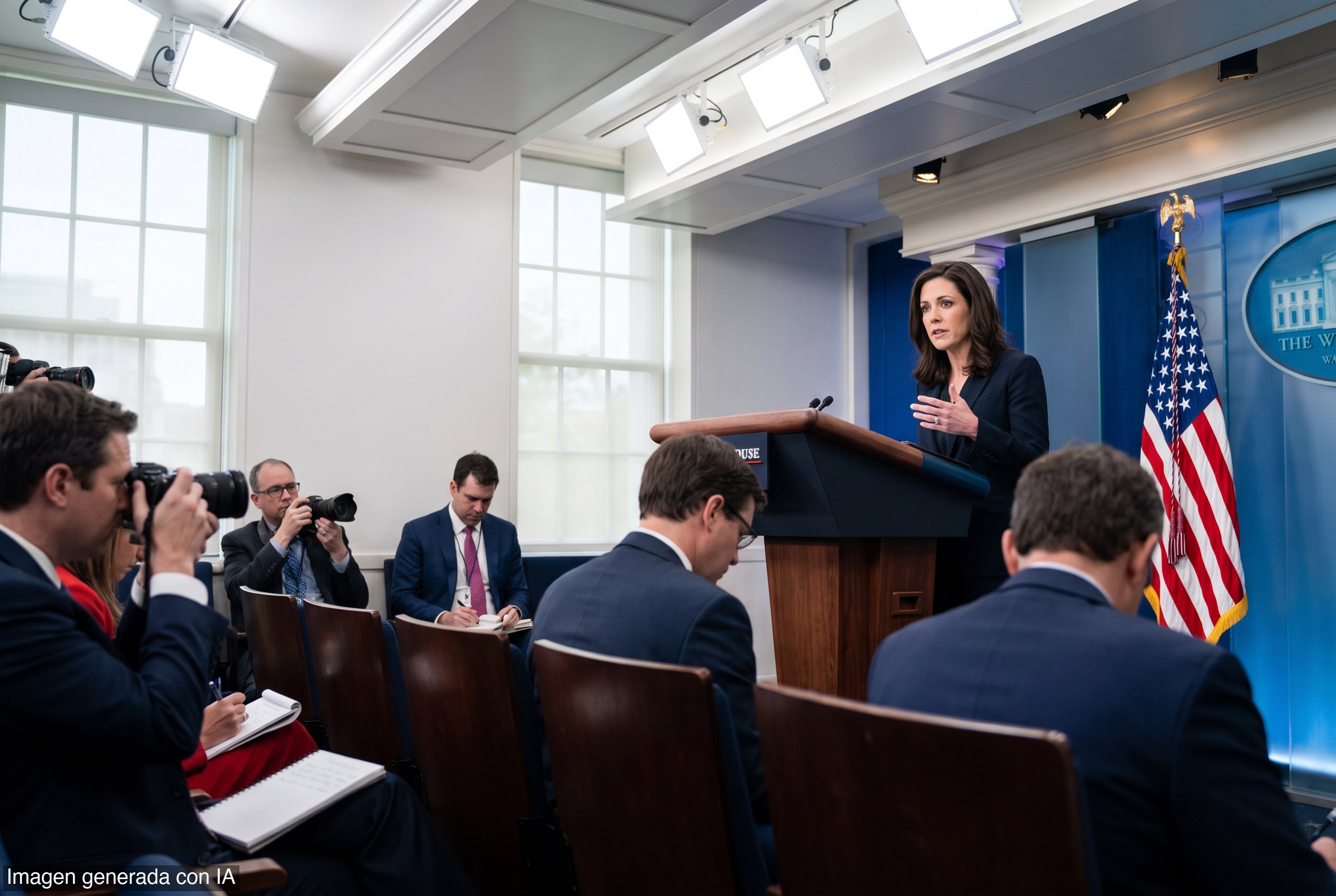
White House press secretary Katie Zacharia is defending her decision to call herself a lawyer after new questions surfaced about her legal credentials.
Reports cited by multiple outlets say Zacharia took the California bar exam after graduating from Pepperdine Law School in 2011, but did not pass. In an interview with Jack Posobiec on Real America’s Voice, she did not deny failing the exam. Instead, she said the bar results were 'somewhat inconsequential' because she knew she would not need the bar in China.
Zacharia said she moved to Beijing after law school and took a role in the international practice division of a Chinese law firm. She said she worked on 'multi-million dollar' shareholder agreements and cross-border transactions, and that she was 'one of four associates under a senior partner.' She also said there was no Chinese bar and that her law degree gave her enough credentials to do the work.
The controversy has centered on the word choice itself. Zacharia said she consulted people in the legal field 'for a very long time' and was told it was acceptable to call herself a lawyer and provide legal analysis, not legal advice. She said, 'I was very careful how I executed this, and I never came across as someone who was an attorney at law.'
The scrutiny intensified after her first White House briefing, when she appeared to stumble while answering a question about where she passed the bar. She later told The New York Times that she misunderstood the question. The Wall Street Journal reported that Zacharia failed California's bar exam, and Business Insider said a review of records in all 50 states and the District of Columbia found no evidence that she had been admitted to practice law in the US.
The issue is now moving beyond cable-news chatter. At least two watchdog groups filed complaints with the State Bar of California, and one report says California makes it a misdemeanor to practice law or advertise yourself as an attorney without a license. Zacharia's LinkedIn page lists her as general counsel for Fix California from January 2024 to March 2025.
For founders, the playbook is straightforward: in a credibility business, titles are not a branding exercise. If your role depends on trust, the label has to match the license, the scope, and the facts. Otherwise, you do not just invite scrutiny; you hand critics a clean shot at your entire message.
That matters inside government as much as in a startup. The White House press secretary is paid to amplify the administration's message, not create a side controversy about qualifications. When the story becomes about the messenger instead of the message, everyone loses time, attention, and control of the narrative.


