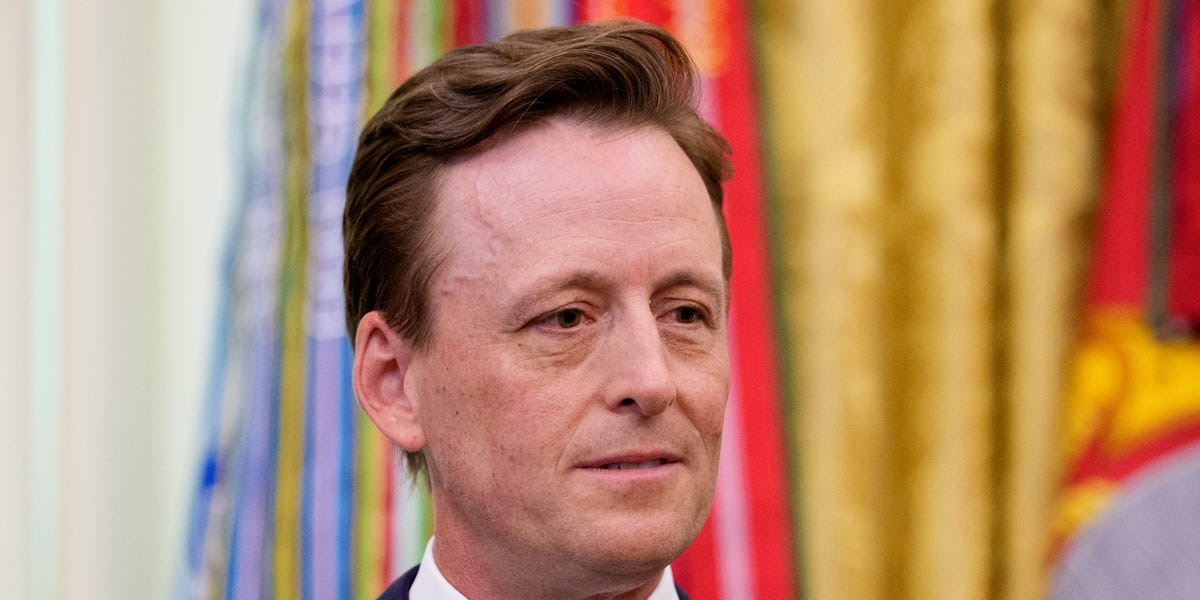
Another personnel change has hit the White House. On Thursday, a White House spokesperson told Business Insider that Sean Cairncross, the national cyber director, is leaving the Trump administration.
A source close to the White House told Business Insider that President Donald Trump supported the decision to fire him. The same source said Kirsten A. Davies, currently chief information officer at the Department of Defense, will take over in an acting capacity. Any permanent successor would need Senate confirmation, which means the post will likely stay in flux for some time.
Cairncross had led the Office of the National Cyber Director since August 2025. The office coordinates cybersecurity policy and strategy across the federal government, so its leadership shapes how agencies buy security tools, how they share threat data and how they work with private vendors.
His tenure included an unusual episode. After the Commerce Department imposed worldwide export restrictions on Anthropic's Fable 5 and Mythos 5 models in June, Cairncross held talks with the company. Anthropic temporarily disabled both models in response. For companies that depend on frontier AI, that sequence is a reminder that export controls can switch a core product off overnight.
The departure also comes after a week of tech outages affecting private companies and government agencies. Administration officials have said they found no evidence the disruptions were connected or caused by cyberattacks. That finding matters for any business that runs on cloud infrastructure: an outage without a clear cause still costs customers, revenue and trust.
What does this mean for you? Federal cybersecurity policy is the rulebook for every founder selling into government, handling sensitive data or building on AI infrastructure. When the person writing that rulebook changes, procurement timelines slip, priorities get reset and the acting officials may hold their posts only briefly. Rely on the fundamentals that survive any reshuffle: a documented incident response plan, redundancy across your providers and a clear account of what your product does if a model or service is suddenly unavailable.
The broader point is about the administrative state itself. Government technology policy is being set by a revolving cast of officials, and taxpayer money flows through contracts that can change with each new appointment. Free enterprise works best when the rules are stable and predictable. Until the Senate confirms a permanent leader and Washington settles on a durable approach to AI and export controls, founders should plan for volatility and keep their own operations resilient.


