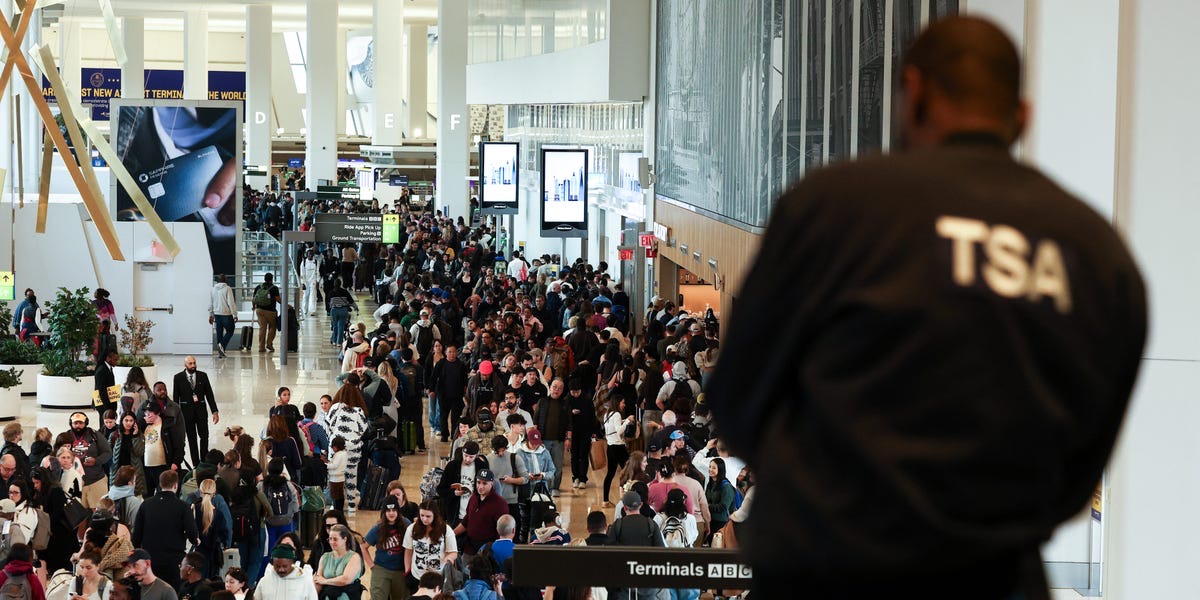
If you travel for business, you already know that time in a security line is time you don't get back. A new ranking from Travel Bulletin, built from eight weeks of MyTSA app estimates and passenger-volume data from mid-June to mid-August 2026, puts hard numbers on that cost across the 50 busiest airports in the United States.
The average security wait at those airports is 9.9 minutes. But the spread is wide. Federal data shows that passengers can wait almost three times as long at some airports as at others, and as little as a few minutes at the best-run ones.
Some of the difference is simple math. Major international hubs with more flights tend to have longer lines. Timing matters too. Holiday travel rushes, including the days around Thanksgiving, are among the busiest of the year, and lines stretch accordingly.
Staffing is the other variable, and it is where the policy debate sits. Business Insider reports that government shutdowns in 2025 and 2026, when TSA officers worked without pay, created staffing and retention problems that lengthened lines. The Trump administration is pushing to expand the TSA's Screening Partnership Program (SPP), which lets airports hire private contractors to screen passengers instead of federal TSA officers.
The airports that already use that model offer a useful comparison. Of the 20 total airports using private screeners, only two are major SPP airports: San Francisco and Kansas City. Passengers moving through both spend among the least time in line. That does not prove privatization is the whole answer, but it is a data point a free-market reader should weigh. When a service can be delivered by a contractor who is accountable for results, the taxpayer should ask why the federal workforce is not held to the same standard.
The Travel Bulletin figures are estimates, not a verdict on any single checkpoint, and the TSA did not immediately respond to a request for comment. Read the ranking as a map of where the system is working and where it is not.
Here's the playbook for travelers in the meantime: check the MyTSA app before you leave for the airport, get to the checkpoint earlier on holiday weekends, and pack for speed. For the rest of us, the lesson is plainer. Every extra minute in line is a cost paid by the traveler and the business, and government should be judged on whether it reduces that cost or simply absorbs it.


