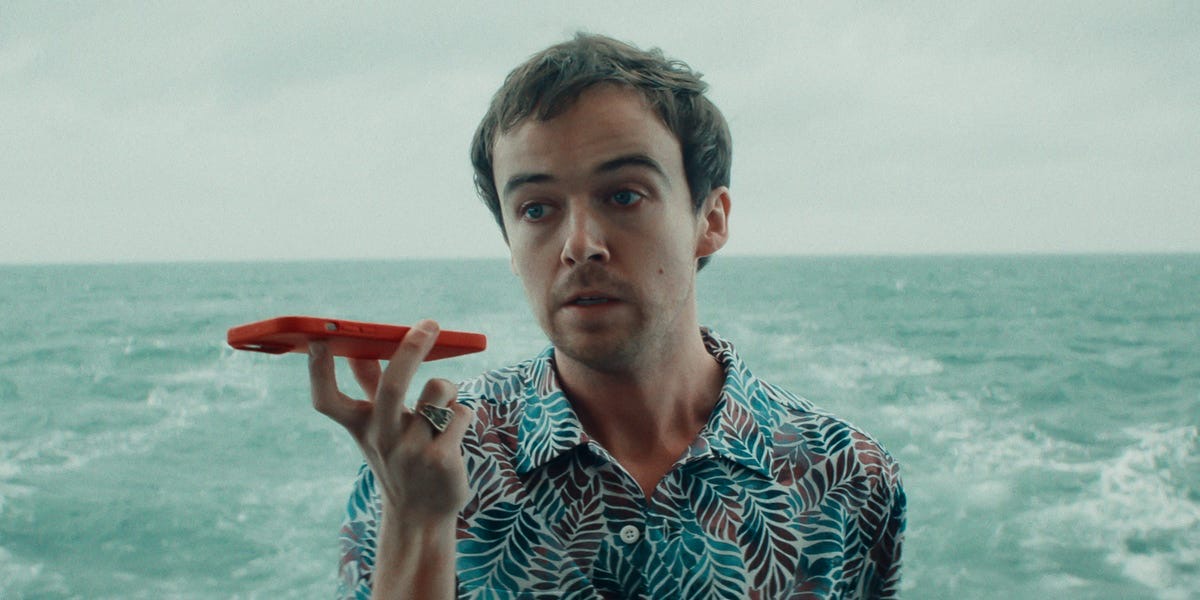
In 'The Altruists,' Netflix's new drama about the FTX collapse, Sam Trabucco appears as a socially awkward but loyal friend of Sam Bankman-Fried, shown six years later on the deck of a yacht and estranged from his 'oldest friend.' The real Trabucco, whose full name is John Samuel Trabucco, took a very different path through the fallout.
He came to Alameda Research in 2019 after working at Susquehanna International Group. In 2021, Bankman-Fried named him and Caroline Ellison co-CEOs of the crypto hedge fund. Both were later listed on the Forbes 30 Under 30 list. In 2022, Trabucco abruptly stepped down, leaving Ellison in sole charge. In his announcement he wrote that he had 'reached the point in life where I have to prioritize other things,' adding, 'Also, I bought a boat—that's been cool.'
Three months later, FTX collapsed after it was discovered that Alameda had used depositors' funds for investments. Bankman-Fried was charged with 13 criminal counts. Ellison, Gary Wang and Nishad Singh pleaded guilty and testified at trial. Trabucco did not testify and was never charged with anything, although he remained an oft-mentioned figure in the case. During the trial, Ellison described text messages in which she and Trabucco appeared to joke about a $100 million bribe, money that Ellison testified Alameda paid to Chinese officials at Bankman-Fried's direction. In November 2023 a jury found Bankman-Fried guilty of fraud and conspiracy, and Judge Lewis Kaplan sentenced him to 25 years in prison.
Trabucco's exposure came through the bankruptcy, not the courtroom. Court documents show he transferred $2.5 million from Alameda to American Yacht Group in March 2022, with the stated purpose 'for the benefit of John Samuel Trabucco.' The 52-foot yacht he named 'Soak My Deck' was part of that trail. In 2024 he agreed to give up the yacht and two San Francisco apartments worth a combined $8.7 million. He also agreed to drop his own $70 million claim for amounts he said were owed to him after the collapse. According to the debtors' filing, they received about $80 million in value from him 'without the need for potentially costly and time-consuming litigation.'
The settlement is a reminder that a founder can walk away from a failure without a criminal charge and still lose the assets that came with the title. Every dollar returned to creditors is a dollar that never reached the people who had trusted the platform with their money.
That is the principle at stake. Property rights and contract discipline only mean something when the people who controlled the money answer for where it went. Fraud at FTX was prosecuted, and the bankruptcy process clawed back what could be recovered. For taxpayers and private investors alike, the cost of weak oversight is ultimately paid by someone outside the boardroom. Private enterprise survives on trust, and trust depends on accountability that is enforced rather than hoped for.


