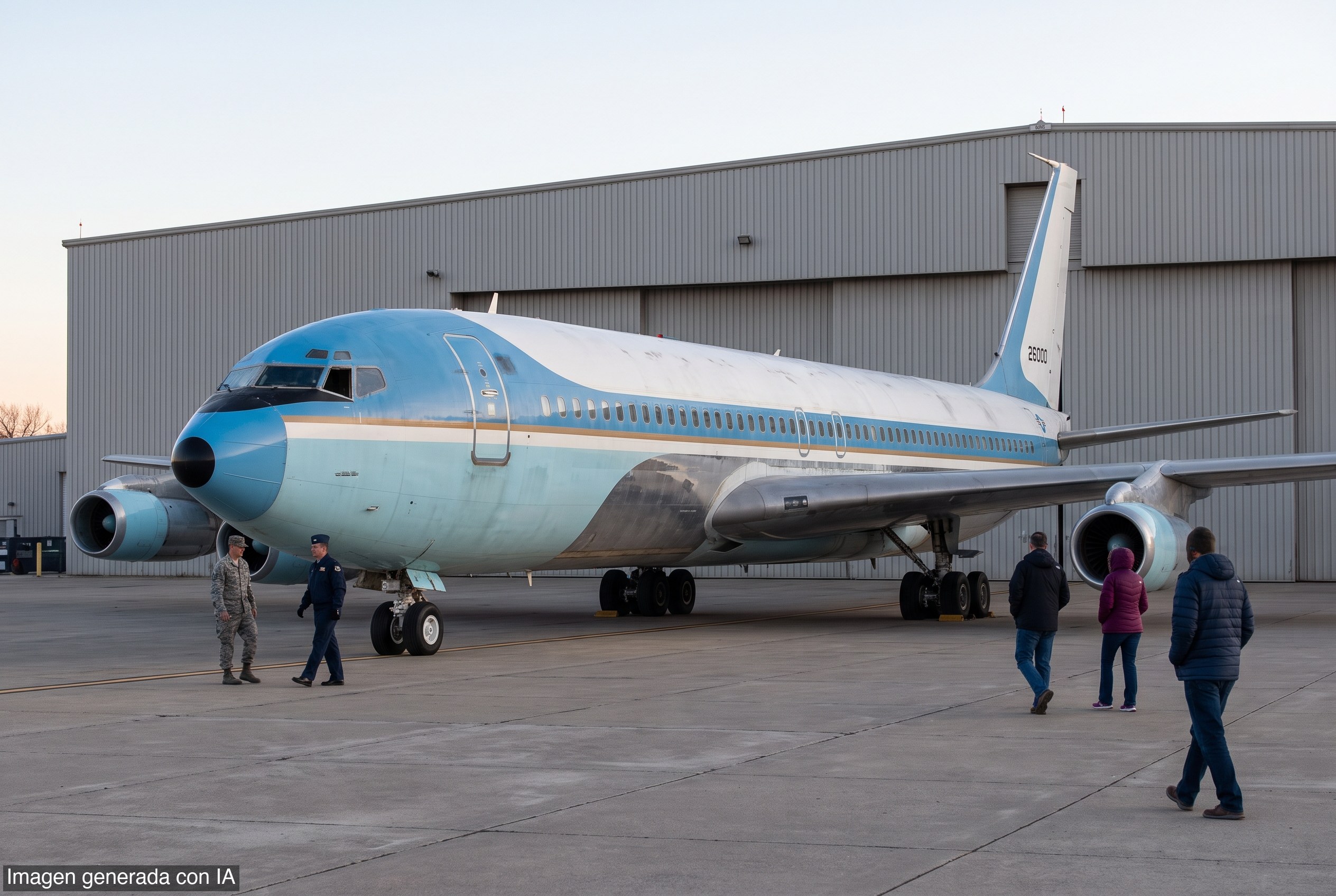
Presidential planes become Air Force One only when the president is onboard, but their afterlife is usually public. Retired aircraft have gone to aviation museums, presidential libraries, restoration projects, and, in a few cases, private ownership.
That matters now because President Donald Trump said in May that he intended for his newest addition to the presidential fleet, a '$400 million VC-25B Bridge' he accepted as a gift from Qatar, to go on display at his future presidential library in Florida. But the plane’s fate is still unresolved. Eric Trump told The Palm Beach Post in August that a recently retired modified Boeing 747, the VC-25A known as SAM 29000, was planned for the installation instead. The White House did not immediately respond to a request for comment from Business Insider.
The history of retired presidential aircraft shows a familiar pattern: once they are out of service, they often become artifacts instead of liabilities. Several ended up at the National Museum of the US Air Force in Dayton, Ohio, including the Douglas VC-54C Skymaster, 'The Flying White House'; 'The Independence'; Columbine III; an Aero Commander L-26; the VC-140B fleet; and the Boeing VC-137C that transported eight US presidents from Kennedy to Bill Clinton.
Other planes landed elsewhere. The VC-137B, nicknamed 'Freedom One' after it carried 52 American hostages back from Iran in January 1981, is at the Pima Air and Space Museum in Tucson, Arizona. Columbine II is undergoing restoration in Bridgewater, Virginia, and is not yet on public display. Some VC-140Bs are at the LBJ Ranch at Lyndon B. Johnson National Historical Park in Stonewall, Texas, while others are at Pima.
The list also shows how much of the presidential fleet became part of public memory. The VC-137C carried the blue-and-white livery created at Jacqueline Kennedy’s request by Raymond Loewy, and that design appeared on many later Air Force One aircraft. The aircraft are now heritage assets, not just transportation.
For taxpayers and founders alike, the lesson is simple: legacy branding lasts longer than service life. These planes do not just retire; they get repurposed as symbols, exhibits, and institutional property. In Trump’s case, the question is whether this next jet becomes a museum piece, a library centerpiece, or something else entirely.


