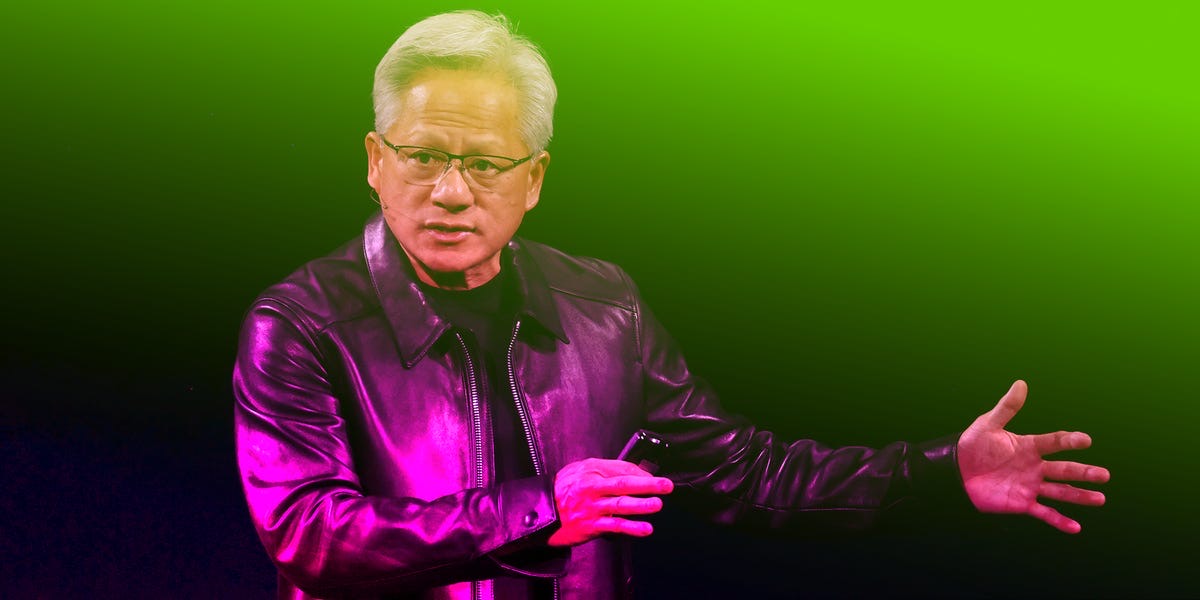
The meme tells you most of what you need to know. A few hours after Jensen Huang was reinstated as CEO of Nvidia, President Donald Trump posted an AI-generated image of Huang rising from the Secret Service's arms, a red bra in hand, in a remake of the most famous image from the first assassination attempt on his own life. Business Insider called it a nail in the coffin of the #MeToo movement.
The backstory is ugly. Huang was forced out of Nvidia after reports said he had lied to his board, had affairs with two employees, and was the subject of a foreign-intelligence investigation. The New York Times later reported that he was a volatile and demeaning manager, telling one executive his mother should have aborted him. Then the board reversed course. On Monday it said it was satisfied with Huang's 'candor' and had received 'input from senior levels of the United States government.' Trump called the decision 'the correct and proper decision' and labeled him a 'National Treasure.'
For decades, large American companies followed a simple rule: CEOs who get involved with subordinates get shown the door. McDonald's ousted Steve Easterbrook in 2019. BP's Bernard Looney resigned in 2023. Nestle fired Laurent Freixe last year. The rule was never only about sex. When the boss is involved with someone who reports to him, everyone else's career is quietly rigged.
Here's the playbook the Nvidia case has written, whether the board intended it or not. The asterisk now reads: the rule does not apply if you are a founder with a famous mystique, if the market believes the company cannot survive without you, and if the President wants you back. Huang's defenders, from Elon Musk to the 200,000-plus signers of the 'Stand with Jensen' petition, largely did not argue that the conduct never happened. Their argument was that it didn't matter. Nvidia is the engine of the AI boom, and you don't fire the engine.
Who wins? Shareholders, clearly. Everyone else gets a harder lesson. Jessica Kriegel of Culture Partners put it plainly: people who are not CEOs will feel that CEOs can get away with more, and that will be frustrating. Bradley Akubuiro, a former chief spokesperson for Boeing, said a message went out to shareholders, employees, customers, and founders about where the line sits between what a leader brings and what conduct a company will accept.
The timing makes the signal louder. The dominant story about white-collar work is that jobs are replaceable as AI scales. Nvidia's lesson inverts that logic for the people at the top: the more indispensable you are, the fewer rules you have to follow. For a mid-level manager who gets a warning for a far smaller infraction, that is not a reassuring equation.
The free-market case for accountability is not complicated. Capital and talent flow to firms that are trusted to be run by rules applied evenly. When a board's exception hinges on a leader's perceived irreplaceability, every other employee learns that the rules are negotiable for the right person. That erodes the trust that makes markets work, and it is a poor precedent for a company whose value rests on credibility with customers and investors.
For founders, the practical takeaway is to write your own conduct policy now, before your company is so valuable that nobody wants to enforce it.


