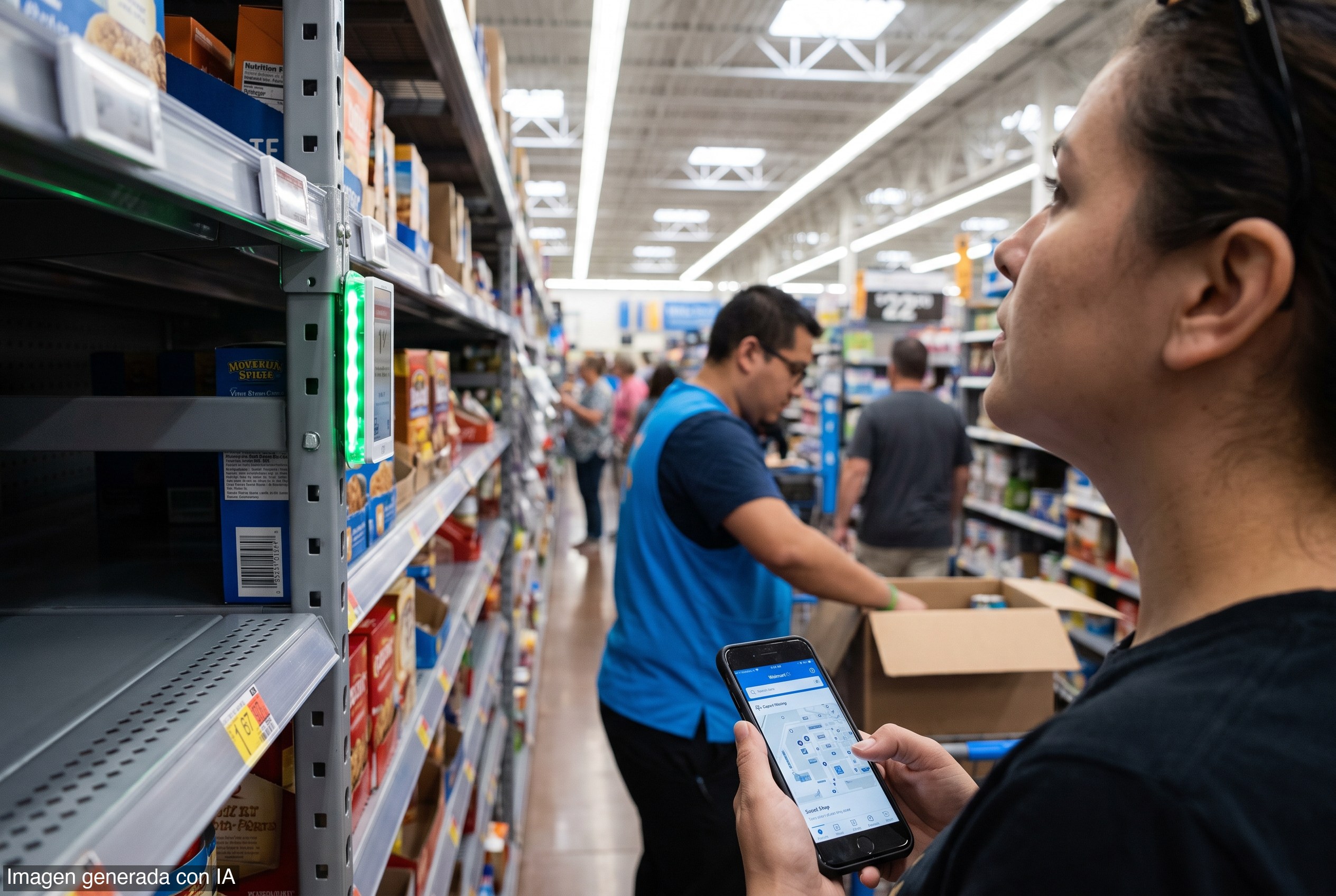
Walmart is turning its digital price tags into a new in-store navigation tool.
The retailer said Thursday that shoppers can use the Walmart app while browsing to activate a flashing light that points them to the exact item they want on the shelf. The feature works through the company’s AI shopping assistant, Sparky, and appears as a little green light in the aisle where the customer is standing.
The system has already been available for employees and Spark delivery drivers over the past several months. Walmart said the same lights help store workers restock shelves more quickly and accurately.
The technology is built into the new digital price tags that have been appearing in Walmart’s US stores over the past year. Business Insider saw the system in action during a store tour in April, and a Spark driver said it helped her fulfill delivery orders faster.
The feature has drawn less attention than the bigger question around digital price tags: whether they could be used to change prices more dynamically. Last week, CEO John Furner said Walmart will never set prices based on the time of day or who is shopping, and there will be no 'personalized price' at Walmart.
Walmart also said all maximum display prices are set centrally at its headquarters, while store managers can offer certain discounts to stay competitive in their markets.
For founders and operators, the playbook here is clear: Walmart is using software to shave seconds out of shopping, picking, and restocking without handing pricing power to the aisle. That matters because the best retail tech does not just look futuristic; it reduces labor friction and helps customers find what they need faster.
The bigger lesson is that digital tools can add convenience without turning into a free-for-all on pricing. Walmart is making a case that central control and local flexibility can coexist, even as it upgrades the store floor with more automation.


