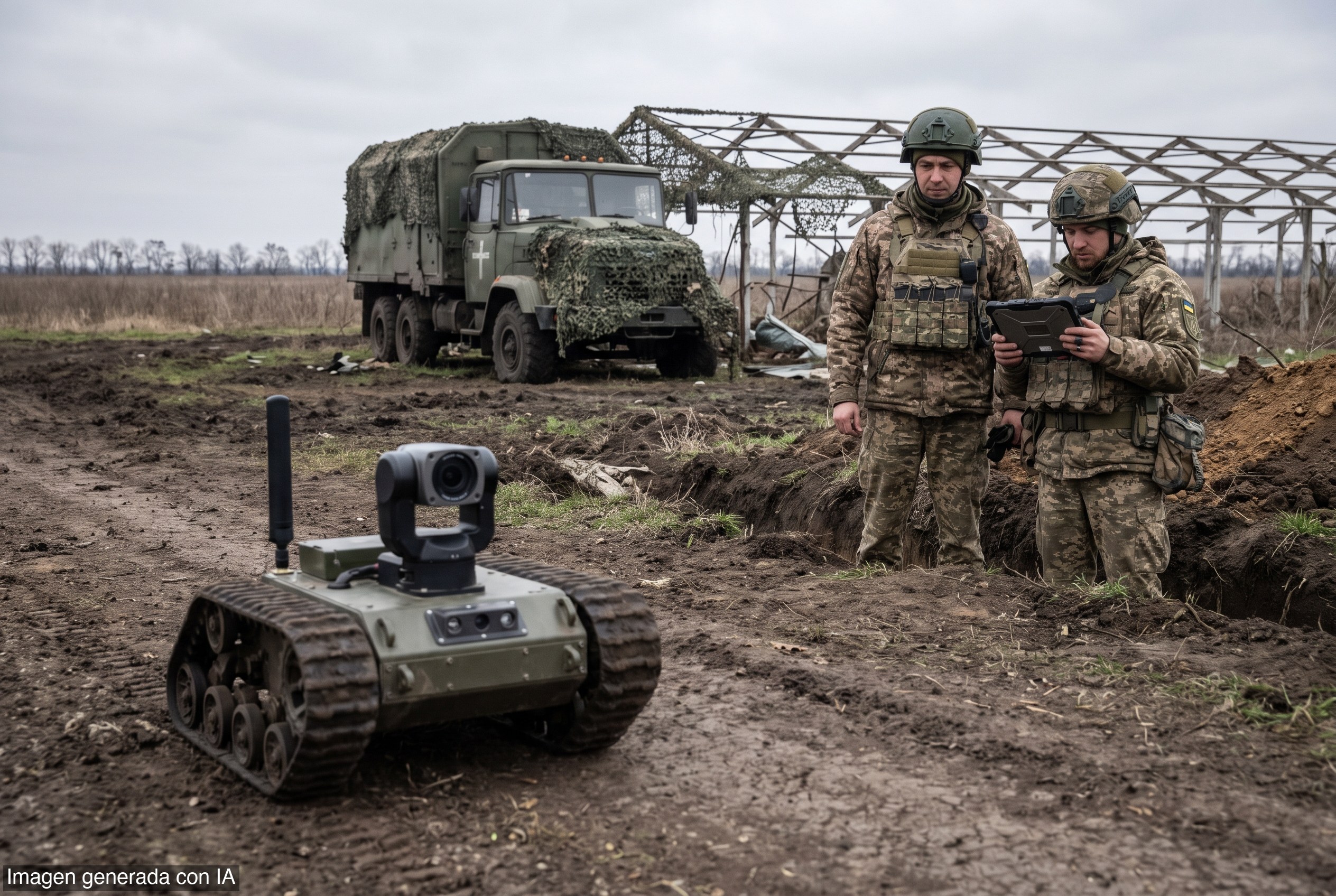
Ukraine’s Operation Vivaldi is becoming a live test for war robots.
In the opening stages of the counteroffensive, Ukrainian forces used uncrewed ground vehicles, or UGVs, as distractions. The robots drew Russian attention and exposed surveillance systems and firing positions while assault troops slipped through and seized key territory.
Since then, the robots have taken on a wider set of roles. They have conducted airborne assaults, delivered explosives, attacked enemy command centers, and supported infantry operations amid the offensive in eastern Ukraine.
NC13, a strike UGV unit within the Third Assault Brigade of the Third Army Corps, has played a leading role. Mykola Zinkevych, the unit’s commander, said his forces have used robots across a wide range of missions to inflict defeats on the Russians.
Over the course of the operation, the robots evolved from diversions that enabled Ukrainian advances into armed strike platforms targeting Russian command posts, drone operators, and large troop concentrations in the rear, according to Zinkevych.
He said those efforts disrupted Russian command and control and logistics, making it harder to bring in more soldiers and limiting Moscow’s ability to conduct operations. He also said the robots carried out full-scale robotic assault operations, independently and in support of Ukrainian infantrymen.
One notable tactic involved heavy bomber drones carrying armed robots over the front lines and dropping them in enemy territory. Zinkevych said that surprised Russian troops and added pressure. Brig. Gen. Andrii Biletskyi, commander of Ukraine’s Third Army Corps, said in late September that his forces had become the 'first in the world' to operationally air-drop robots from drones in combat.
NC13 also deployed robots armed with grenade launchers, which Zinkevych said the unit was the first to do in combat. He said the Russians apparently mistook the UGVs for an infantry assault, leading to confusion and disorientation.
These tactics fit into a broader Ukrainian effort to put ground robots into dangerous front-line missions, especially logistics and casualty evacuation roles.
Vivaldi, launched over the summer to halt Russian advances in the northern part of the Donetsk region, has already seen Kyiv retake control of dozens of square miles of territory, according to analysts at the Institute for the Study of War.
Zinkevych attributed that success in part to strike robots, while also crediting Biletskyi’s planning and coordination. Conventional weaponry, especially artillery, also played a key role, according to Western analysts and the Ukrainian military.
For founders watching the future of defense tech, the playbook is simple: automation is moving from support to execution. In war, that can mean fewer people exposed to risk and faster tactical decisions. It also means the edge may go to the side that can integrate machines, software, and human operators into one system faster than the enemy.
The math is simple. If robots can take the first hit, draw fire, and carry out dangerous jobs, the value is not just military. It is organizational: less exposure, more speed, and a better use of scarce human talent.


