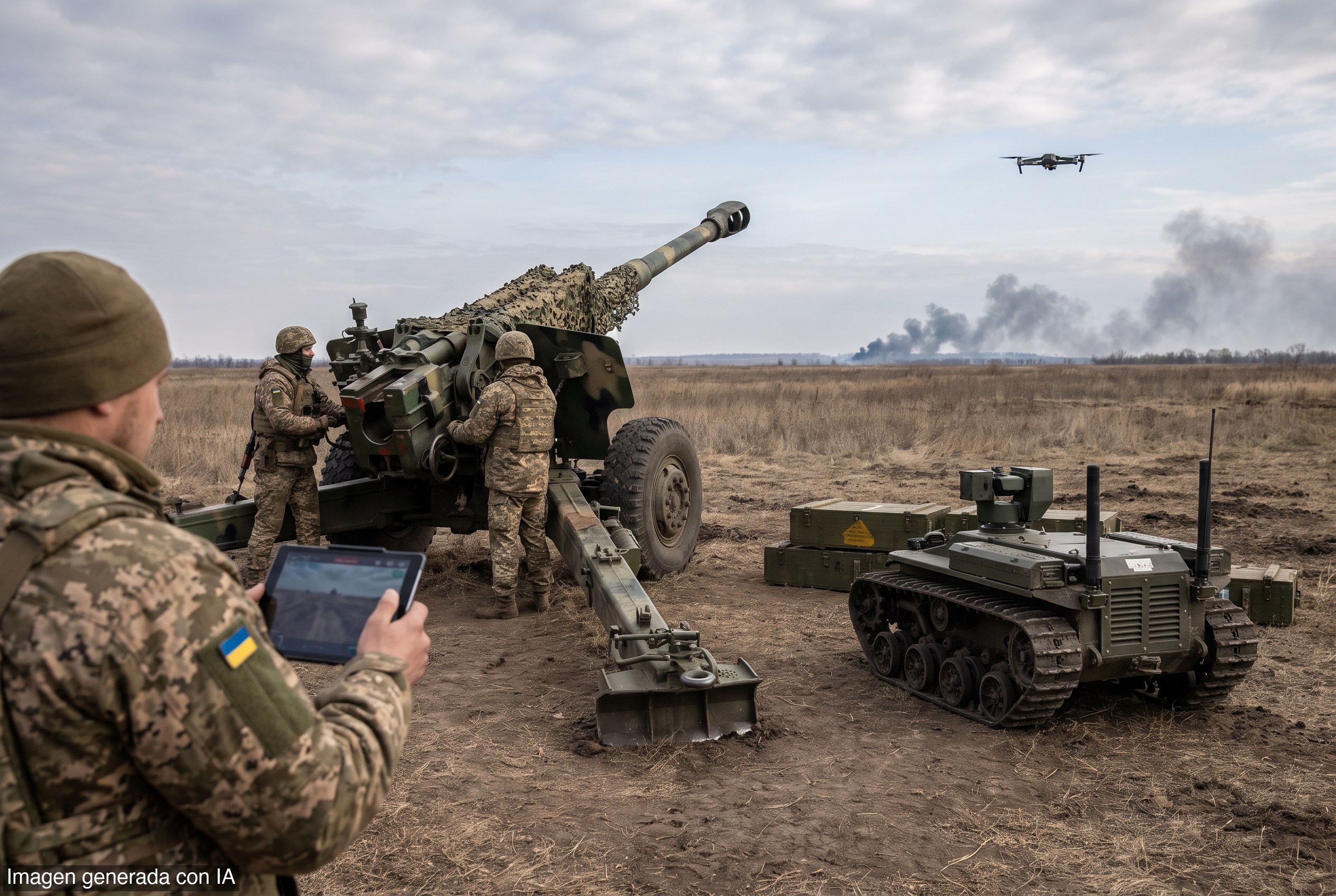
Ukraine's Operation Vivaldi is giving the clearest case yet that drones have changed war, but not replaced artillery.
The major counteroffensive near Lyman has combined drones, robotic systems, and new tactics with heavy artillery support to push Russian forces back. By the end of September, Ukrainian forces had recaptured 176 square kilometers of territory, according to the Third Army Corps, the lead unit.
The Institute for the Study of War said reports indicate Ukrainian forces 'heavily relied on artillery strikes' to stop Russian troops from regaining lost ground during the operation. The think tank said that showed 'how artillery remains relevant even in modern, drone-dominated battlefield conditions.'
The Third Army Corps said it had assembled one of the largest artillery formations of any corps for the operation, with enough systems per kilometer of front to keep fire going even if individual guns were hit. It said drones worked with artillery to find targets, then artillery destroyed them.
The corps said its artillery turned 'Vivaldi' into a kill zone for the enemy. It also said the 52nd Separate Artillery Brigade and rocket artillery units from multiple brigades kept several settlements under fire, preventing Russian forces from bringing up reserves, equipment, or ammunition.
The unit said strikes by Ukrainian HIMARS destroyed more than 20 artillery guns, two Buk air defense systems, and two transport-loading vehicles, and hit Russian command posts at battalion level or higher.
The broader lesson is simple for founders and operators watching defense tech: new tools rarely make old ones irrelevant overnight. Drones can expand reach, improve targeting, and change the pace of battle, but artillery still delivers the sustained force needed to hold territory.
That matters because every battlefield innovation creates a second-order question: what still works when the first wave of hype fades? Ukraine's answer is that the best playbook is often not replacement, but integration.
For any organization trying to win with limited resources, the takeaway is the same. Pair the new capability with the proven one, or risk discovering too late that the old system was still carrying part of the load.


