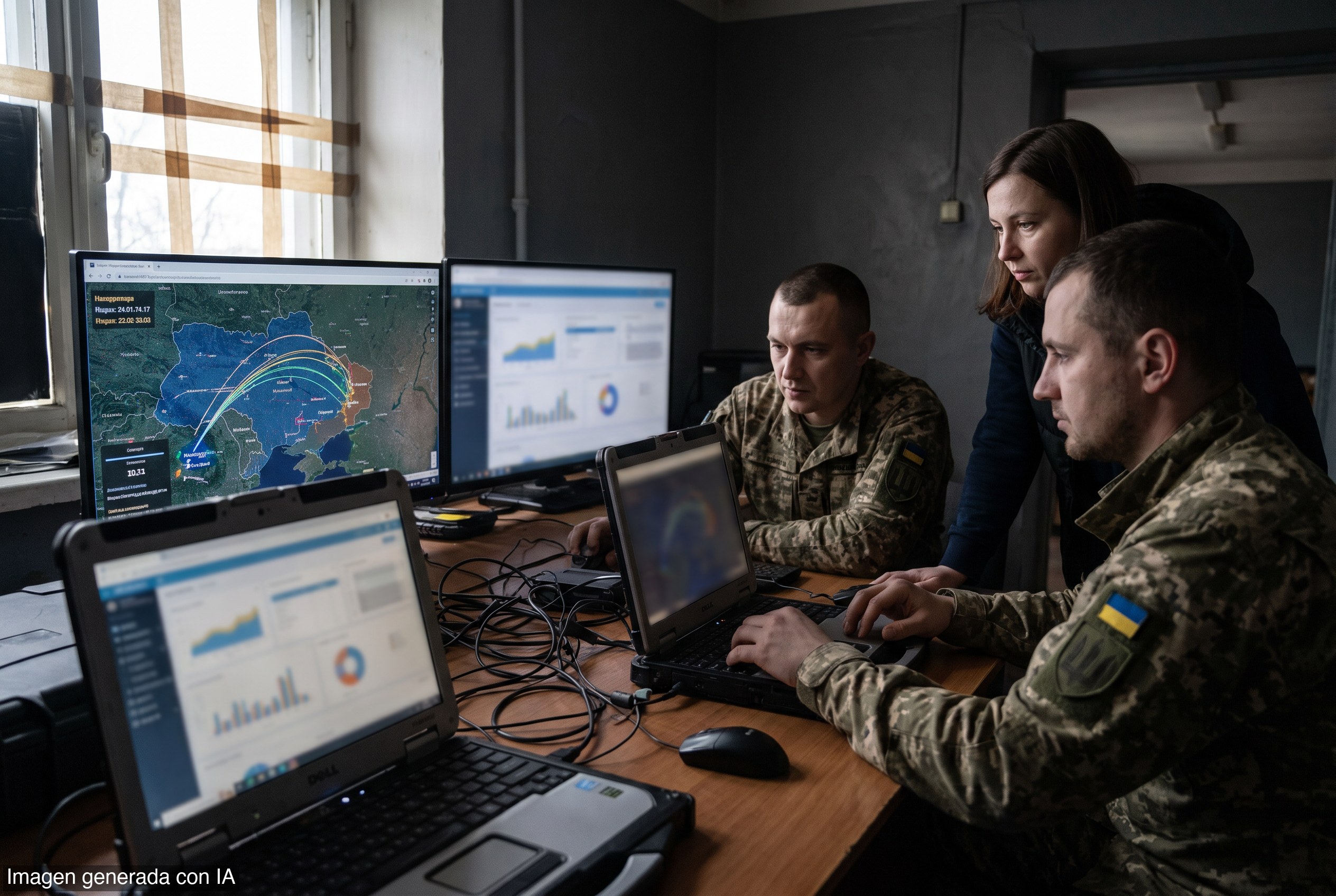
Ukraine's defense ministry said its forces are about to start using a jointly NATO-developed artificial intelligence model to predict where and when Russia's drone strikes will land.
The tool, dubbed 'Model No. 13,' analyzes past combat data, weather conditions, and battlefield conditions to estimate, with 'high probability,' how Russian troops will use drones on the front lines, the ministry said in a statement. It can forecast the strike's time, location, intensity, and type of drone used.
The ministry said the solution has already been validated using real-world datasets and is ready for integration into the Armed Forces of Ukraine's situational awareness systems. It said Model No. 13 was developed by its armed forces and NATO's Allied Command Transformation, with support from the Joint Analysis, Training and Education Center, or JATEC.
The announcement follows earlier Ukrainian remarks that its forces have been working with AI and machine learning models since last year to process combat data for 'threat forecasting.' Ukraine's defense ministry also said another AI model, No. 32, is being jointly created to plan artillery deployments, though troops are still testing a prototype.
Model No. 13 is likely to run on Ukraine's DELTA battlefield management system, a digital app that combines intelligence from drones, cameras, and battlefield reports for commanders on tablets or phones. Ukraine says DELTA already uses an AI module called Vezha that can automatically detect and flag Russian equipment in seconds by analyzing satellite imagery, drone camera feeds, and radio signals. The defense ministry has said DELTA reached over 200,000 users in November.
For founders watching defense tech, the lesson is simple: software is now part of the kill chain, and data advantage matters as much as firepower. The side that turns messy inputs into faster decisions gains an edge without waiting for a new platform or a bigger budget.
That is where the market is heading in wartime and beyond. AI that shortens response time, improves targeting, and reduces guesswork is not a side project; it is infrastructure. Founders building in defense, logistics, or risk software should read this as a demand signal: the buyer wants decision tools that work under pressure.


