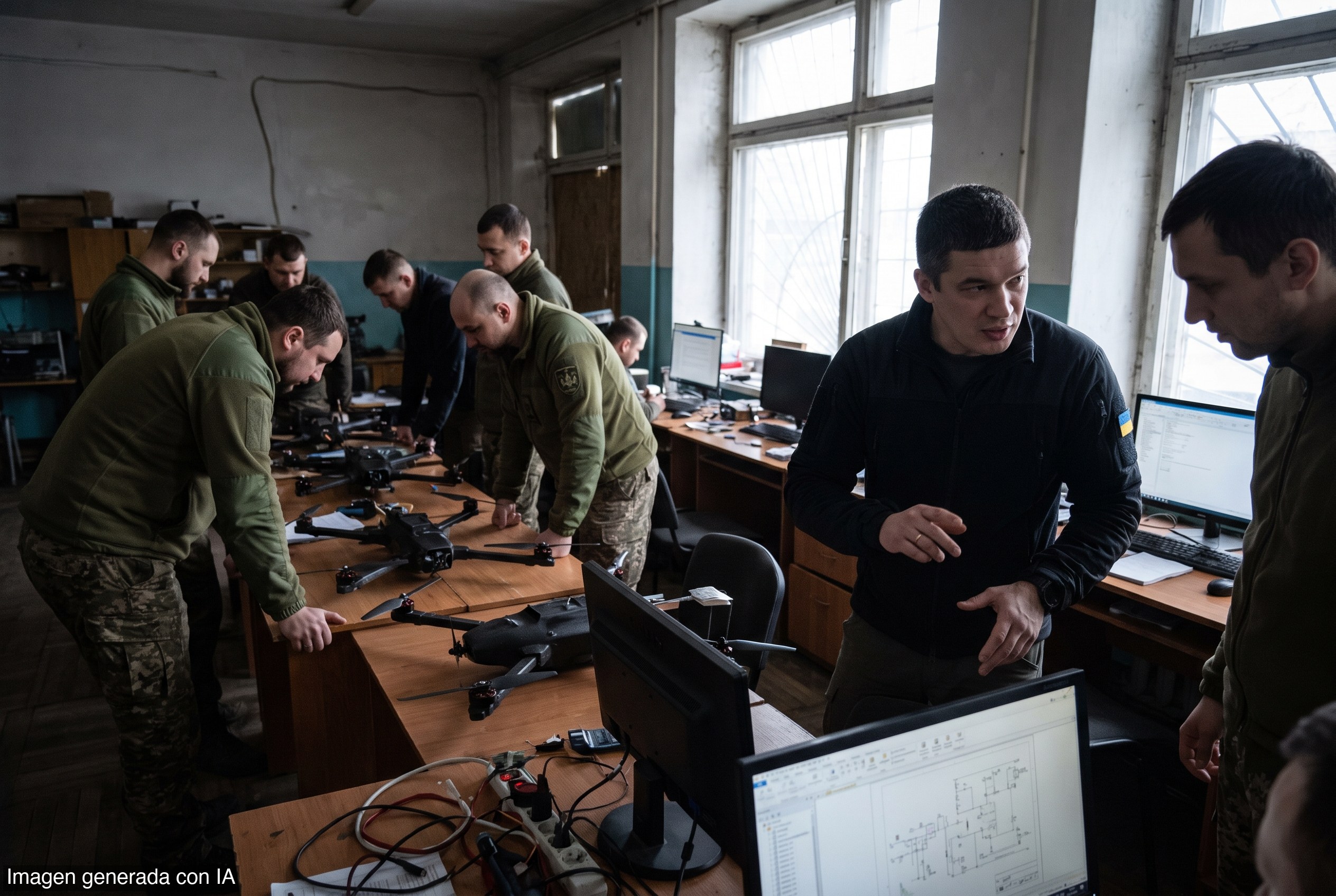
Mykhailo Fedorov, Ukraine's former defense minister, has unveiled a new interceptor drone designed to take down Russia's fastest attack drones.
The drone is currently flown by a human pilot. Fedorov said he wants to make it autonomous in flight using artificial intelligence and aims to produce hundreds of interceptors a month by the end of the year.
He said the interceptor 'will be very affordable' and called the goal 'a low-cost, mass-producible solution that can be scaled rapidly.'
The new model is part of a broader shift in Ukraine toward AI-enabled autonomous drones and robots that can keep operating when electronic warfare cuts the link between systems and operators.
Ukrainian defense firms have developed several interceptors aimed at Russia's fastest drone, the Geran-5, which is powered by a mini turbojet engine and can reach speeds of up to 375 mph. In recent combat tests over Kyiv, a specialized unit of Ukraine's National Guard used the new interceptor to bring down two Geran-5 drones.
It is not clear how fast the interceptor can fly, but testing is ongoing, and the next steps are to improve the technology and scale up production.
The pressure is real. Ukraine's air force said Russia launched 350 drones in June, and that number rose to 2,800 in August. Officials said the interception rate for Russia's propeller-powered drones, which reach 115 mph, typically sat above 90%, while President Volodymyr Zelenskyy said Kyiv shot down just 55% of Russia's jet-powered drones in late September.
Fedorov said Russia can be stopped and that Ukraine has already shown it can engage the slower drones. 'Our next challenge is to do the same with jet-powered versions,' he said.
For founders and investors, the playbook is familiar even in wartime: build for speed, lower unit cost, and scale. The math is simple. A defense system that can be produced in volume and improved quickly has a better shot at keeping pace with a faster threat.
Fedorov's move after leaving office also points to a commercial model, not just a battlefield one. After his departure in July, he launched a defense company focused on developing warfighting technology to strengthen Ukraine and support international partners. He said the first investor will be Alex Karp, the CEO of Palantir, and that he plans to open investment to other partners soon.


