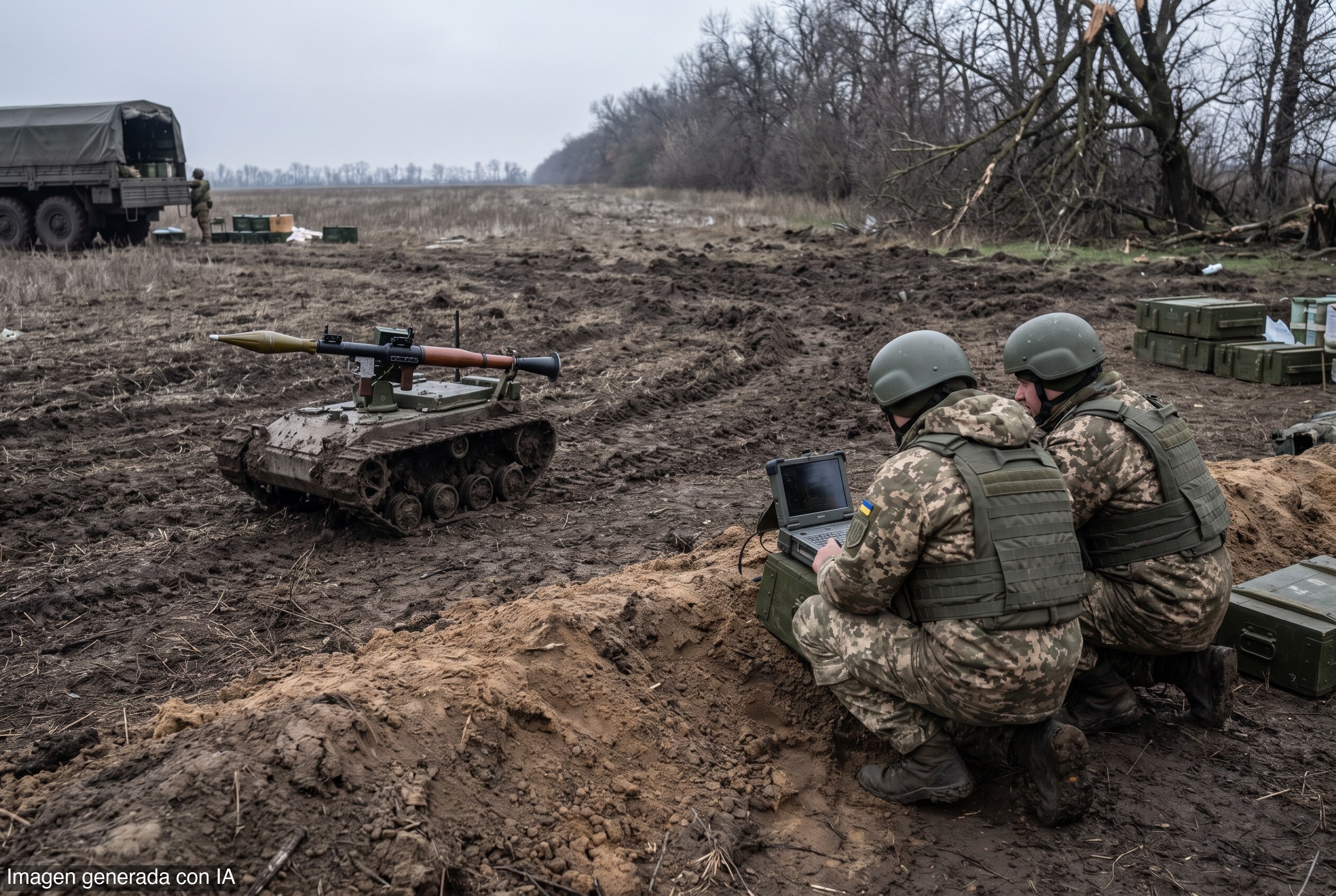
Ukrainian soldiers operating in the kill zone are putting anti-tank RPGs on ground robots, according to DevDroid's R&D director, Oleg Fedoryshyn.
Fedoryshyn said the battlefield has become too dangerous for troops to use the weapons the old way. He said that in the kill zone, 'nobody knew how to use' an RPG 'while staying safe himself.'
The kill zone along Ukraine's front can be as deep as 50 kilometers in some areas. Drones are heavily concentrated there, alongside other weapons, making any movement a significant risk. For many soldiers, Fedoryshyn said, simply getting within RPG range is extremely difficult.
Rocket-propelled grenades are usually used by infantry to defeat armored vehicles and weaken fortified positions. Early in Russia's full-scale invasion, they were a common infantry weapon used against Russian tanks and vehicles and to support fighting in towns and cities.
But cheap drones, in both surveillance and strike roles, have changed ground combat. They have reduced the use of armored vehicles and altered infantry engagements, pushing soldiers to find new ways to keep older weapons useful.
Fedoryshyn said soldiers working with DevDroid started putting RPGs on robots that were already armed with machine guns. The robots can drive close to targets and fire shorter-range weapons while keeping operators farther from danger.
He said a brigade approached the company with the idea and had 'great' success using it. DevDroid is now exploring how to add that support for everyone in the future.
The company also says requests from soldiers often drive Ukraine's new battlefield capabilities. Fedoryshyn said DevDroid has 24/7 chat support for every unit using its systems, and that it can design an update, test it with a brigade, and roll it out across deployed systems within a week.
He compared the update process to mobile phones or operating systems.
Other weapons, including flamethrowers, grenade launchers, and machine guns, have also been mounted on robots as the war evolves.
For founders and defense makers, the playbook is clear: battlefield software and hardware now move together. Ukraine's front line rewards inexpensive, replaceable systems that can be updated fast, not expensive platforms that are slow to adapt.
That matters because the next advantage is not just firepower. It is iteration speed, lower replacement cost, and the ability to keep older gear in the fight instead of writing it off.


