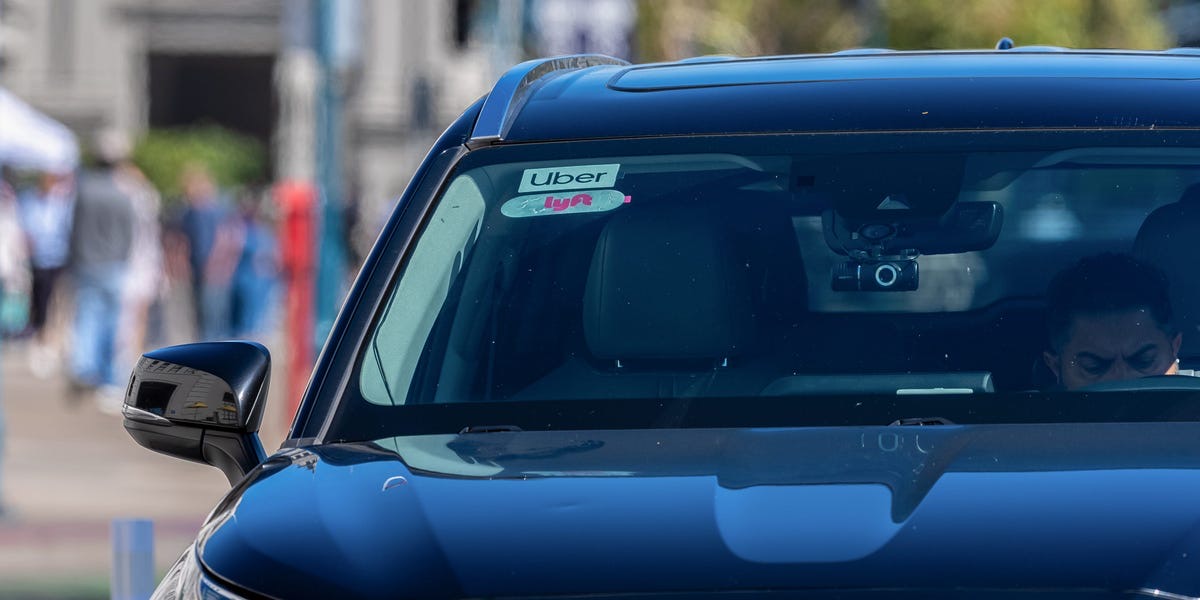
Mujtaba Khan had worked for Uber for 11 years and drove businesspeople and government workers around Washington, DC. He held a five-star rating when he tried to upload a new insurance document to the app in September.
He uploaded the wrong file. It was a placeholder certificate his insurer had sent him, not his own proof of coverage. Uber deactivated his account and said he had submitted a 'fake document,' according to a message Business Insider saw. 'I was just in a rush,' Khan said. 'I thought, that's the document Uber is asking for.'
An Uber spokesperson said the company is still investigating the deactivation. 'We understand how stressful losing access to the platform can be, which is why these decisions are made with careful consideration,' the spokesperson said.
Khan's case is one example of how quickly ride-hailing and delivery companies can cut off gig workers. Uber, DoorDash and similar firms say they can deactivate contractors for issues such as theft or unsafe driving. But workers also report losing access over far smaller lapses. In most cases, the companies reserve the right to deactivate accounts at will. Workers can appeal and pursue binding arbitration, and some now turn to AI chatbots to help them through that process.
Khan sent an appeal with the correct document. Uber rejected it, according to a screenshot Khan shared from his app. He said he has no equivalent of the HR office a traditional employer would provide. 'The problem with Uber is that there's nowhere I can go,' he said.
Since the deactivation, Khan has been driving his 2025 Chevrolet Suburban for a local black-car service. The work pays the bills, he said, but it is more rigid than Uber, where he could log on and work at his own pace. 'I'm bound by this kind of timing,' he said. 'I'm not a freelancer like before.' He also drives for Blacklane, the Berlin-based chauffeur service that Uber said in March it plans to acquire. Khan said support staff at Blacklane are easier to reach than Uber's.
The case also raises a question about incentives. CEO Dara Khosrowshahi said earlier this month that Uber is offering more bonuses to drivers for the first time in several years, a sign the company may be short on drivers. Khan finds it puzzling that a platform in need of drivers would deactivate experienced ones over a document error. 'The drivers are there, but maybe they don't want to listen to us,' he said.
The free-market reading is simple. Contractors who take on the risk and cost of running their own vehicles deserve a clear appeal process, not a one-click termination with no human on the other end. Local governments are starting to step in: Uber Eats reinstated as many as 10,000 delivery worker accounts earlier this year as part of a settlement with New York City over pay and deactivations. Better recourse for independent workers should come from competition and transparent rules, not from ever-thicker regulation of the platforms.


