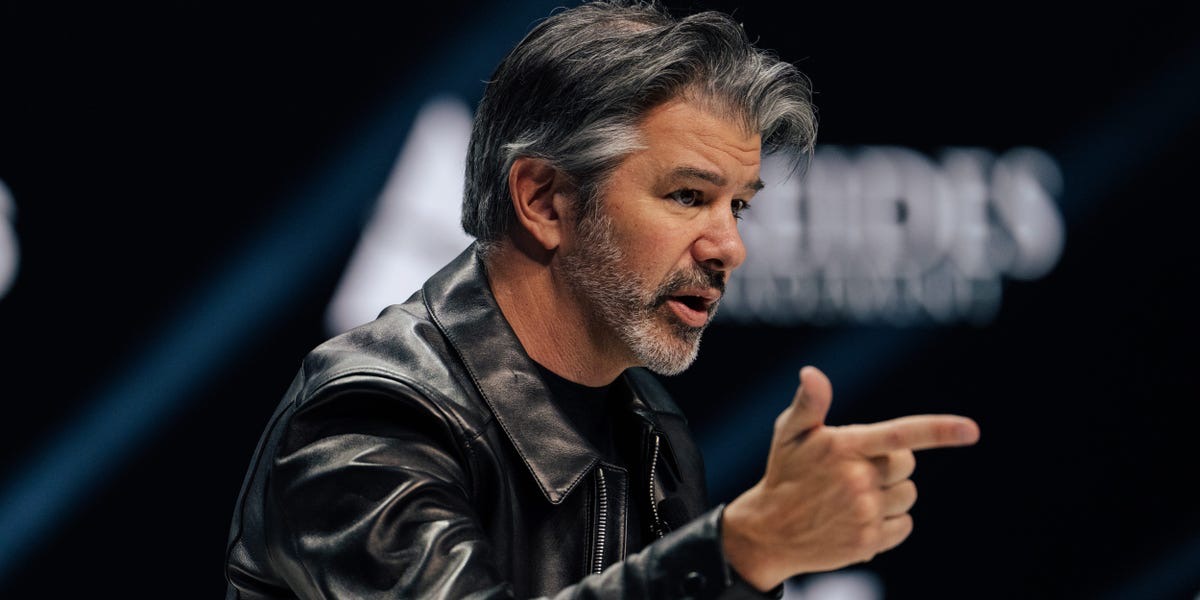
Travis Kalanick says he would stand outside Nvidia's headquarters to push for the return of Jensen Huang, the company's former chief executive. Speaking at the TomorrowX Summit in Austin on Wednesday, Kalanick described the scene he has in mind: 'I will show up to Nvidia HQ with a wafer-encrusted megaphone, with tons of Nvidia employees who want to walk out, tons of CEOs, founders.' Silicon wafers are the base material used in AI chips, so the prop was a deliberate nod to the company's core business.
Kalanick said he had sent Huang screenshots of 2017 stories about a petition to reinstate him at Uber, the ride-hailing firm he led before resigning under pressure. That resignation followed an investigation into Uber's workplace culture, prompted by a former engineer's allegations of sexual harassment and HR issues. 'I'm like, petition good, walkout better,' Kalanick said, adding that Huang did not reply to the message.
The backdrop is a sudden leadership crisis. Huang resigned from Nvidia last Thursday after the board began investigating whether he was the 'target of a foreign intelligence effort.' He also apologized for being unfaithful to his wife. On Tuesday, Huang said he would be 'honored' to return, and more than 200,000 people have signed a petition to reinstate him. Business Insider has reported, however, that the Nvidia board is not considering bringing him back.
Kalanick framed the stakes as more than one executive's fate. 'Jensen is the No. 1 guy that's going to give us that liberty, and stood for it,' he said, arguing that AI should serve humanity rather than become an 'AI overlord.' He also called for due process: 'You should also care about justice and due process.'
For founders, the episode is a reminder of how quickly governance questions can become public pressure campaigns. A board that opens an investigation, a chief executive who resigns, and a petition with 200,000 signatures all land on the same company within days. The lesson is not about one company's boardroom. It is that when the people who own and build a business lose confidence in its decision-making, the market and the workforce will say so loudly.
The editorial read is straightforward. Shareholders own Nvidia, and its board answers to them. A board that acts on an investigation it has the power to run, and decides who leads the company, is exercising the authority that property rights are supposed to put in accountable hands. Employees and petition signers have every right to voice their views, but a walkout is a labor tactic, not a substitute for the board's fiduciary duty. Founders should take note: clear, documented governance protects the enterprise, and a leadership change handled quietly and fairly protects everyone with money at stake.


