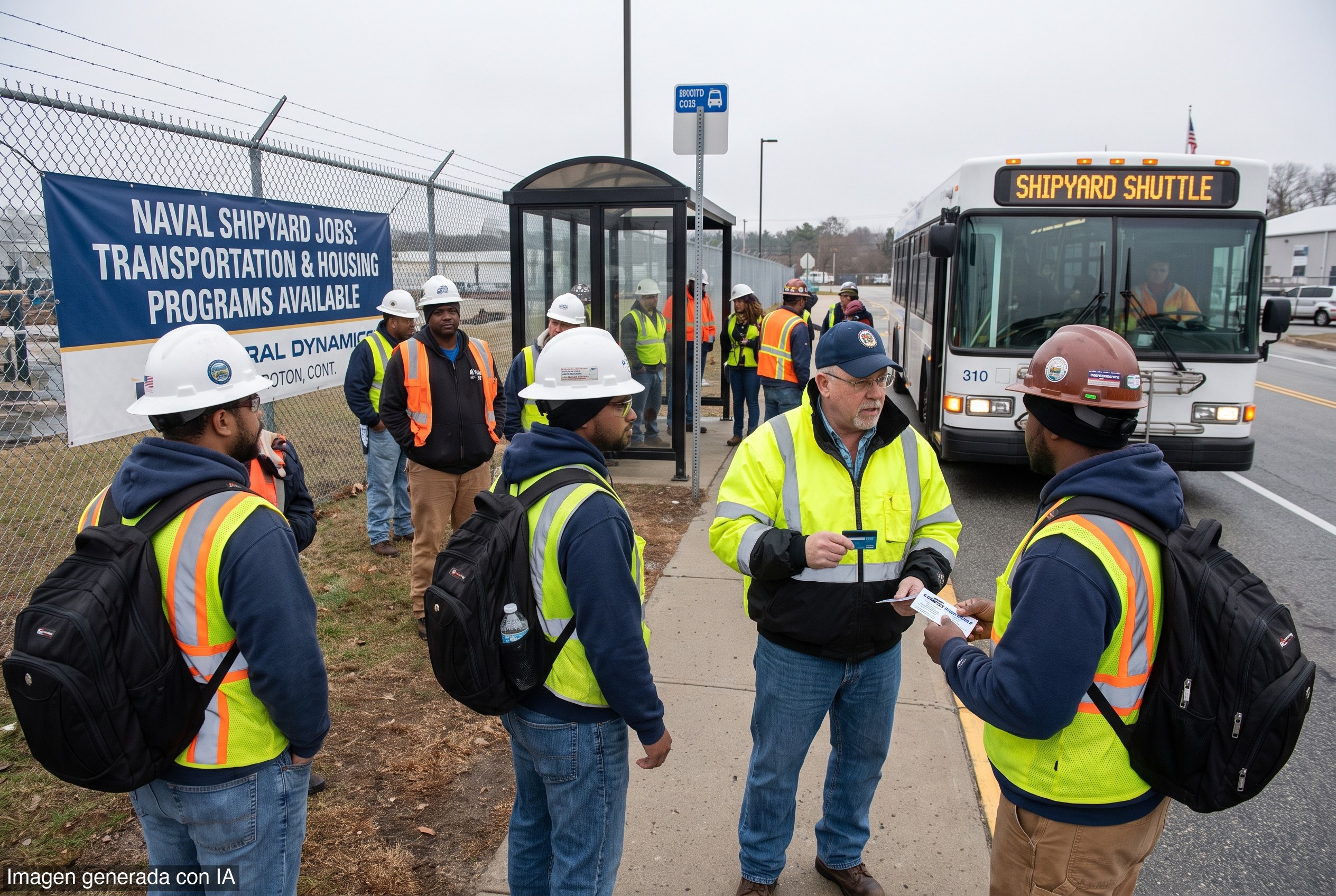
The US Navy is treating transportation as a workforce problem, not a side issue.
The Navy's Submarine Industrial Base Program Office says it has been working with federal and state partners on region-specific fixes to help recruit and retain workers at submarine construction and repair yards. Erica Logan, the office's director of workforce, said the team looks at local education, demographics, unemployment, cost of living, and transportation when assessing a region.
'What does the transportation system look like? Is it a very rural area where there may not be transportation?' Logan said. 'How would we get folks there? What could we do to help a supplier that lives in an area like that?'
The office has supported transportation pilots with bus systems, and those efforts have led to more questions about free bus passes and van pools. In one example, General Dynamics Electric Boat partnered with the Rhode Island Public Transit Authority to provide direct service to the Quonset Point shipyard. The office said ridership has more than doubled year over year, and the service came at no cost to the Navy.
In another case, the Hampton Roads Workforce Council provides workers with gas cards and bus passes. Since September 2023, the Hampton Roads Maritime Training System program within the council has provided nearly $200,000 in transportation assistance, funded through grants, donations, and the Virginia state government.
Housing is part of the same equation. The office has not funded permanent housing or related subsidies for shipyard or supplier workers, but it is engaging with state and local partners to expand affordable housing. Some programs also support trainees directly. In Danville, Virginia, the Accelerated Training in Defense Manufacturing program offers students housing during their 16-week training.
The Navy's broader goal is simple: rebuild the supplier, builder, and manufacturer network that constructs submarines, and keep the labor pipeline full. The service estimates it will need to hire 250,000 skilled workers over the next 10 years to account for expected attrition and retirement.
For founders and operators, the lesson is straightforward. Labor shortages are not always just a pay problem. Sometimes the bottleneck is whether people can get to work, stay housed, and make a routine work in the real world. Founders who get this right move faster, because the cheapest growth is keeping the workforce you already can reach.


