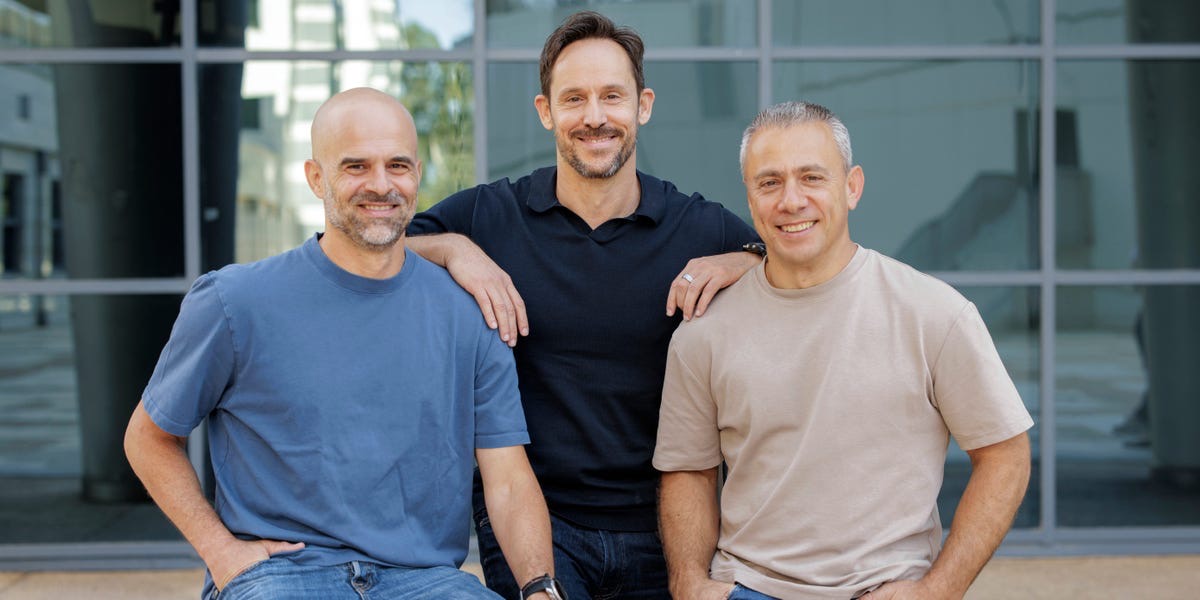
Three former Goldman Sachs executives have closed $320 million for the second fund of their venture firm, and the relationships they built at the bank did a lot of the heavy lifting.
Sarel Eldor, Amit Pilowsky and Danny Akerman founded Key1 Capital in 2022 after years at Goldman in Israel. The Tel Aviv-based firm focuses on late-stage Israeli and Israel-related tech companies. According to the firm, most of the capital for the new fund comes from institutional investors and family offices, plus nearly 10 limited partners who are current or former Goldman executives.
The network runs deeper than investors. Among the 25 limited partners who are current or former founders, 20 worked with the Key1 team during their time at the bank. Some of those former clients now mentor the founders Key1 is backing.
The firm's track record from its first $300 million fund gives new backers something concrete to point to. Two of its biggest exits were gaming company Superplay's sale to Playtika in 2024 and Dustphonics' sale to Credo Tech in the semiconductor industry earlier this year.
The founders see a market that is still expanding. According to a report from the IVC Research Center cited by Business Insider, Israeli tech companies raised around $4.1 billion in the third quarter of this year, up from $2.4 billion in the third quarter of last year. The country also has a high concentration of AI companies. Pilowsky said the opportunity is 'as good, and probably even better, than we had in fund one,' adding that AI is 'such a massive propeller for every good founder.' The founders told Business Insider they are particularly interested in AI infrastructure and cybersecurity in Israel.
What they bring from Goldman is a specific skill set. The cofounders worked mostly with established companies weighing an M&A deal or an IPO. Eldor, who led the bank in Israel, put it this way: 'Through essentially a tremendous amount of repetition, you know how to actually select those that you feel comfortable taking public, selling, or financing.' He added that late-stage underwriting is grounded work: 'You have real KPIs. You have a market; you have information, financial and operational.'
Founders who want to raise from a firm like this should take the lesson seriously. Late-stage investors are not buying a story about what might happen in 15 years. They are buying a company with measurable performance, and the firm's own history suggests it knows how to judge that.
The team also credits a working style built during the bank years. Akerman described a low-ego approach: 'You have funds that are working in a silo... We completely don't work like that.' They say shared experience through the Great Recession, downturns and the pandemic built trust and taught them each other's communication styles.
For a free-market reader, the story is about capital finding its way to proven operators. Private backers chose to commit money to a fund built on hard-won deal experience and personal networks, not on government direction. Whether the AI-driven boom in Israeli tech keeps pace is the open question, but the fundraising shows that experienced investors are willing to bet on it with their own money.


