The Pentagon has been reacting to weapons shortages rather than getting ahead of them, according to a new report from the Government Accountability Office, the congressional watchdog. The finding matters to anyone who pays the bill, because it suggests billions in taxpayer money could be spent on the wrong weapons at the wrong time.
The GAO released its report on Thursday, arguing that the need for planning and leadership has become urgent. The US war in Iran has spotlighted the state of weapons stockpiles, and conflicts in the Middle East, along with US support for Ukraine, have taken a heavy toll on American munitions. The watchdog's core complaint is that the Department of Defense lacks what it calls an overarching plan.
"DoD does not have an overarching plan that links munitions production and funding to requirements," the GAO said. According to DoD officials, without such a plan, the department and the services can be reactive to global events rather than driven by total requirements.
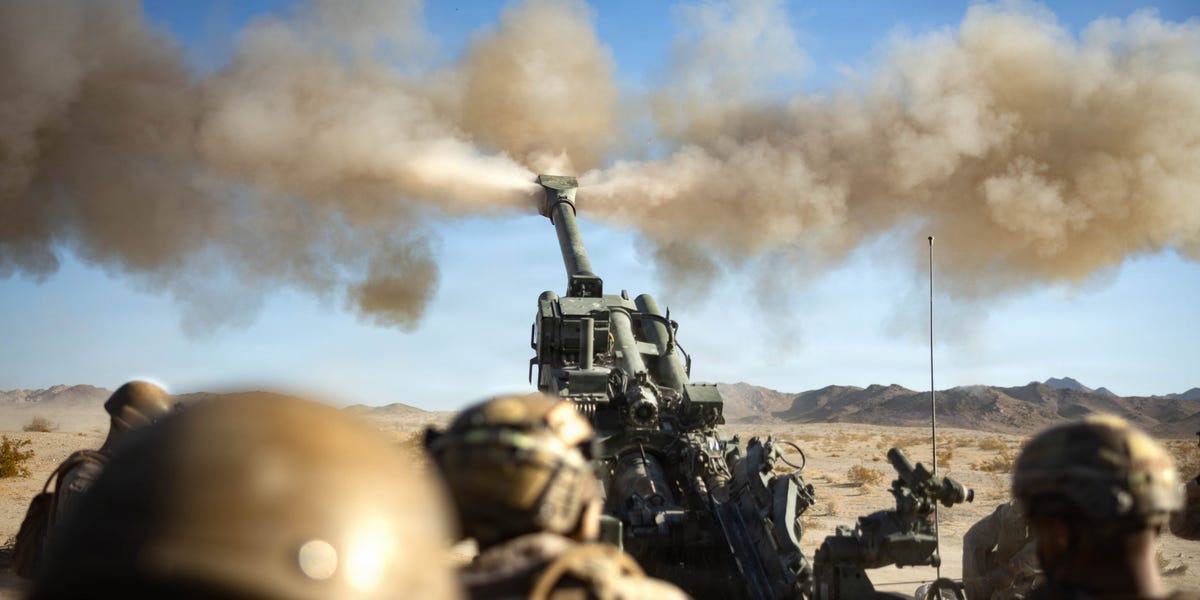
The report offers a concrete example. The US Army ramped up production of 155mm artillery shells to address shortages caused by support for partner nations, Ukraine in particular. The increase answered an immediate pressure, not a deeper need for better overall munitions management.
The watchdog warned that the approach carries real risk. Without a plan that identifies long-term goals, strategies for reaching them, and metrics to gauge progress, the department and the services are poorly positioned to fix persistently low inventories. They could also end up investing in munitions projected to exceed total requirements, which is precisely the kind of waste a disciplined budget is supposed to prevent.
The structural gaps go further. The Pentagon has no single office in charge of improving munitions stockpiles or planning. The services told the GAO that without dedicated leadership, progress would be difficult. Data is also a problem: while the department can track munitions across the services, oversight and review of that information is limited, and the department-wide picture depends on individual tools maintained by each service.
The GAO recommended an overarching plan that improves production-linked inventory levels, funding, and long-term goals. It also called for a single point of authority for that plan, regular timelines, and a data management plan to track munitions.
A DoD official told Business Insider that the US is "fully equipped to strike at the time and place of the President's choosing" and has already conducted successful operations across multiple combatant commands while preserving a deep, ready stockpile. The Pentagon has also been working with defense firms to significantly increase Patriot interceptor and Tomahawk missile production. Replenishing key stockpiles, however, could be a substantial undertaking.
Some officials and analysts have gone further, raising concerns that US stockpiles of certain weapons may be dangerously low. Those worries extend beyond the Middle East to the readiness needed for other conflicts, including a potential war with China.
The editorial reading here is straightforward. Every dollar spent on emergency production is a dollar taken from taxpayers without a clear return, and every unplanned purchase is a bet placed without the odds. Free enterprise can respond to demand when the government gives it a clear signal, but a Pentagon that reacts to headlines sends mixed signals to the defense firms it depends on. Reform that imposes one accountable authority, honest metrics and a real budget line is not a partisan demand. It is the minimum a serious deterrent requires, and the principle at stake is simple: a republic that funds its defense should be able to show what it bought, why, and whether the stockpile will be there when it is needed.


