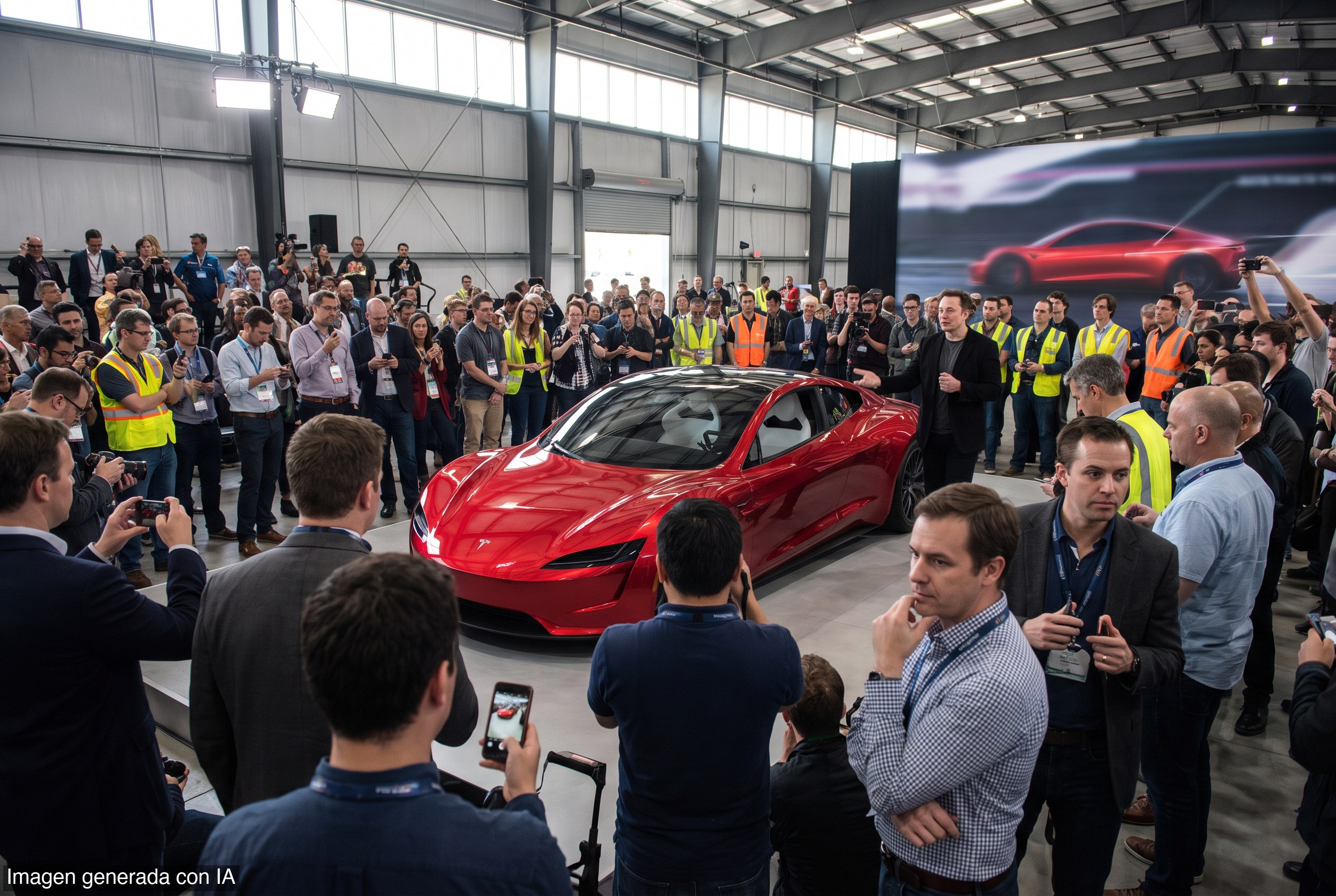
Tesla used a livestreamed event in Waco, Texas, to show a next-generation Roadster that drove upside down on a ramp, briefly flew, and accelerated to 60 mph in 0.81 seconds.
Elon Musk said the car can 'basically fly like a rocket' and do 'rolls' and 'crazy gymnastics.' Tesla VP for Engineering Lars Moravy said the vehicle uses a fan suction system underneath the car that can pull up to 2Gs, and the company said it also uses thrusters and high-pressure air to lift itself off the ground.
The event lasted less than 30 minutes and came with no mention of price, release date, or other basic commercial details. Musk said production would start in 2028, while also backing away from a cleaner road-legal claim by saying, 'You know I’m not necessarily sure it’s legal in all jurisdictions.'
Tesla has said the Roadster will be its only manually driven car. The vehicle is a two-seater with steer-by-wire controls, a yoke, brakes, and throttle, plus a retractable rear wing. Tesla also said the car can recharge its own tank and that the production version should improve on the demonstrated acceleration, though Musk acknowledged the extreme forces involved.
The Roadster has been a long time coming. Tesla first announced a prototype in 2017 and originally said deliveries would start in 2020. Early buyers put down $50,000 deposits, or $250,000 for the limited Founders Series, effectively giving Tesla interest-free funding while the company focused on mass-market vehicles such as the Model Y and wrestled with the Cybertruck.
Tesla later updated its website with three performance tiers for the car, including a 'performance' version that requires a $50,000 deposit and a 'Thrust' version with 'acceleration thrusters' that requires a $250,000 deposit. The company also said the car can reach a top speed of up to 230 mph and has a battery range of at least 300 miles.
For founders and operators, the playbook here is simple: spectacle can generate attention, but revenue comes from shipping product with clear terms. The Roadster story still centers on a promise, not a business.
That matters because customers and investors eventually care less about a demo and more about deliverables. If Tesla does bring the Roadster to market in 2028, it will have to turn a viral stunt into a real product with legal, operational, and manufacturing constraints that no amount of stagecraft can erase.


