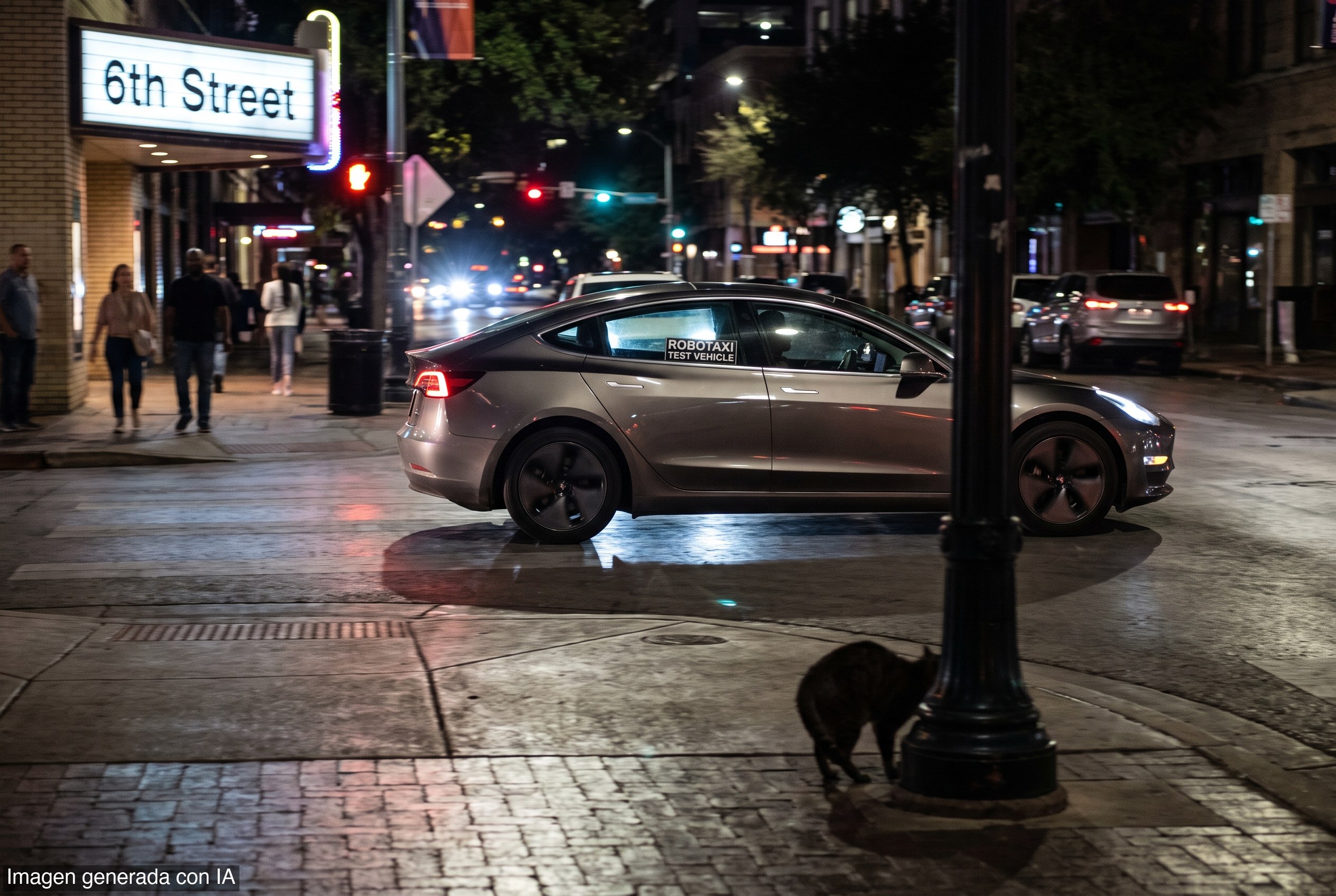
Tesla is expanding the operating hours of its robotaxis in Austin from 10 p.m. to 11 p.m., Elon Musk said on Saturday.
Musk said the company is working through a specific nighttime problem: avoiding pets that are hard to see after dark. 'The main thing we're trying to solve is making sure that we don't run over pets when they're hard to see at night,' Musk wrote on X. 'Literally trying to avoid grey kittens on grey tarmac in the dark.'
Tesla rolled out its robotaxis in Austin last year after years of delays. Since then, the company has gradually expanded availability there and in other Texas cities and in Florida.
Tesla says its Cybercabs use 'camera vision and sensors' to navigate. In its vehicle manuals, the company says low or limited light, including unlit or poorly lit roads at night, can limit a camera's ability to provide accurate visual information.
Musk said in a reply on X that AI-assisted camera processing could improve nighttime visibility. 'Visual spectrum cameras can see very well in the dark when AI is doing the photon count analysis,' he said.
The National Highway Traffic Safety Administration is investigating Tesla's camera system for full self-driving vehicles and whether it is good enough at spotting road hazards in less-than-ideal visibility conditions.
Tesla's approach differs from Waymo's. Waymo uses LiDAR, which uses laser beams to scan the environment. The report also noted that a Tesla Model Y operating in Austin struck a dog in September 2025, and Tesla filed that report with the National Highway Traffic Safety Administration.
The math is simple: if robotaxis cannot reliably read a dark road, the rollout slows, and so does the revenue story behind autonomy. For founders building in regulated markets, the lesson is the same. The technology may be moving fast, but the safety case still has to clear the road before the business can scale.


